


Transform your applications today by downloading our free evaluation version
Overview
The WPF Scheduler control is used to schedule and manage appointments through an intuitive user interface, similar to the Outlook Calendar. Eight different view modes are supported: day, week, workweek, month, timeline day, timeline week, timeline workweek, and timeline month. The control’s rich feature set supports:
- A built-in appointment editor for manipulating appointments.
- Appearance customization.
- Appointment rescheduling through resizing and drag and drop.
- Localization to meet the needs of different regions.
Views
A wide range of built-in view modes are available: day, week, workweek, month, timeline day, timeline week, timeline workweek, and timeline month.
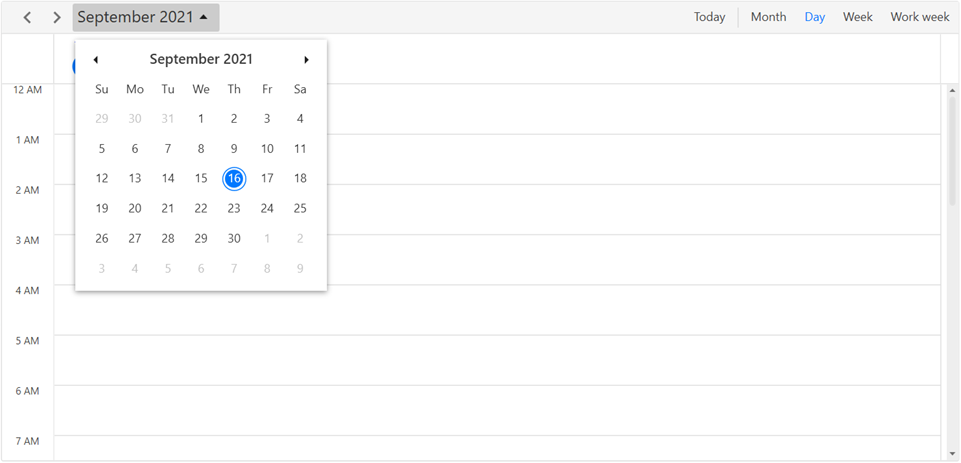
Day
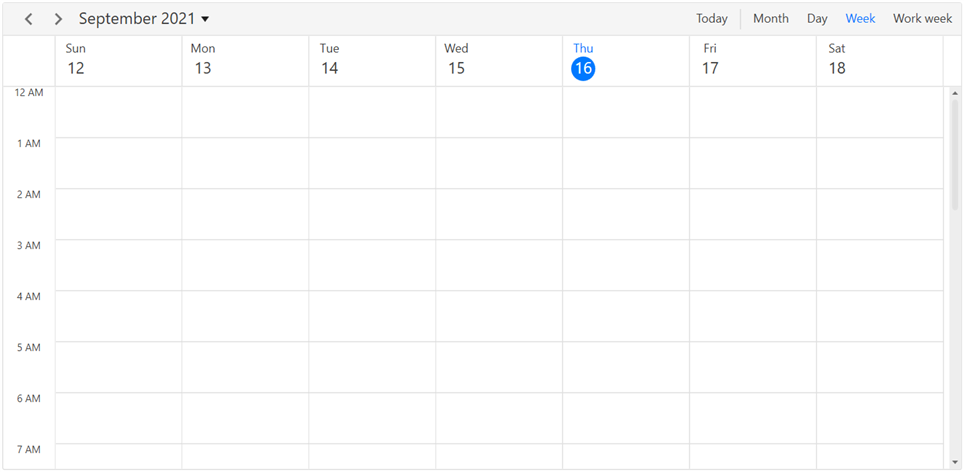
Week
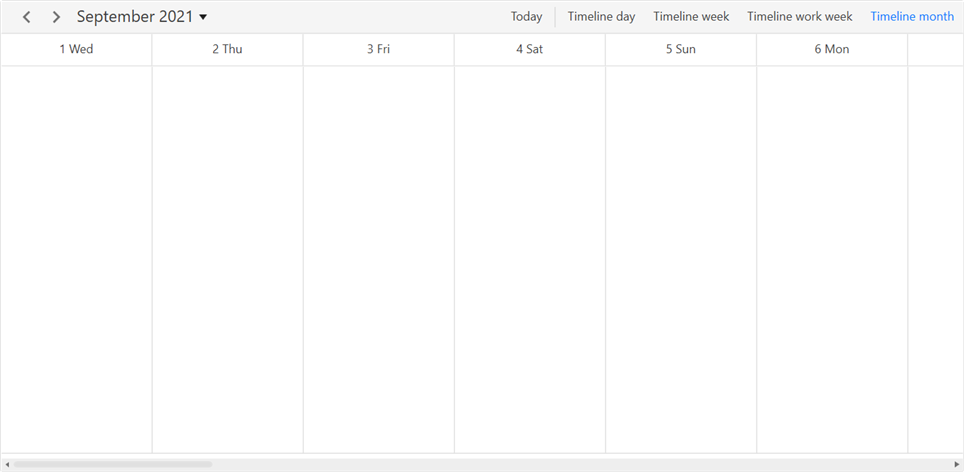
Timeline month
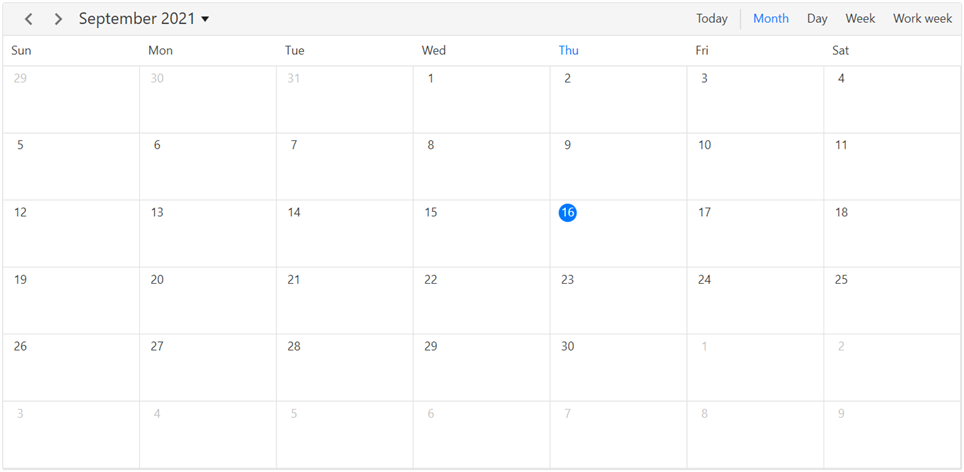
Month
Calendar types
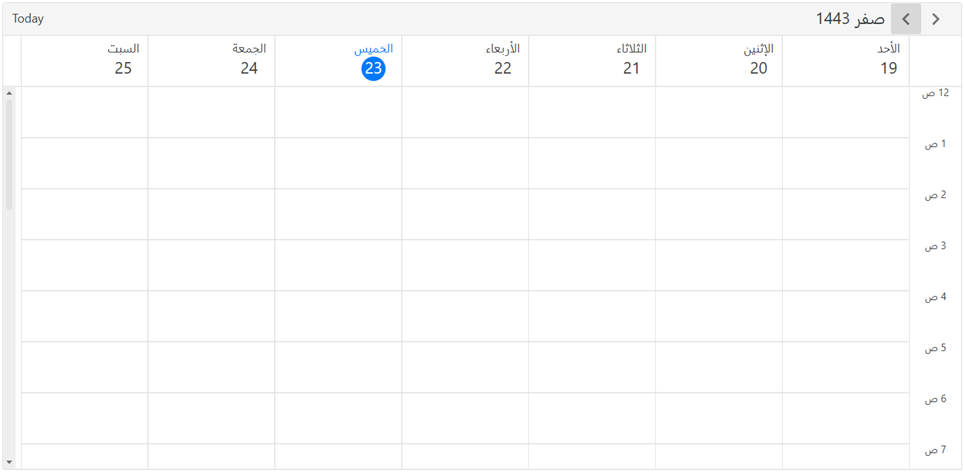
Supports different types of calendars such as Gregorian, Korean, Hebrew, Hijri, Taiwan, Thai, UmAlQura, and Persian. The default calendar type is Gregorian.
Events
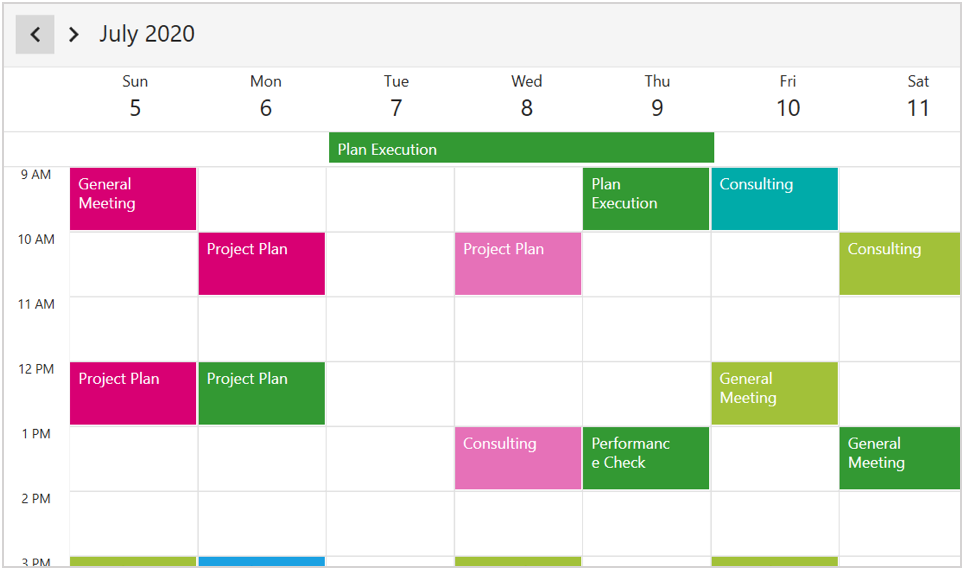
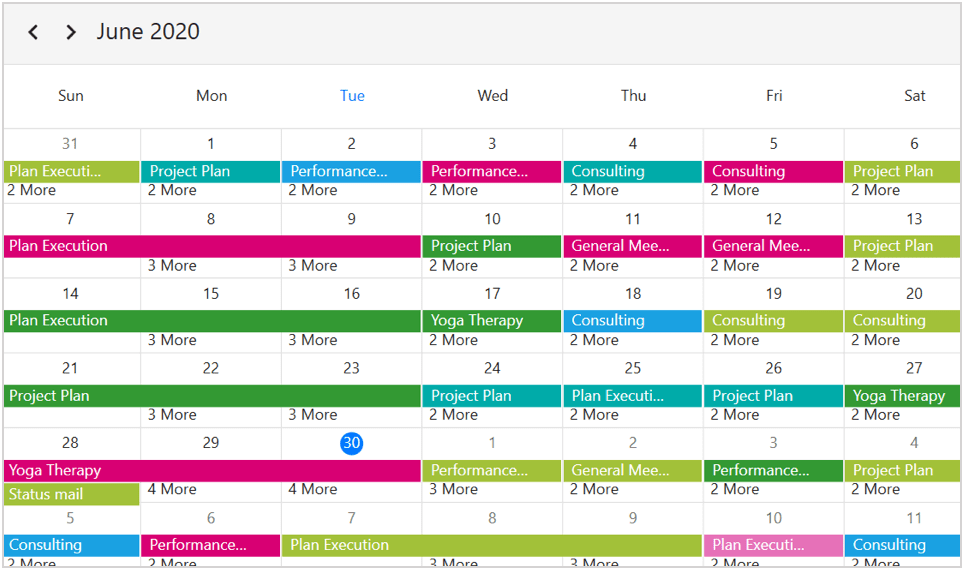
Render recurring, all-day, and spanned appointments to visualize your schedule and events easily. Appointments contain information on events scheduled at specific times. In addition to default appointments, users can use their own collections to connect a business entity to an appointment by mapping their fields, such as start time, end time, subject, notes, and recurrence.
Recurring events
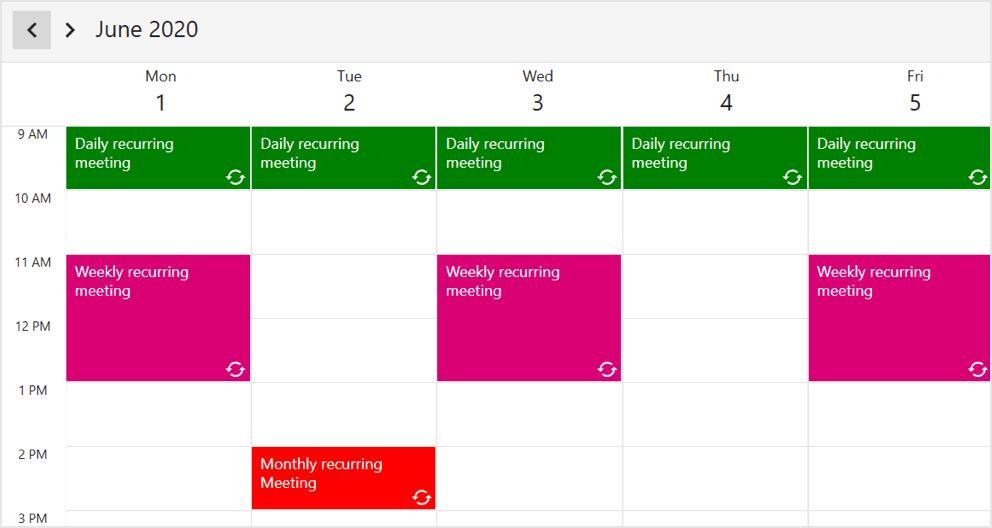
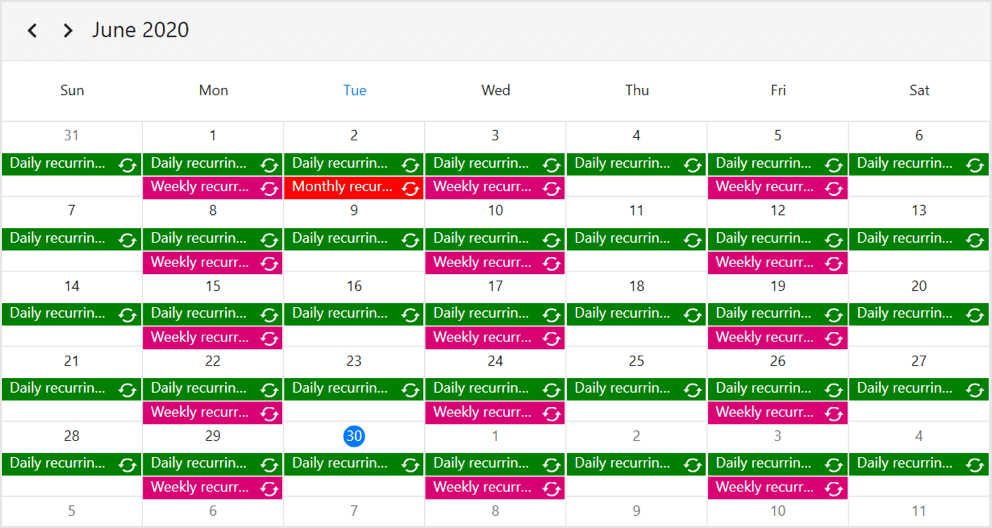
Easily configure recurring events on a daily, weekly, monthly, or yearly basis. You can also skip or change an occurrence of a recurring appointment.
Resource grouping
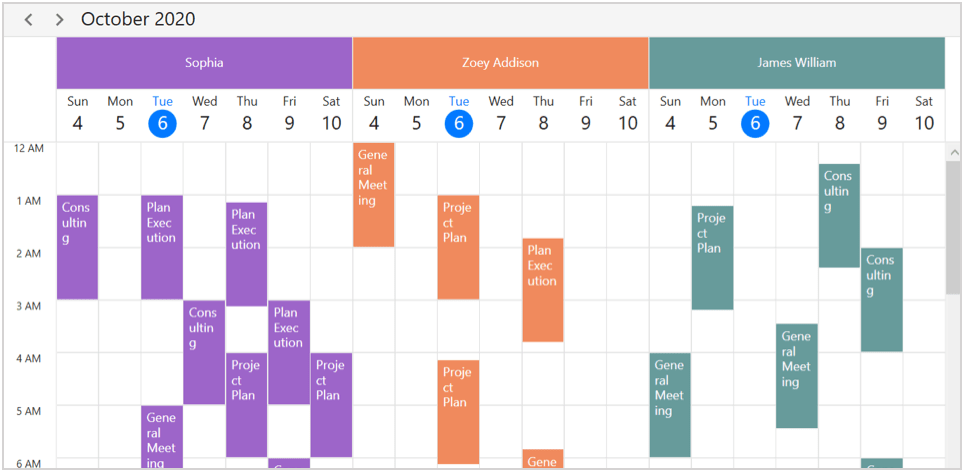
Group appointments based on the resources associated with them in day, week, workweek, timeline day, timeline week, timeline workweek, and timeline month views.
Load on demand
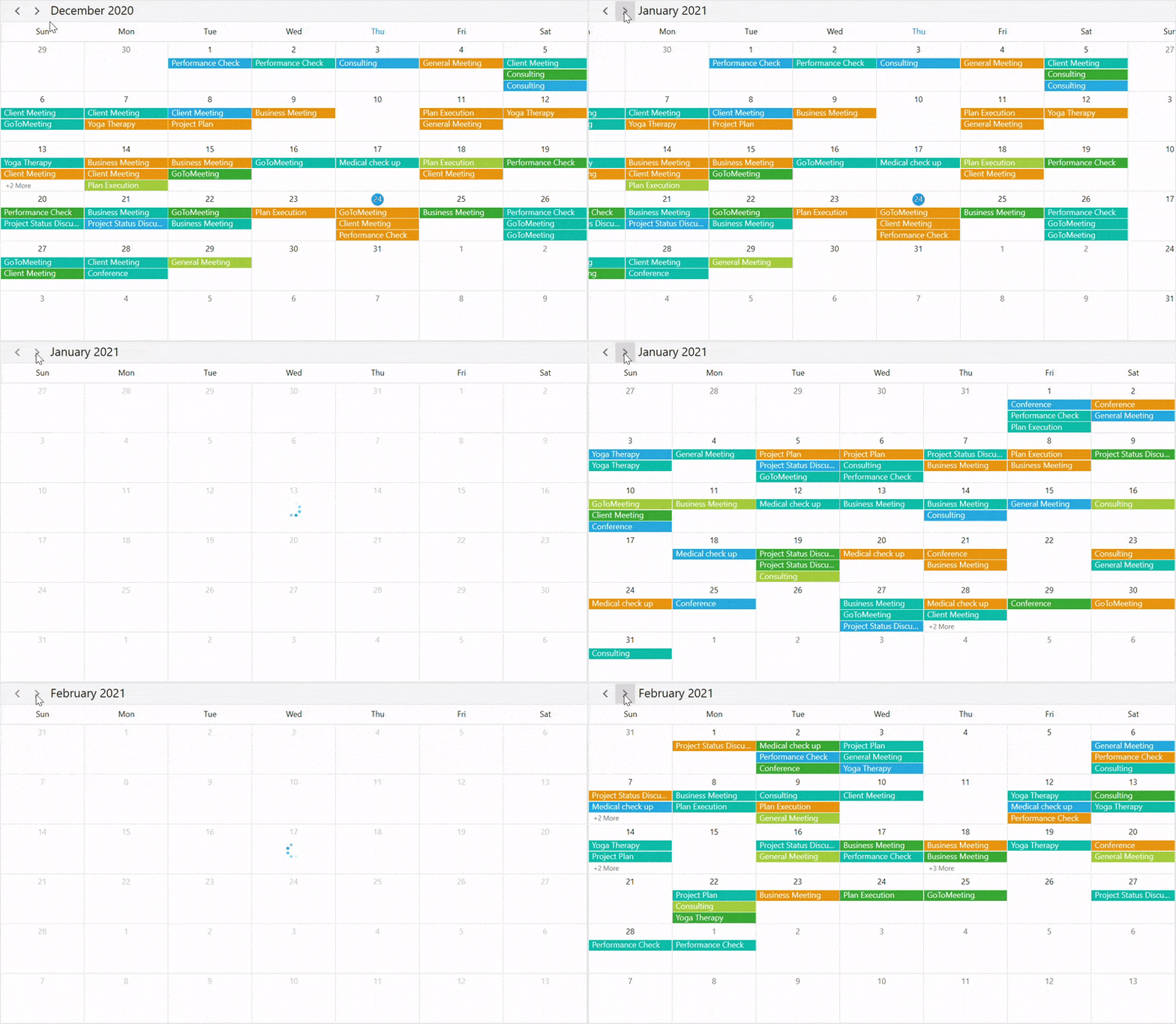
Load appointments on demand for the visible date range with the loading indicator. Loading appointments on demand improves loading performance ranging multiple years.
Appointment reminder
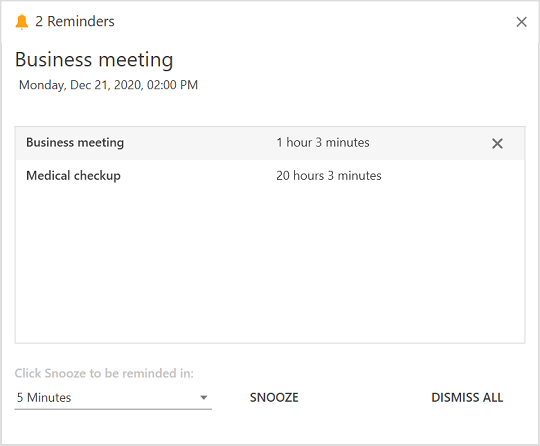
The WPF Scheduler alerts you with reminders a specified time period before an appointment’s start time.
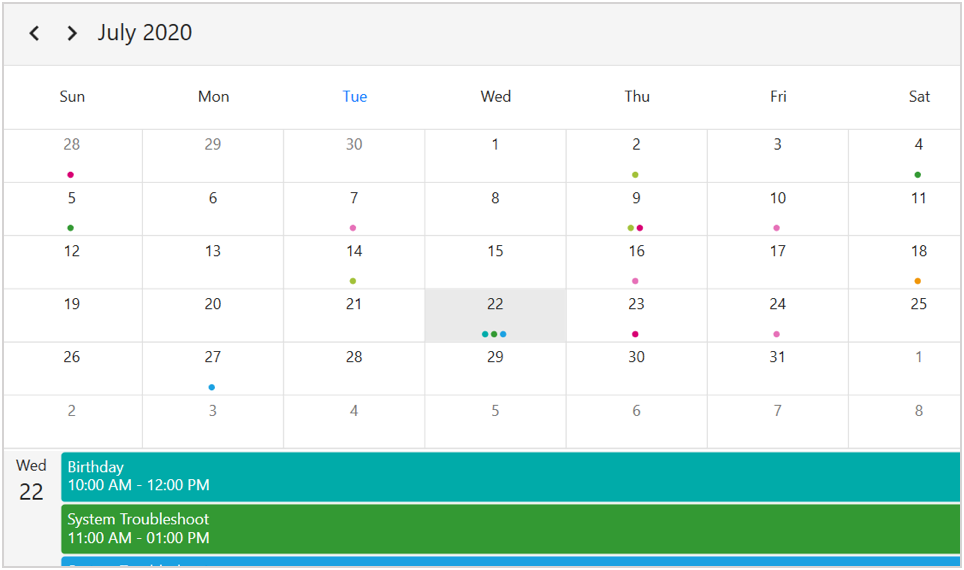
Month agenda view
Display the appointments in a list below the month view by clicking a day.
Appointment editing and rescheduling
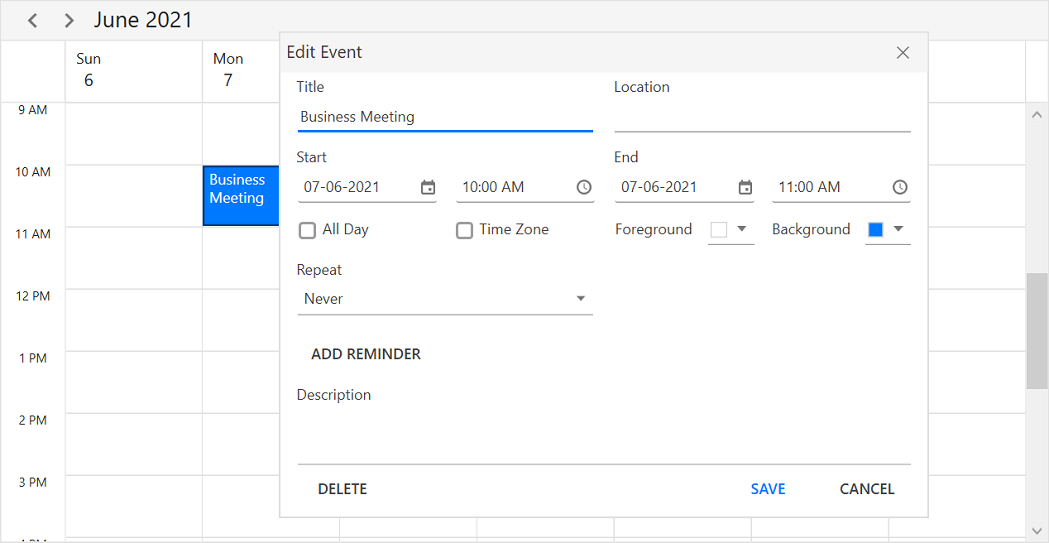
Built-in appointment editor
You can easily create, edit, or delete appointments using the built-in appointment editor.
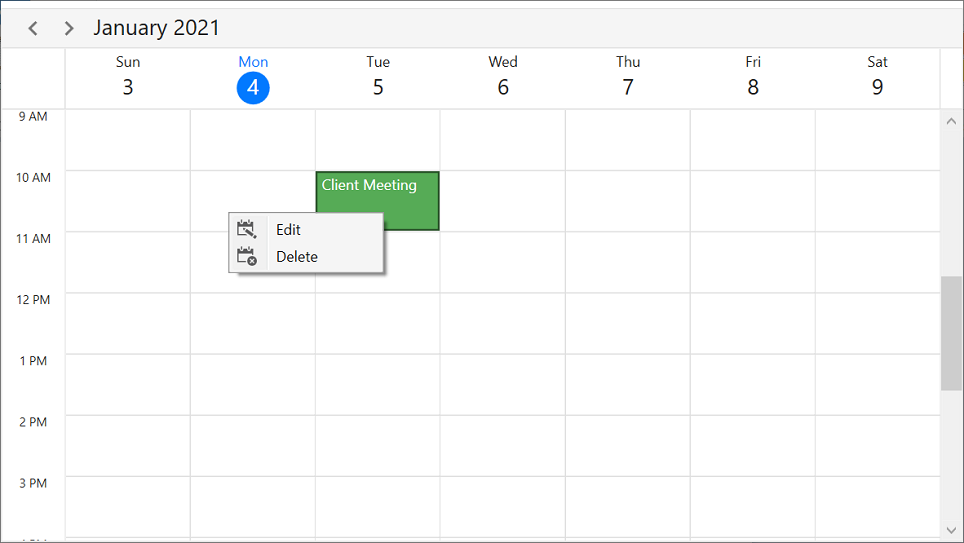
Context menu and command
The WPF Scheduler context menu displays the shortcut options to add, edit, and delete appointments during user interaction when users right-click the cursor on appointments, time slots, and month cells. You can use built-in RoutedUICommands for handling the context menu options.
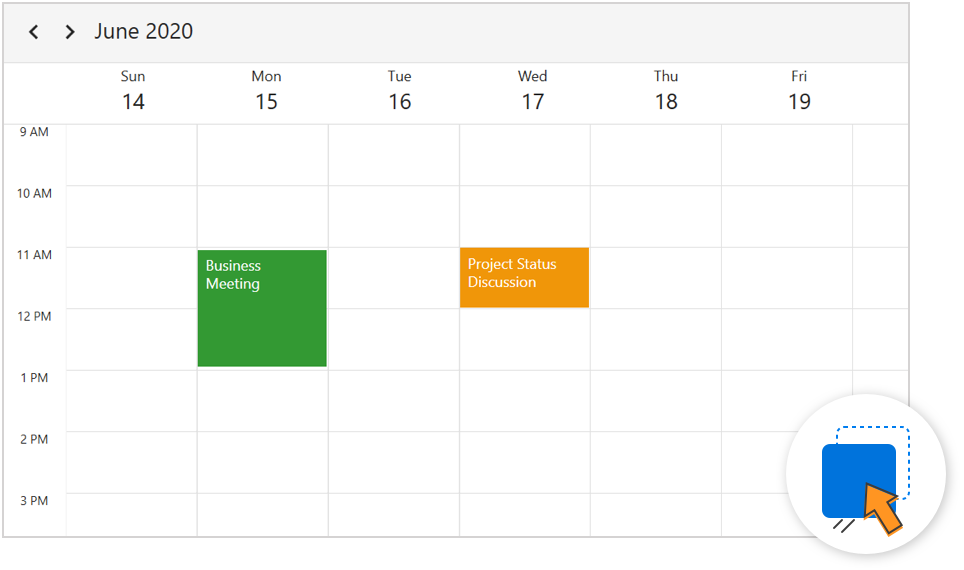
Drag and drop
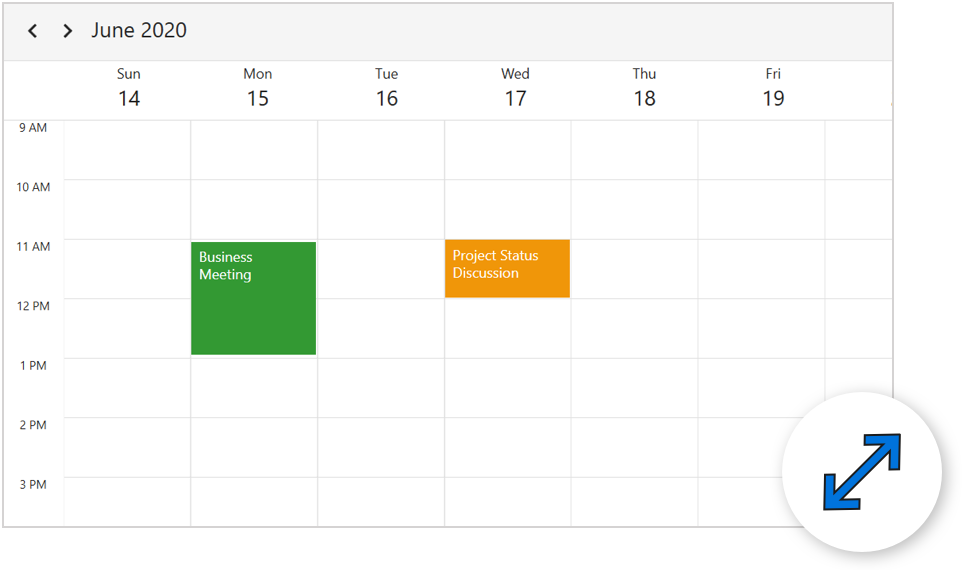
Easily reschedule an appointment by dragging it from one time slot or month cell and dropping it into a different time slot or month cell. Restrict the rescheduling of certain appointments and prevent appointments from being dropped in specific slots.
Resizing
You can quickly extend or reduce an appointment’s start and end times by resizing the appointment.
Time zones
Display appointments created in various time zones in a system. Appointment start and end times are also automatically adjusted and displayed based on daylight saving time.

Special time region
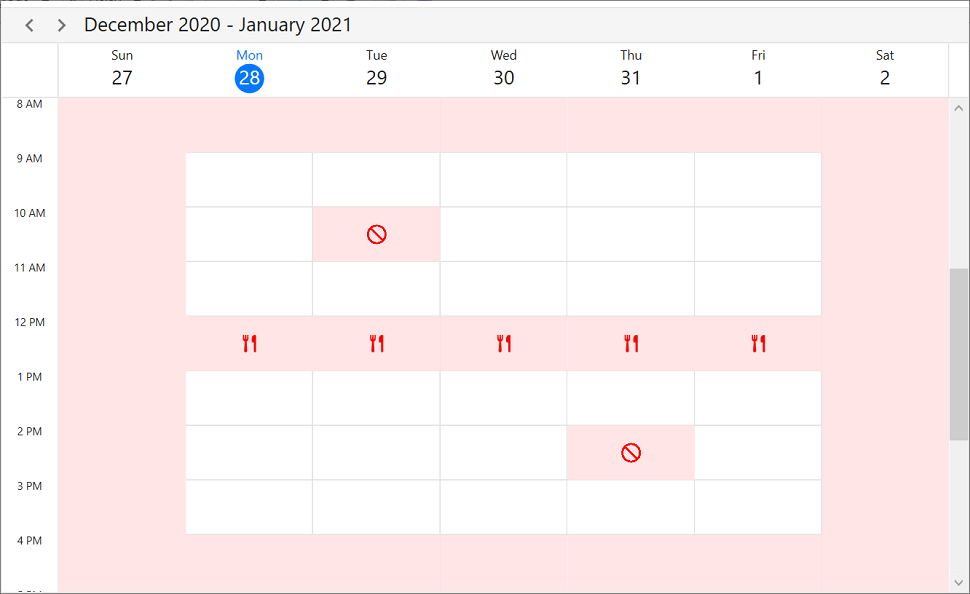
Create special time regions to highlight time slots in day, week, workweek, timeline day, timeline week, and timeline workweek views. Merge adjacent special time regions and show them as a single region instead of showing them separately for each day in week and workweek views.
Flexible working days
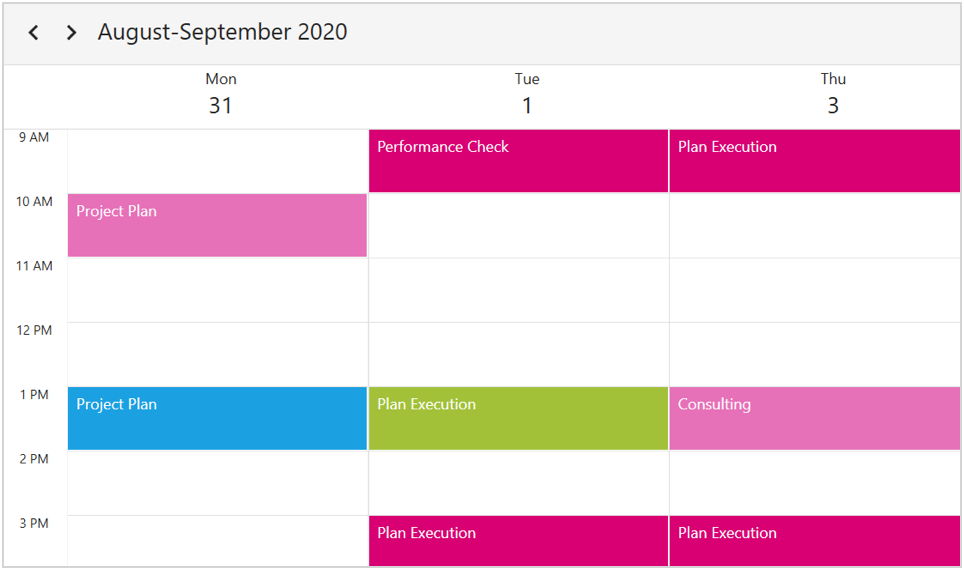
Customize the work days in a workweek so that the remaining days will be hidden from view.
Date restriction
Prevent navigation before the minimum date and beyond the maximum date. This restricts users from selecting certain dates outside of a range of time.
Appearance customization
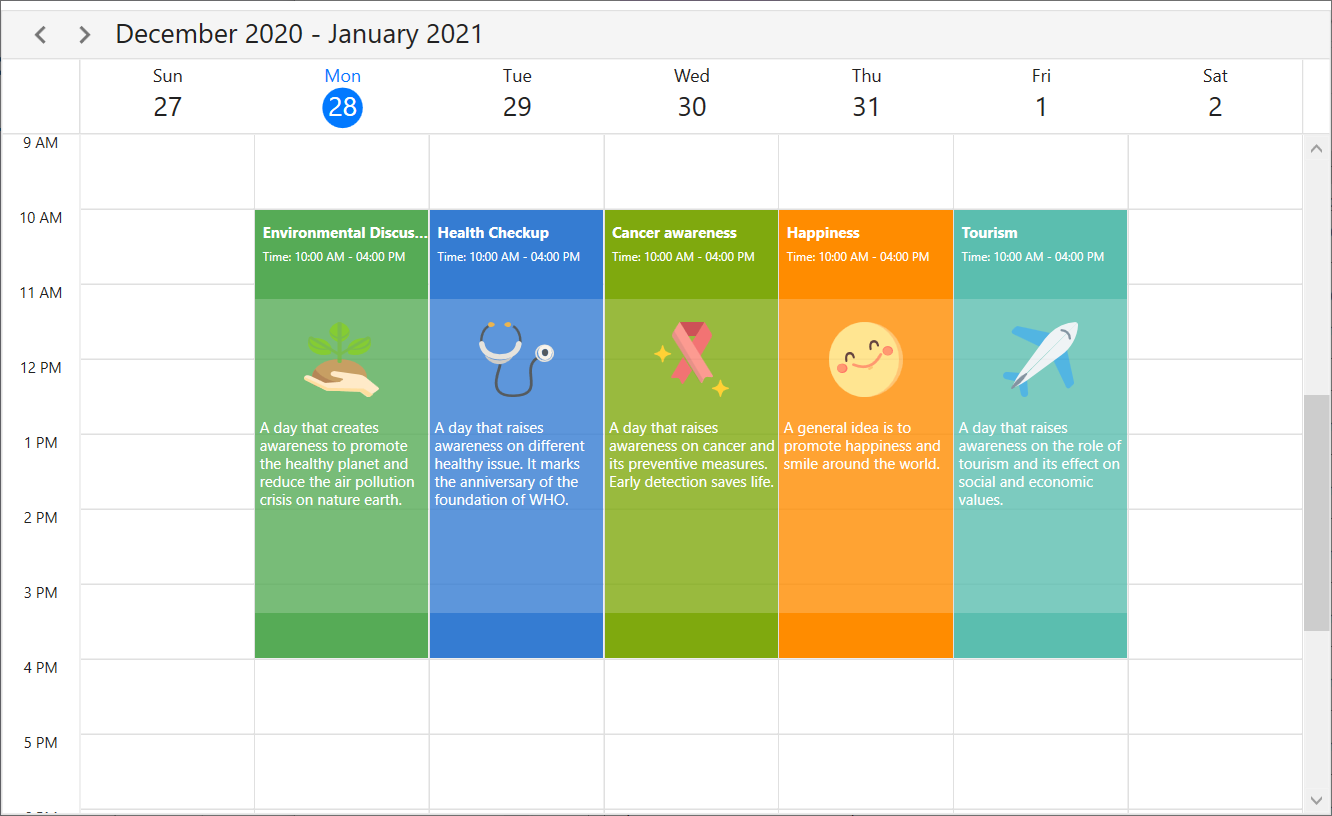
Provide a unique and consistent look to your scheduler with appearance customization using styles, data templates, and theme support.
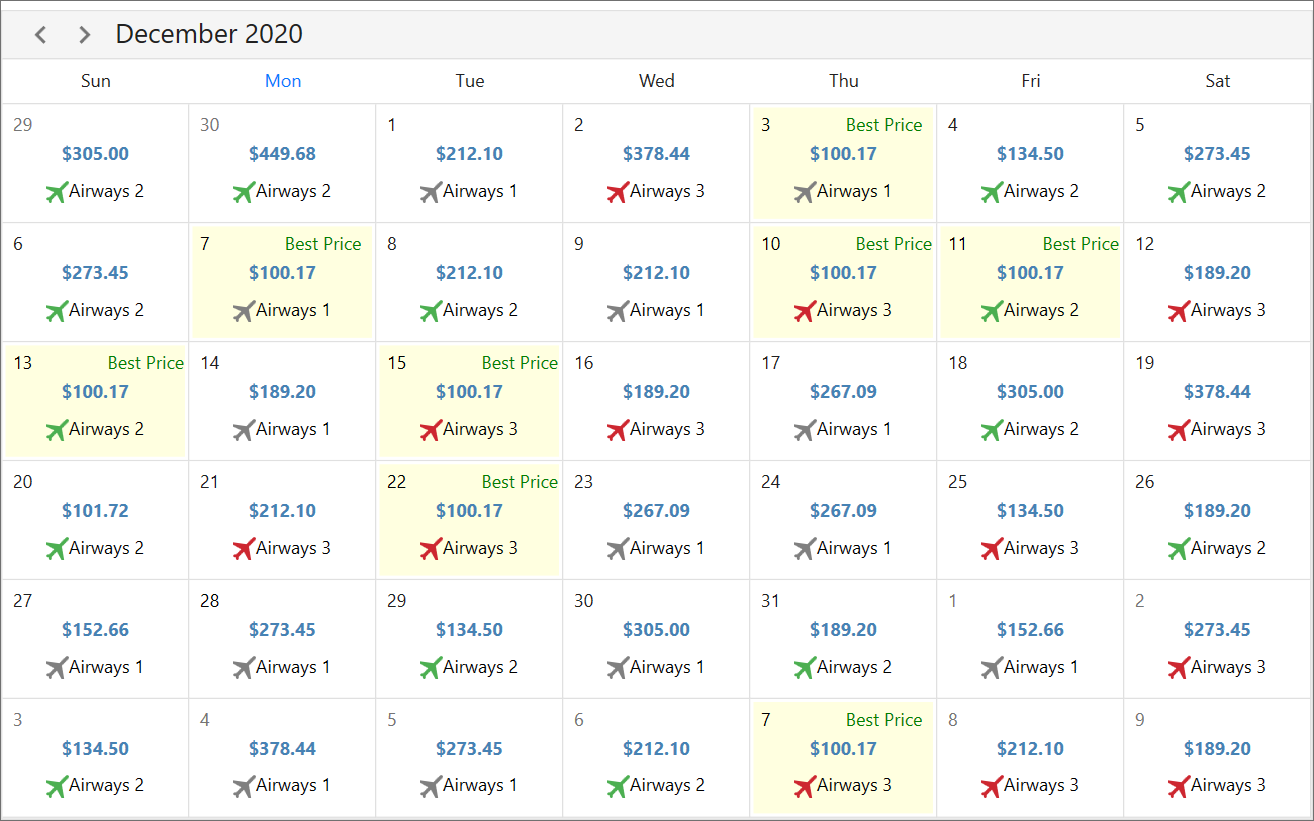
Localization and globalization
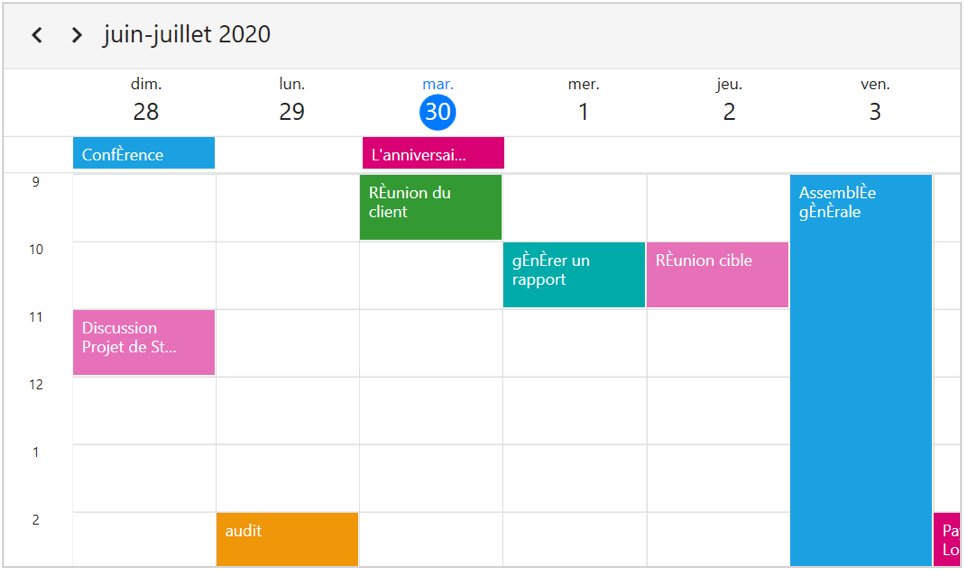
Localization
Display the current date and time by following the globalized date and time formats. Localize all available static text in the WPF Scheduler.
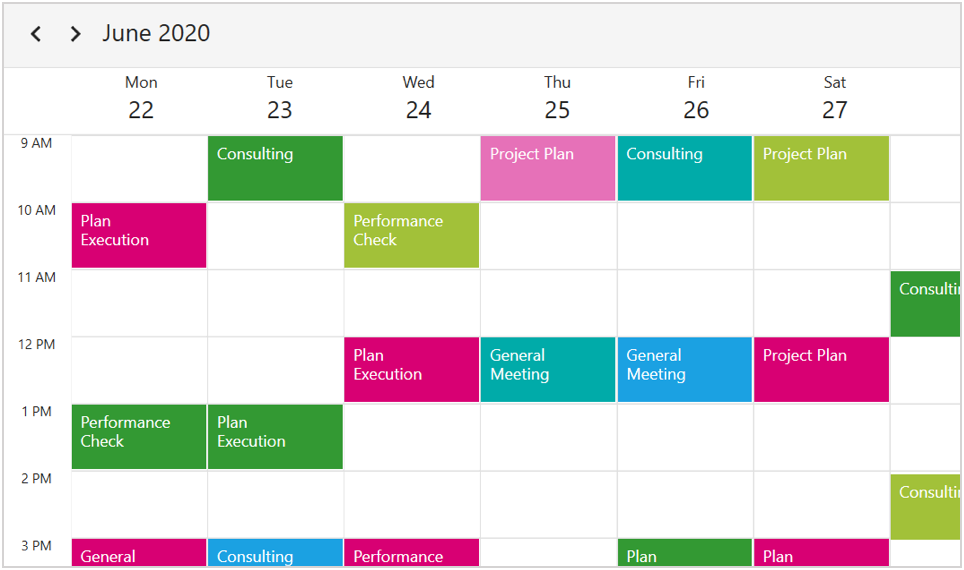
First day of the week
Customize the first day of the week as needed. The default first day is Sunday.
WPF Scheduler Code Example
Easily get started with the WPF Scheduler using a few simple lines of XAML or C# code example as demonstrated below. Also explore our WPF Scheduler Example that shows you how to render and configure the scheduler in WPF.
xmlns:syncfusion="http://schemas.syncfusion.com/wpf"
<syncfusion:SfScheduler x:Name="Schedule"
                        ViewType="Week" >
</syncfusion:SfScheduler>
// Creating an instance for schedule appointment collection
var Appointments = new ScheduleAppointmentCollection();
//Adding schedule appointment in the schedule appointment collection
Appointments.Add(new ScheduleAppointment()
{
StartTime = new DateTime(2020, 12, 15, 10, 0, 0),
EndTime = new DateTime(2020, 12, 15, 12, 0, 0),
Subject = "Client Meeting",
Location = "Hutchison road",
});
//Adding schedule appointment collection to the ItemSource of SfScheduler
Schedule.ItemsSource = Appointments;Not sure how to create your first WPF Scheduler? Our documentation can help.
I’d love to read it nowFrequently Asked Questions
Why should you choose Syncfusion WPF Scheduler Control?
Syncfusion WPF Scheduler provides the following:
- Eight different types of view modes: day, work week, week, month, timeline day, timeline week, timeline work week, and timeline month.
- Display normal, recurring appointments, all-day, and spanned appointments
- Load appointments on-demand for better performance when loading a large number of appointments.
Resource Grouping allows grouping appointments based on the resources or dates in timeslot views.
- One of the best WPF Scheduler in the market that offers feature-rich UI to interact with the software.
- Adapts to different time zones and cultures instantly.
- Set reminders for an appointment.
- Appointment editing (CRUD) can be done through appointment editor, drag-drop , resize, and context menu.
- Customize the appearance easily.
- Simple configuration and API.
Extensive demos, documentation to learn quickly and get started with WPF Scheduler.
Can I download and utilize the Syncfusion WPF Scheduler Control for free?
No, this is a commercial product and requires a paid license. However, a free community license is also available for companies and individuals whose organizations have less than $1 million USD in annual gross revenue, 5 or fewer developers, and 10 or fewer total employees.
How do I get started with Syncfusion WPF Scheduler?
A good place to start would be our comprehensive getting started documentation.
Our Customers Love Us
Having an excellent set of tools and a great support team, Syncfusion® reduces customers’ development time.Here are some of their experiences.

Good Library with lot of features that are very helpful
We needed a clear picture of our schedule for the day across our organization, and Scheduler in Syncfusion helped us get to it with ease.

Nishanth Kiran J,

Great Enterprise product for complex scenarios.
The customer needed a complex implementation of a Calendar (Scheduler Component) with drag and drop functionalities, custom fields, colors and so on. The Scheduler component from Syncfusion allowed me to implement what I needed without spending a lot of hours to develop it.

Juan Cruz B,

Web developer
See Real Success Stories
Developers around the world trust Syncfusion’s Essential Studio to simplify complex projects and speed up delivery. With a vast library of UI controls, powerful SDKs, and reliable support, Essential Studio helps teams build enterprise-ready applications with confidence.
Read Our Customer StoriesIndustry
Software development
75% Cost reduction
50% Faster development
Industry
Utilities (oil and gas)

450+ hours saved
Streamlined processes and hours of development effort saved.

Advanced, flexible features
Empowered users through robust and versatile functionality.
Industry
Software and technology
1000+ of hours saved
Accelerated development with enterprise-ready UI components.

Efficient file management
Streamlined workflows with document libraries without building them from scratch.
Industry
Software and technology

2 Years of delay avoided
Two years of delays prevented with proactive planning.

On-time delivery
Projects delivered on schedule using trusted controls.
Industry
IT services and IT consulting

Improved performance
Large datasets handled with easy customization and quick debugging.

Highly customizable
Plug-and-play controls with quick template integration.
Industry
Professional services
Instant access
Quick availability of features and resources.
Reduced dependencies
Fewer dependencies for faster development.
Rated by users across the globe
Awards
Greatness—it’s one thing to say you have it, but it means more when others recognize it. Syncfusion® is proud to hold the following industry awards.