


Flexible Storage Options for Every Deployment
Choose the storage backend that fits your infrastructure, from on-premises file systems to cloud services, enterprise systems, and SQL databases.
Cloud storage connections
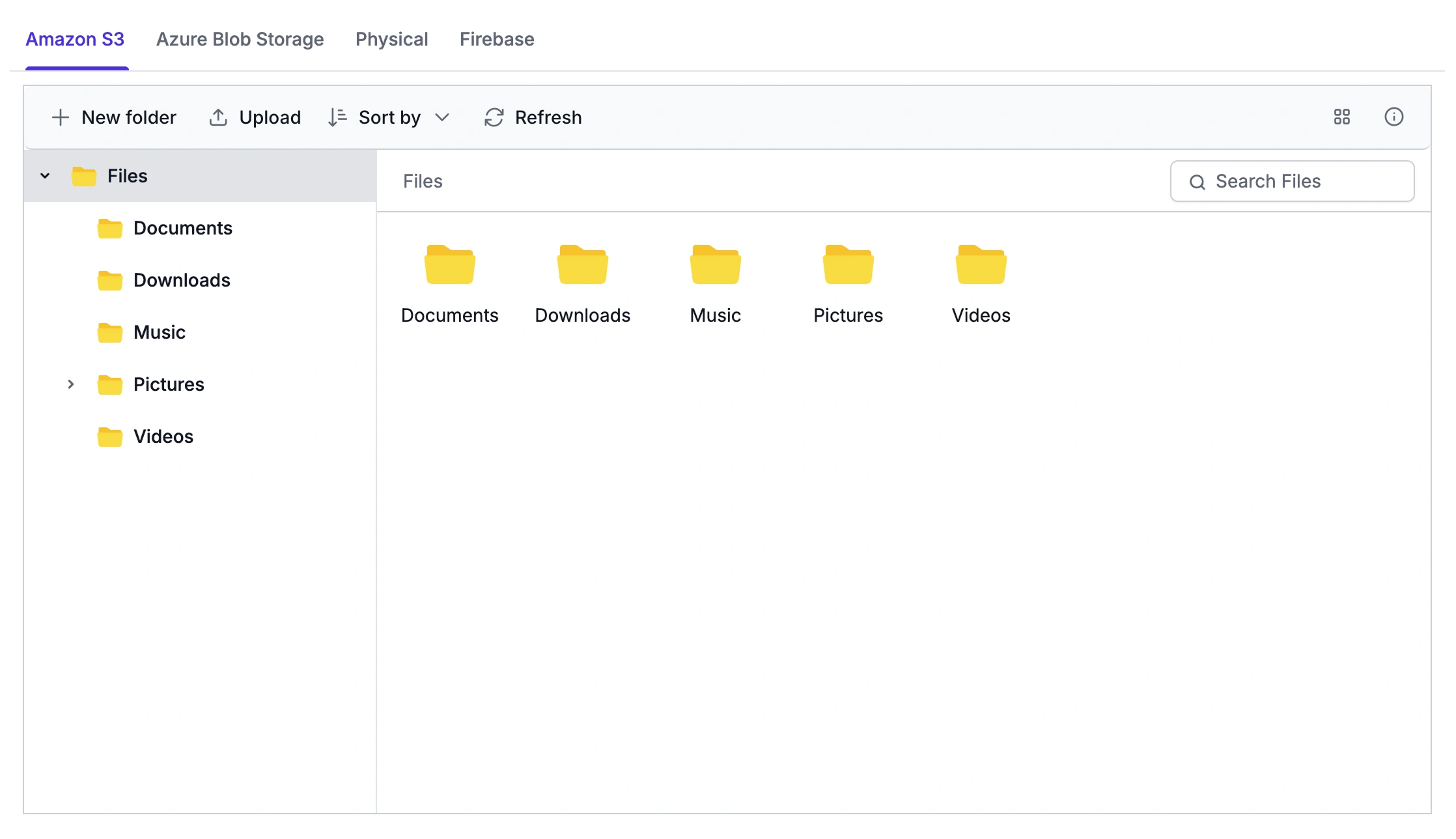
Store files in scalable cloud services like Azure Blob Storage, Amazon S3, Firebase, or IBM Cloud through one consistent interface. Use this for applications needing files available across multiple regions, such as global document or media libraries.
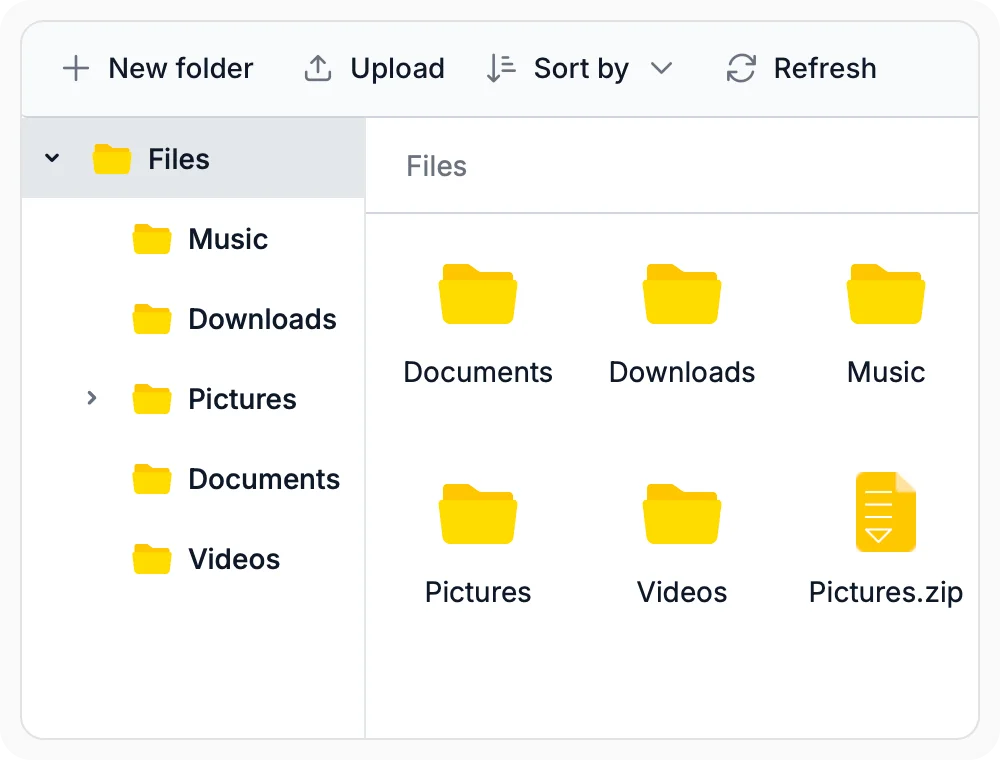
Access FTP and SharePoint storage
Access files stored in enterprise SharePoint sites and traditional FTP servers through a backend service. Existing document libraries and file servers stay in place without any migration. Use this provider for Microsoft 365 integration or when maintaining established file server infrastructure.
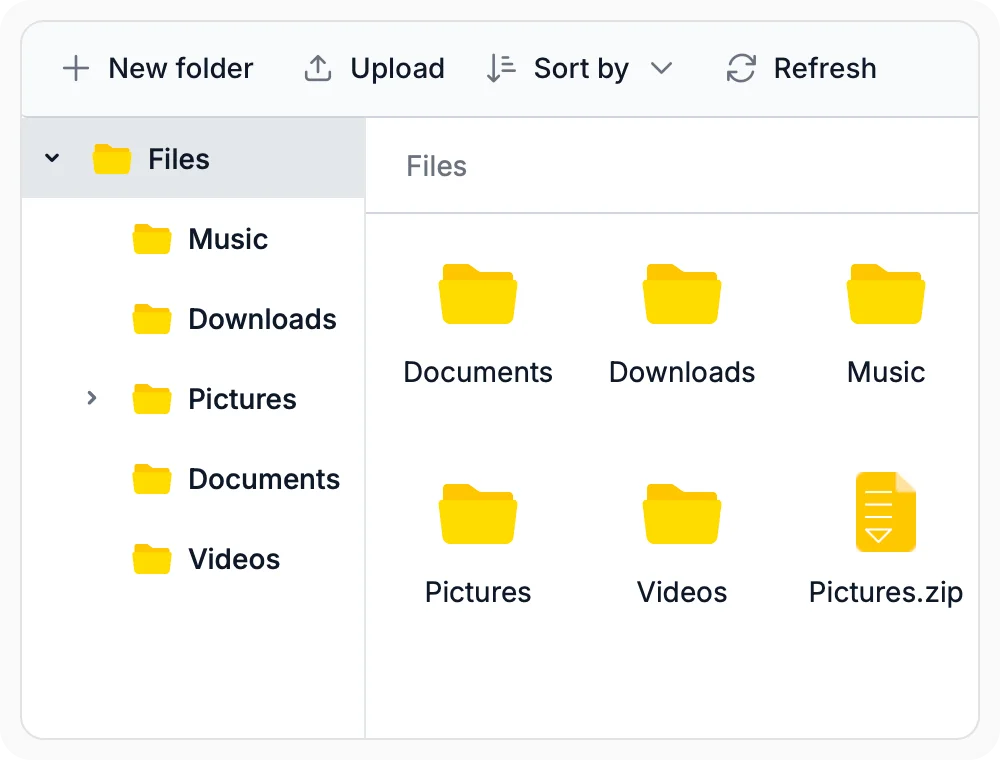
SQL database file storage
Store file metadata and content directly in SQL Server or other relational database. Files stay linked to related business records inside the same transaction. Use this when files must stay associated with business records, such as invoices or claims.
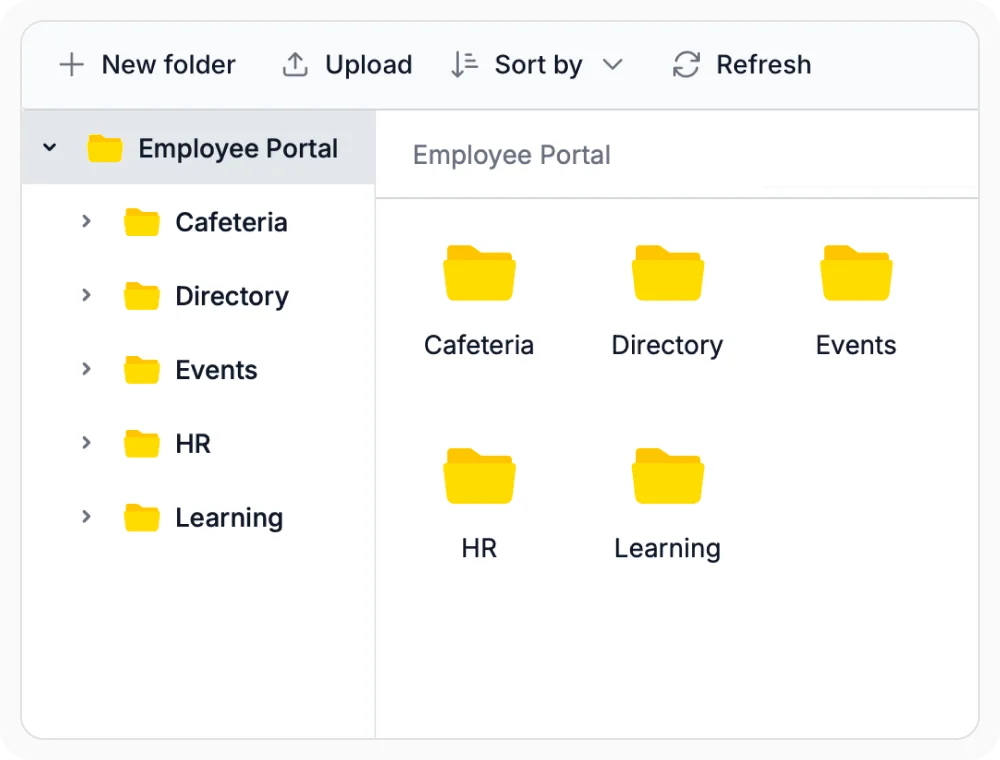
Use Local file storage
Store and access files directly from a local server through the physical file system, keeping full control at the server level. Use this for on-premises applications like internal HR portals or legacy systems that avoid external cloud dependencies.
Frequently Asked Questions
What does a storage provider mean in React File Manager?
A storage provider connects React File Manager to a storage system, including local file systems, cloud services, SharePoint, FTP servers, and databases, allowing files to be browsed, uploaded, and managed through one interface.
Can I change the storage provider without changing the File Manager interface?
Yes. React File Manager provides a consistent file management interface, allowing the storage provider to be changed without affecting the overall experience, so files can still be browsed, uploaded, and organized the same way.
How do I choose a storage provider for React File Manager?
Choose a storage provider based on where files are stored and how they are managed. React File Manager supports local storage, cloud storage, FTP, SharePoint, and database storage through a consistent file management interface.
Can React File Manager work with my existing storage system?
Yes. React File Manager connects to an existing storage provider, including local file systems, cloud services, SharePoint, FTP servers, and SQL databases, allowing files to be managed without changing where they are stored.
Resources
Learn more about our React File Manager
Explore demos, KB articles, and documentation to get the most out of the File Manager.
Explore guides, APIs, and quick-start tips
See live use cases in action
Ask, share, and connect with peers
Find solutions and best practices fast
Get expert help when needed
Feature requests and bug reports
Track issues and suggest improvements
See Real Success Stories
Developers around the world trust Syncfusion’s Essential Studio to simplify complex projects and speed up delivery. With a vast library of UI controls, powerful SDKs, and reliable support, Essential Studio helps teams build enterprise-ready applications with confidence.
Read Our Customer StoriesIndustry
Software development
75% Cost reduction
50% Faster development

Industry
Utilities (oil and gas)

450+ hours saved
Streamlined processes and hours of development effort saved.

Advanced, flexible features
Empowered users through robust and versatile functionality.
Industry
Software and technology
1000+ of hours saved
Accelerated development with enterprise-ready UI components.

Efficient file management
Streamlined workflows with document libraries without building them from scratch.
Industry
Software and technology

2 Years of delay avoided
Two years of delays prevented with proactive planning.

On-time delivery
Projects delivered on schedule using trusted controls.
Industry
IT services and IT consulting

Improved performance
Large datasets handled with easy customization and quick debugging.

Highly customizable
Plug-and-play controls with quick template integration.
Industry
Professional services
Instant access
Quick availability of features and resources.
Reduced dependencies
Fewer dependencies for faster development.
Awards
Greatness—it’s one thing to say you have it, but it means more when others recognize it. Syncfusion® is proud to hold the following industry awards.