


Scalable data processing
Process and display large datasets efficiently with intelligent rendering strategies, on-demand data loading, and backend-integrated operations that minimize resource consumption and improve application performance.
Smooth scrolling with virtualization
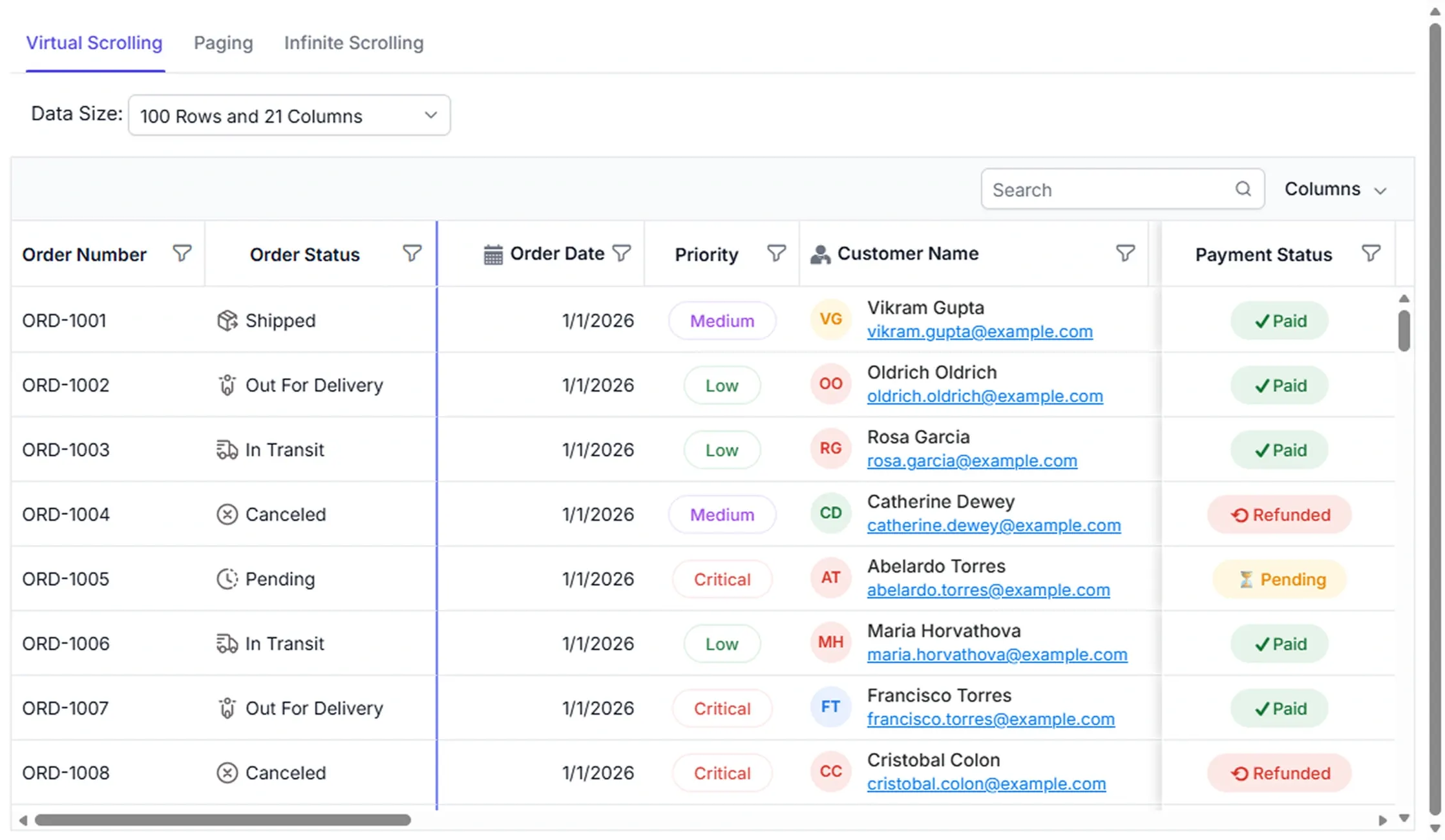
Virtualization renders only the rows and columns visible in the grid viewport, loading additional records dynamically as users scroll. Use it to display large datasets responsively while maintaining smooth performance and efficient resource usage.

Infinite scrolling for large datasets
Infinite scrolling fetches additional grid records on demand as users reach the bottom of the current view. Use it when applications require continuous navigation through very large datasets without interruptions, pagination, or manual actions.
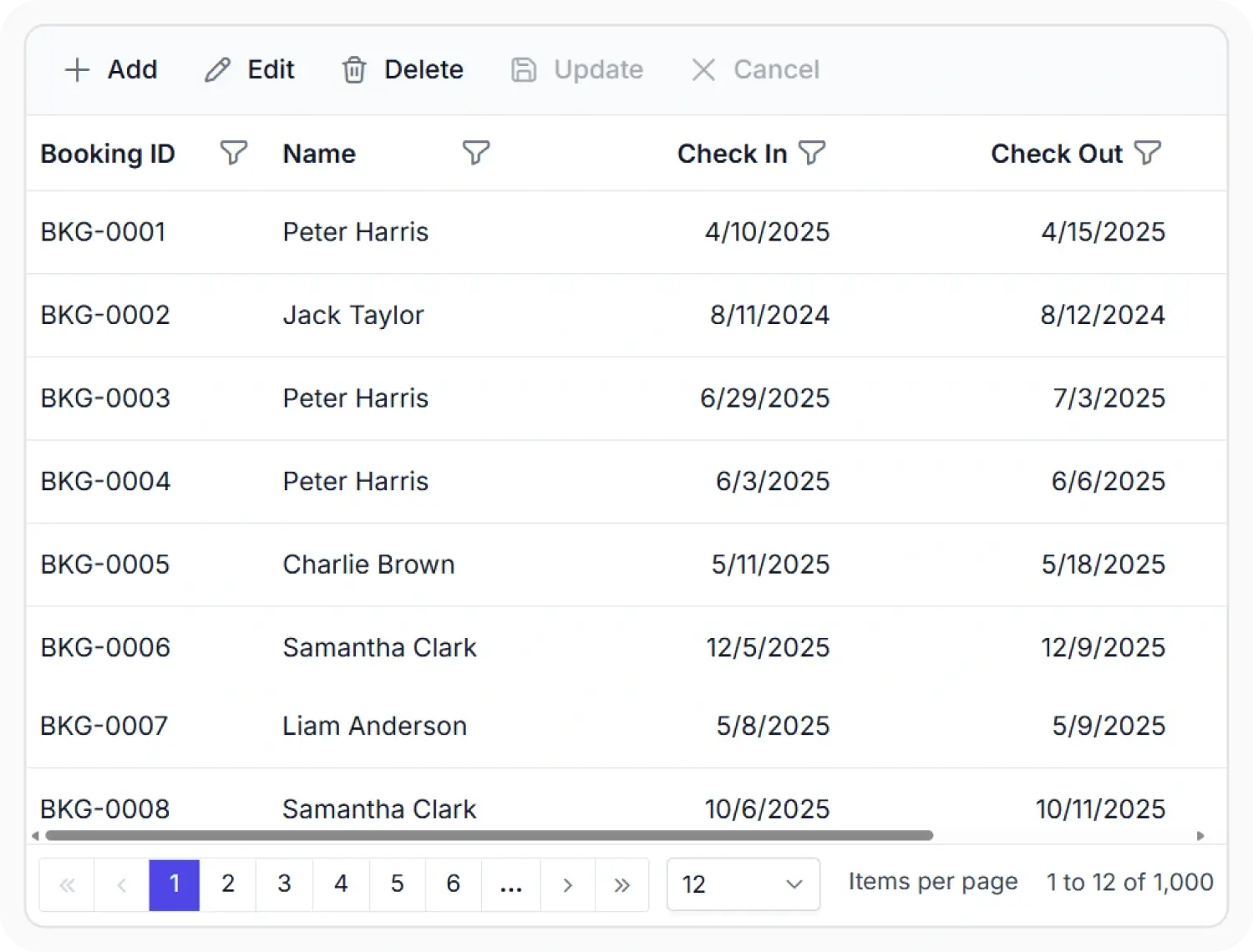
Navigate datasets using paging
Paging organizes grid records into multiple pages, displaying only the relevant records per page. Use it when applications need structured navigation, easier data browsing, and reduced rendering workload for large datasets.
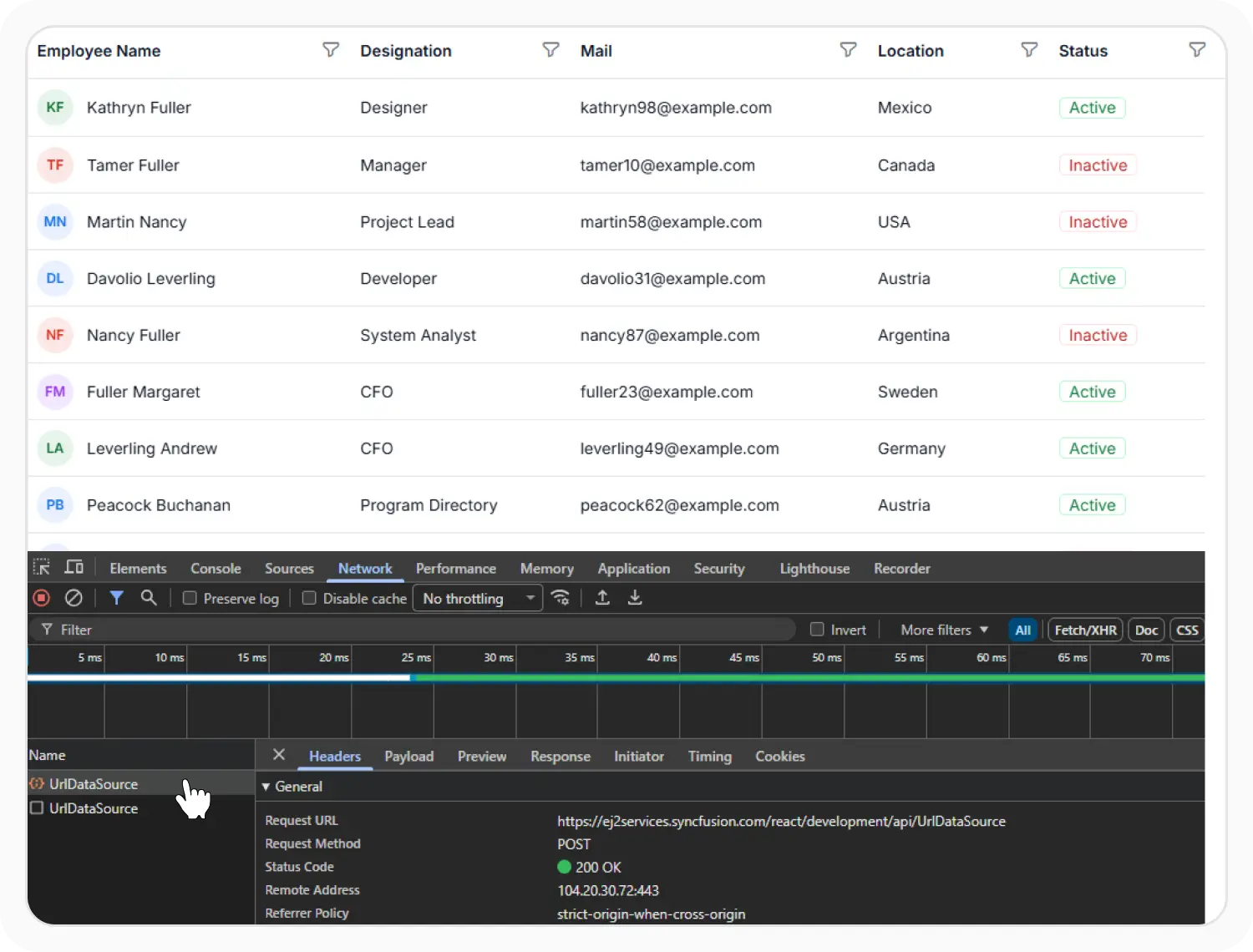
Perform server-side data operations
Server-side processing retrieves only the required records for display and performs filtering, sorting, searching, grouping, and CRUD operations on the server. Use this feature when applications require improved performance and server-managed processing for large datasets.
See Why Developers Love Syncfusion
Our Customers Love Us
Having an excellent set of tools and a great support team, Syncfusion reduces customers’ development time. Here are some of their experiences.




Frequently Asked Questions
How does virtualization improve React Data Grid performance?
Virtualization improves performance by limiting rendering to visible rows and columns. This reduces browser overhead and enables smooth scrolling and interaction with large datasets.
When should infinite scrolling be used in React Data Grid?
Use infinite scrolling when large datasets should be loaded progressively within a single view rather than through paged navigation. It loads additional records as users scroll through the grid.
Can React Data Grid combine virtualization with server-side processing?
Yes. React Data Grid supports virtualization alongside server-side processing. Virtualization limits rendered content to visible rows and columns, while server-side processing handles data retrieval and operations on the server.
Can React Data Grid efficiently handle millions of records?
Yes. React Data Grid supports virtualization, paging, infinite scrolling, and server-side data processing to efficiently manage and display millions of records while maintaining responsive performance.
Can React Data Grid use server-side processing with SQL databases?
Yes. React Data Grid supports server-side processing with SQL databases, enabling filtering, sorting, paging, grouping, and aggregation to be performed on the server for improved scalability and performance.
How does React Data Grid load data on demand for large datasets?
React Data Grid loads data on demand using server-side processing, infinite scrolling, and virtualization. These features retrieve only the required records and render only the visible content, helping applications work efficiently with large datasets.
Resources
Learn more about React Data Grid performance
Explore demos, knowledge base articles, and documentation for React Data Grid performance.
Explore guides, setup details, and quick-start tips
See live use cases in action
Ask, share, and connect with peers
Find solutions and best practices fast.
Get expert help when needed.
Feature requests and bug reports
Track issues and suggest improvements
See Real Success Stories
Developers around the world trust Syncfusion’s Essential Studio to simplify complex projects and speed up delivery. With a vast library of UI controls, powerful SDKs, and reliable support, Essential Studio helps teams build enterprise-ready applications with confidence.
Read Our Customer StoriesIndustry
Software development
75% Cost reduction
50% Faster development

Industry
Utilities (oil and gas)

450+ hours saved
Streamlined processes and hours of development effort saved.

Advanced, flexible features
Empowered users through robust and versatile functionality.
Industry
Software and technology
1000+ of hours saved
Accelerated development with enterprise-ready UI components.

Efficient file management
Streamlined workflows with document libraries without building them from scratch.
Industry
Software and technology

2 Years of delay avoided
Two years of delays prevented with proactive planning.

On-time delivery
Projects delivered on schedule using trusted controls.
Industry
IT services and IT consulting

Improved performance
Large datasets handled with easy customization and quick debugging.

Highly customizable
Plug-and-play controls with quick template integration.
Industry
Professional services
Instant access
Quick availability of features and resources.
Reduced dependencies
Fewer dependencies for faster development.
Awards
Greatness—it’s one thing to say you have it, but it means more when others recognize it. Syncfusion® is proud to hold the following industry awards.