Overview
Axes in a Cartesian Chart play a vital role in identifying the value of the visualized data. Cartesian charts typically have two axes that are used to measure and categorize data: Vertical axis (y-axis) and horizontal axis (x-axis).
The vertical axis always uses a numerical scale. The horizontal axis supports the following scale types:
- Category
- Numeric
- Date-time
- Logarithmic
- Date-time category
Types
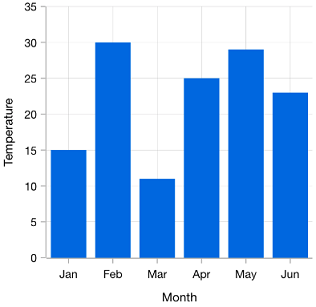
Categorical
The categorical axis is a nonlinear axis that displays text in axis labels.

Numerical
The numerical axis is a linear axis that displays numbers with an equal interval in the axis labels.
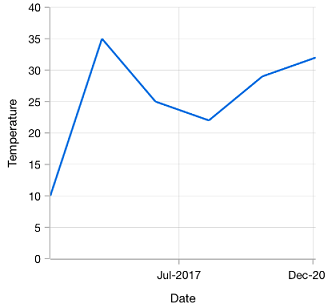
Date-time
The date-time axis displays date-time values with an equal interval in the axis labels. It is typically used as an x-axis.
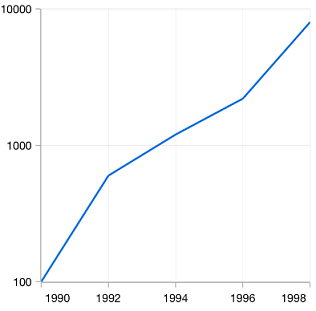
Logarithmic
The logarithmic axis displays logarithmic scale values and displays numbers in labels.
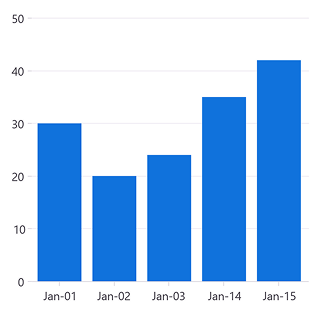
Date-time category
The date-time category axis displays date-time values with non-linear intervals. It is typically used as an x-axis.
Customizations
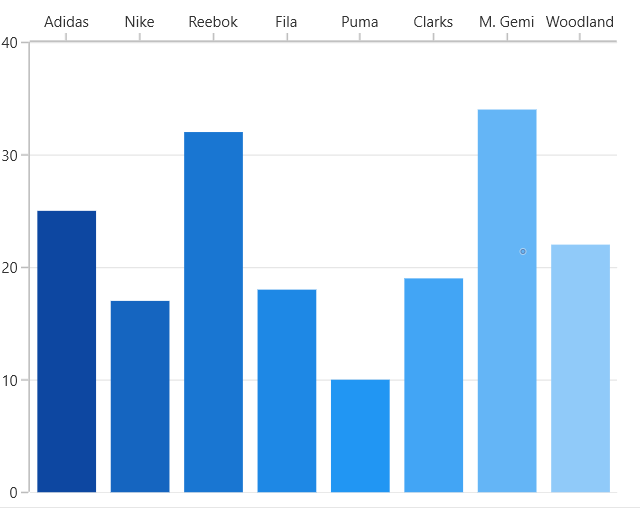
Opposite axis
Charts supports an axis being rendered in a side opposite to the default position.
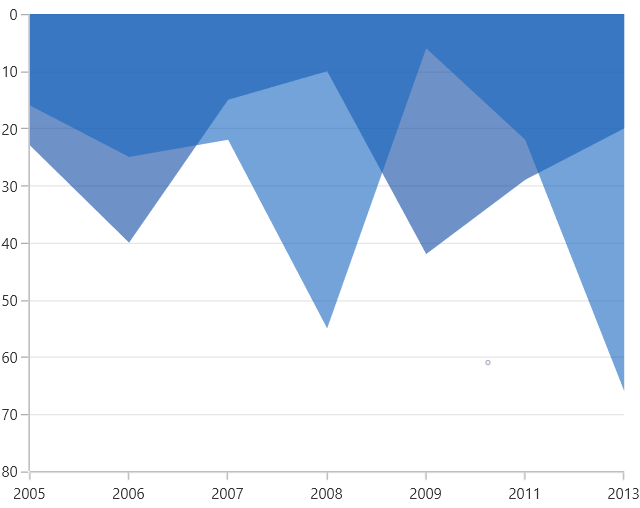
Inversed axis
There is support for inverting values in an axis.

Axis labels
Charts provide many customization options for axis labels, including positioning, placement, label format, and rotation. It also has options to avoid labels overlapping.

Axis crossing
The position of the axis can be moved anywhere in the chart relative to its associated axis.
Our Customers Love Us




See Real Success Stories
Developers around the world trust Syncfusion’s Essential Studio to simplify complex projects and speed up delivery. With a vast library of UI controls, powerful SDKs, and reliable support, Essential Studio helps teams build enterprise-ready applications with confidence.
Read Our Customer StoriesIndustry
Software development
75% Cost reduction
50% Faster development

Industry
Utilities (oil and gas)

450+ hours saved
Streamlined processes and hours of development effort saved.

Advanced, flexible features
Empowered users through robust and versatile functionality.
Industry
Software and technology
1000+ of hours saved
Accelerated development with enterprise-ready UI components.

Efficient file management
Streamlined workflows with document libraries without building them from scratch.
Industry
Software and technology

2 Years of delay avoided
Two years of delays prevented with proactive planning.

On-time delivery
Projects delivered on schedule using trusted controls.
Industry
IT services and IT consulting

Improved performance
Large datasets handled with easy customization and quick debugging.

Highly customizable
Plug-and-play controls with quick template integration.
Industry
Professional services
Instant access
Quick availability of features and resources.
Reduced dependencies
Fewer dependencies for faster development.
 95+ UI controls
200+ interactive .NET MAUI demos
3.5M+ downloads
95+ UI controls
200+ interactive .NET MAUI demos
3.5M+ downloads