Why do you need our .NET Document Chunking Library?
Prepare Word, PDF, Excel, PowerPoint, and Markdown documents for enterprise AI workflows with intelligent document chunking. Preserve document hierarchy, context, citations, and metadata while generating meaningful chunks optimized for vector databases, semantic search, knowledge bases, and retrieval-augmented generation (RAG) applications, enabling more accurate retrieval, grounding, and AI-generated responses.
Enterprise-ready Document Chunking library
Transform enterprise documents into chunks
Extract and normalize content from business documents before chunking. Convert supported formats into a consistent representation while preserving structure, hierarchy, and source information required for downstream AI workflows.
- Process Word, PDF, Excel, PowerPoint, and Markdown documents
- Preserve enterprise document’s structure, hierarchy, and source references
- Handle document-specific extraction through a unified processing pipeline
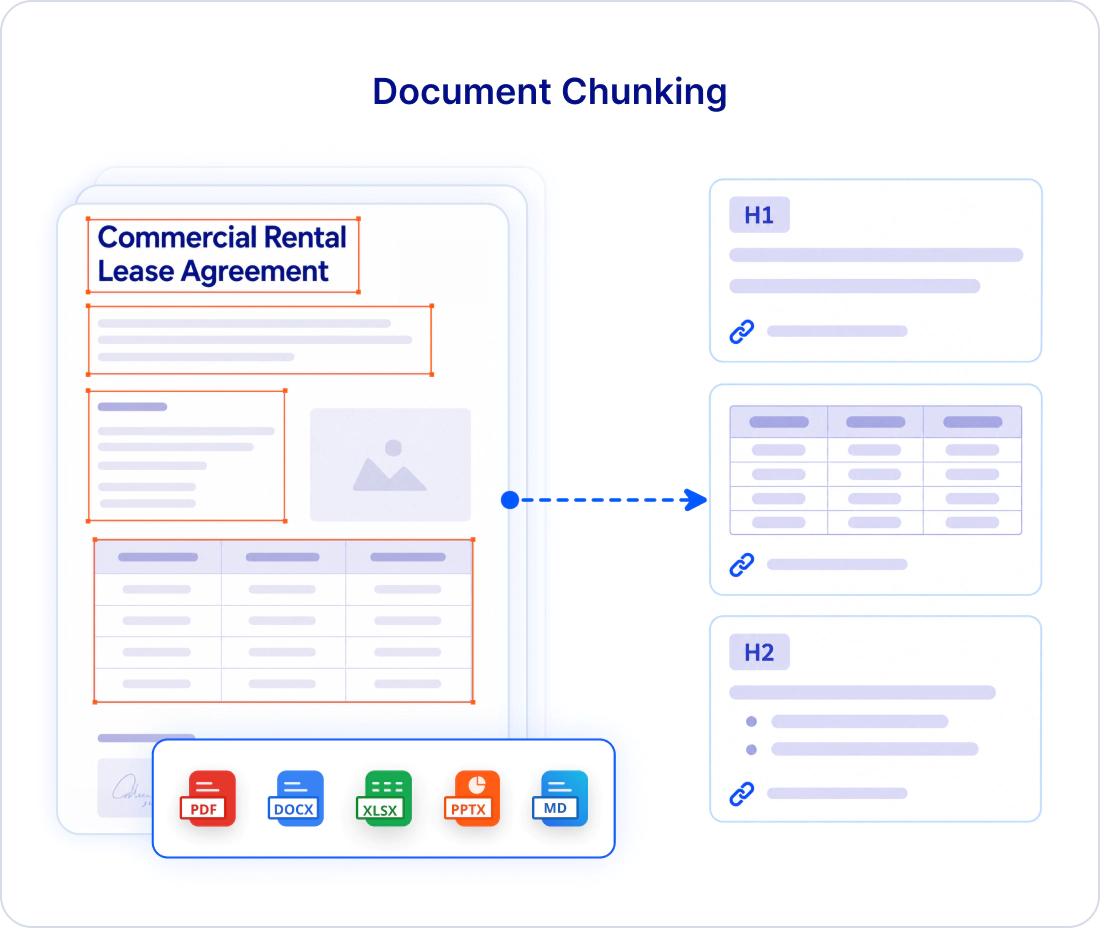
Process and chunk content across multiple document formats
Process common enterprise formats through a unified chunking workflow. Extract or normalize Word documents, PDFs, spreadsheets, presentations, Markdown content, and other business documents.
- Extract pages, headings, paragraphs, and tables from PDF and Word documents
- Process worksheets, tables, ranges, and spreadsheet content from Excel workbooks
- Preserve slides, titles, sections, and speaker notes from PowerPoint presentations
- Preserve heading structure and content relationships from Markdown documents
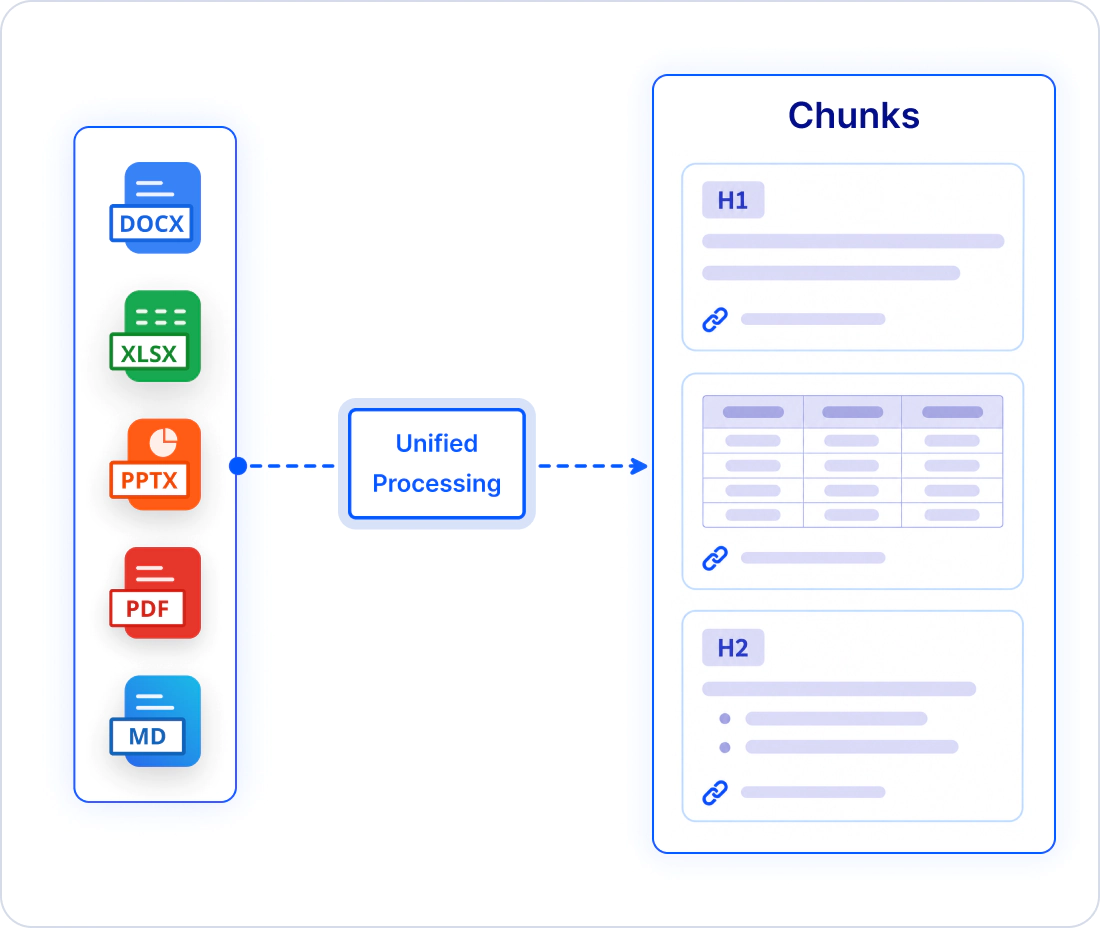
Preserve document context for AI retrieval
Generate chunks that preserve meaning and document context instead of splitting text solely by character count.
- Split content using headings, sections, paragraphs, and other semantic boundaries
- Keep related content together by preserving heading hierarchies, lists, and contextual relationships
- Handle oversized sections through recursive chunking while minimizing unnecessary sentence fragmentation
- Apply configurable overlaps and structural metadata to maintain retrieval continuity across chunks
- Generate deterministic chunk identifiers and source context for indexing, traceability, and updates
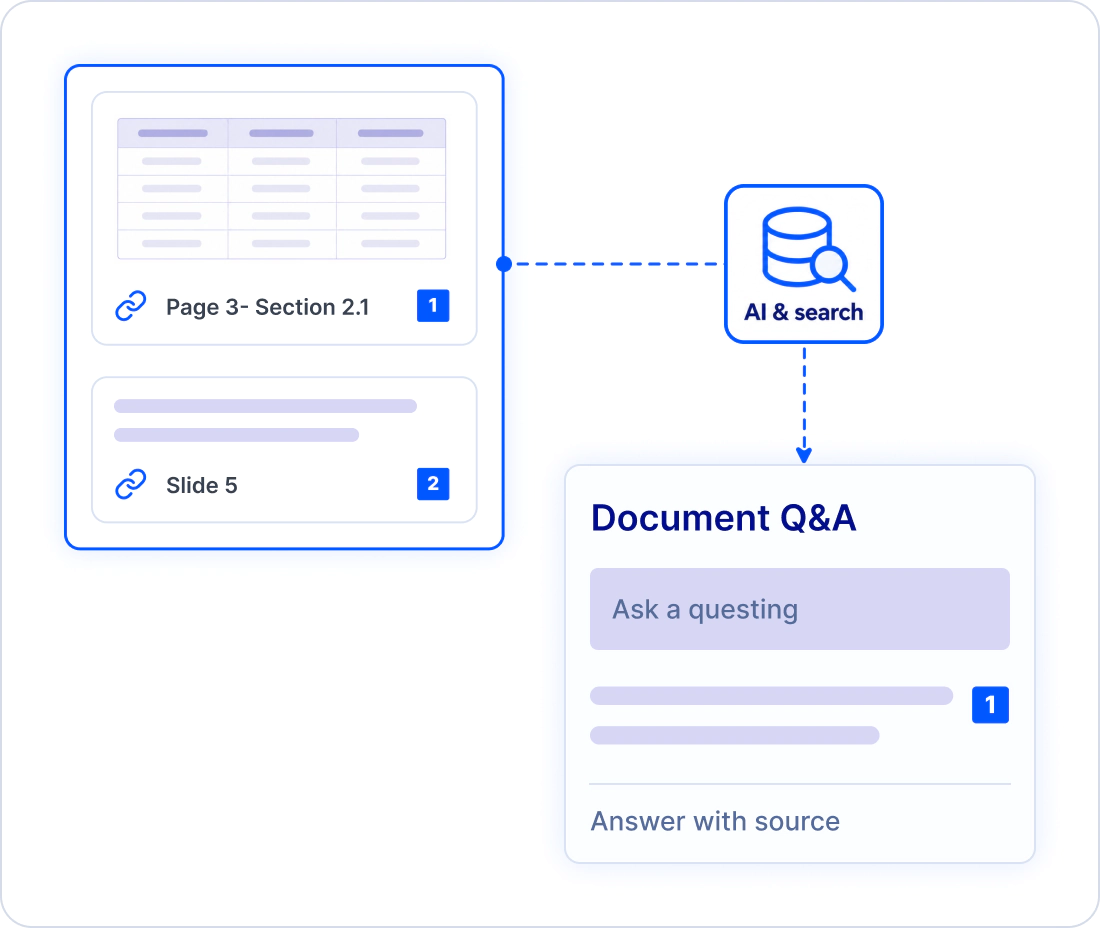
Preserve citations and source references for grounded AI responses
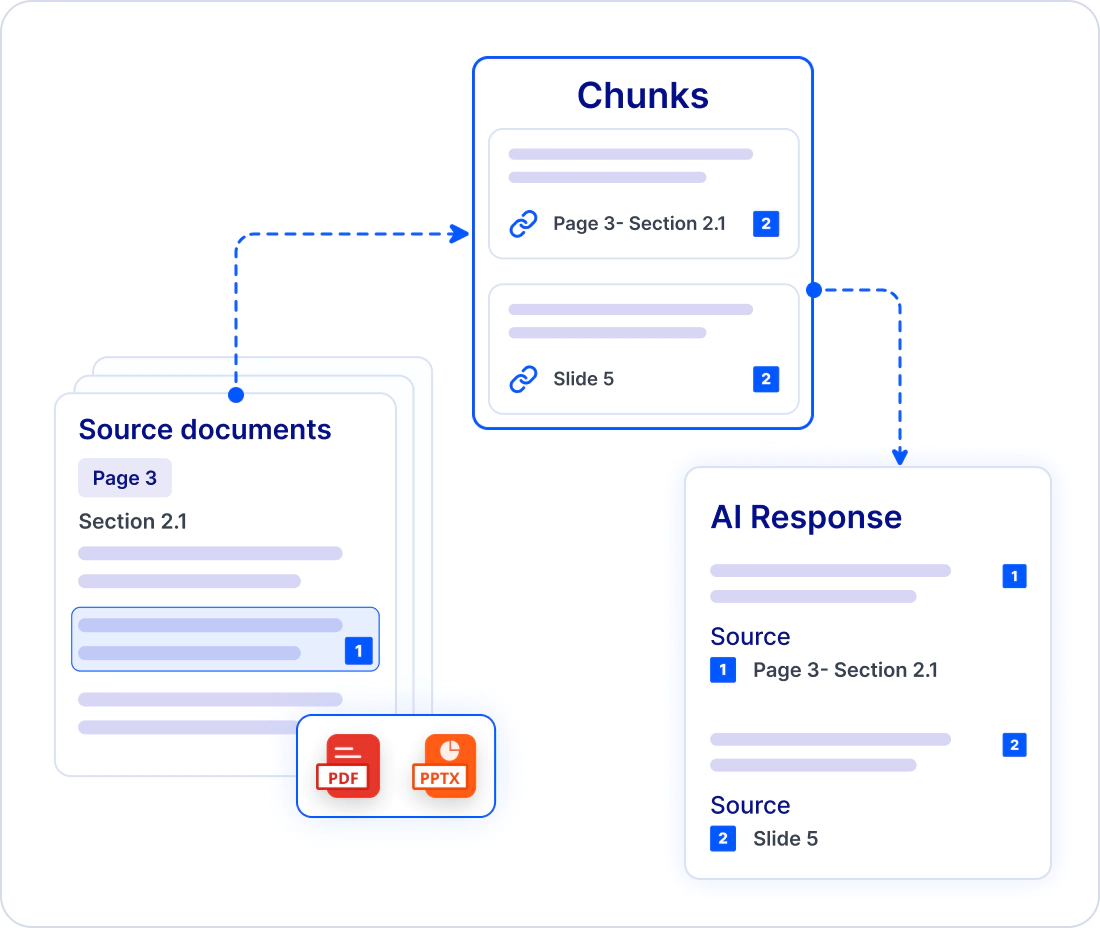
Retain connections between generated chunks and their original source locations. Enable grounded retrieval experiences by preserving the context required to identify where content originated.
- Associate chunks with pages, sections, slides, and worksheets
- Preserve document hierarchy and source location information
- Enable citation generation for retrieval and RAG workflows
- Track chunk origins across indexing and updates
- Improve transparency in AI-generated responses
ChunkingService chunkingService = new ChunkingService();

IChunkingResult result = chunkingService.Chunk("SalesData.xlsx", new ChunkingOptions
{
    MaxTokens = 500,
    IncludeMetadata = true,
    IncludeCitation = true,
    SourceOptions =
    new ExcelChunkingOptions
    {
        ChunkingMode = ExcelChunkingMode.Auto
    }
});
Works with enterprise AI platforms
Generate structured, metadata-rich chunks that can be consumed by modern AI retrieval, indexing, and search solutions. Produce retrieval-ready content that fits naturally into enterprise knowledge, semantic search, and RAG workflows.
- Generate embedding-ready chunks for vector databases, custom embedding pipelines, and retrieval architectures
- Prepare content for semantic search, document question-answering, enterprise knowledge assistants, and AI agent applications
- Produce metadata-rich output that can be indexed by Azure AI Search, Azure OpenAI workflows, Microsoft Semantic Kernel solutions, and hybrid keyword-vector retrieval systems
Intelligent documents chunking across formats
Prepare enterprise documents for AI retrieval workflows using format-aware extraction and chunking. Preserve document structures, hierarchy, and contextual relationships while generating meaningful, retrieval-ready chunks from Word, PDF, Excel, PowerPoint, and Markdown files.
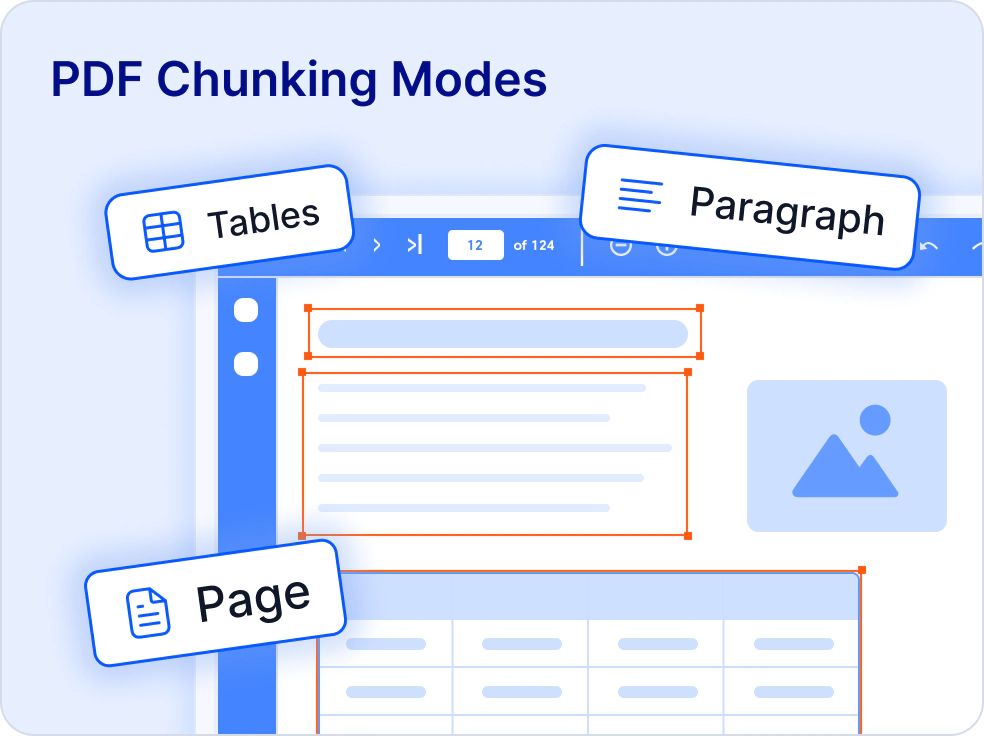
Page-aware PDF chunking
Analyze PDF documents and extract pages, paragraphs, and tables into organized chunks. Preserve document structure and contextual connections to improve the downstream processing, retrieval, and analysis.
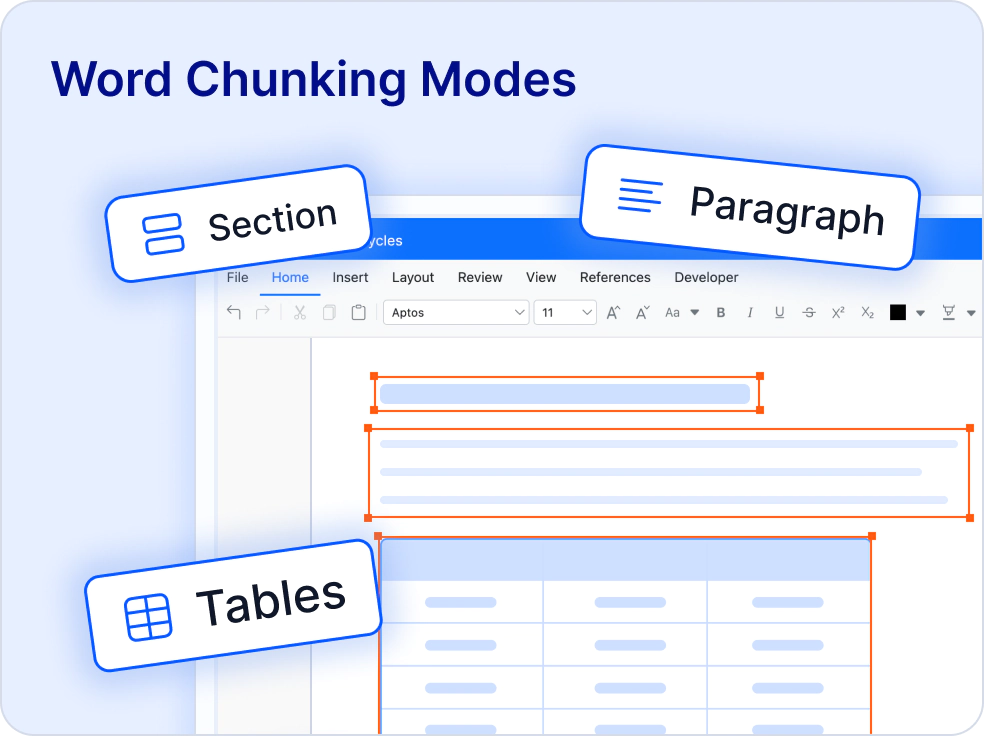
Structure-aware Word chunking
Extract and normalize content from Word documents while preserving headings, paragraphs, lists, tables, and document hierarchy. Generate structured chunks that maintain contextual relationships and section-level organization.
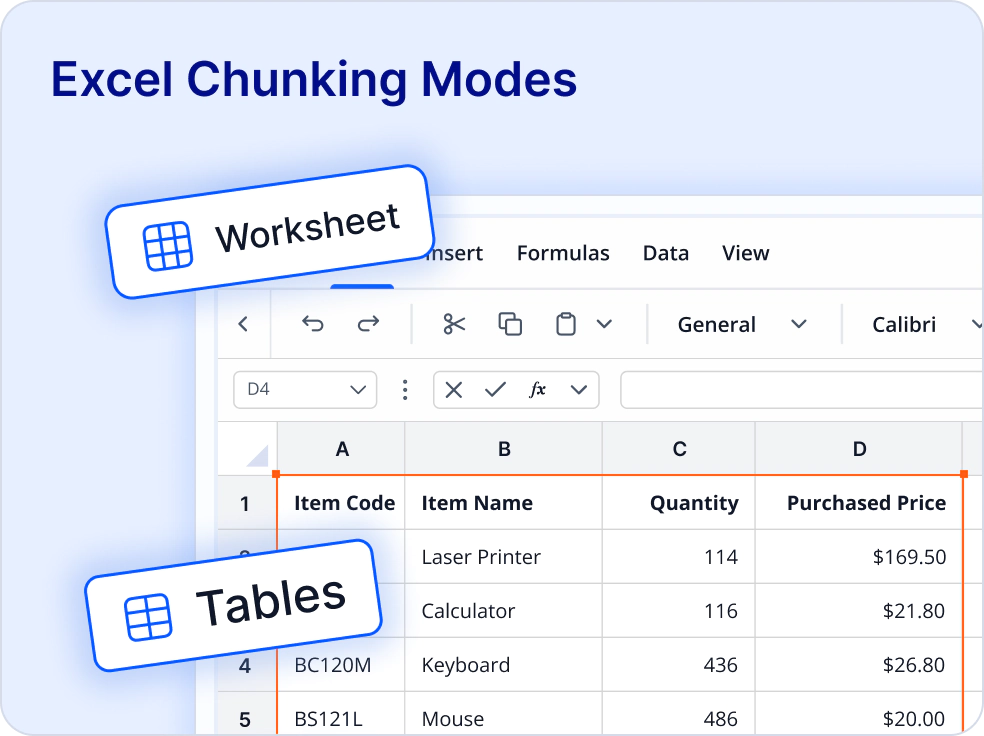
Context-aware Excel chunking
Process spreadsheet content while preserving worksheets, tables, ranges, formulas, and structural context. Generate chunks that retain worksheet information and business data relationships needed for retrieval workflows.
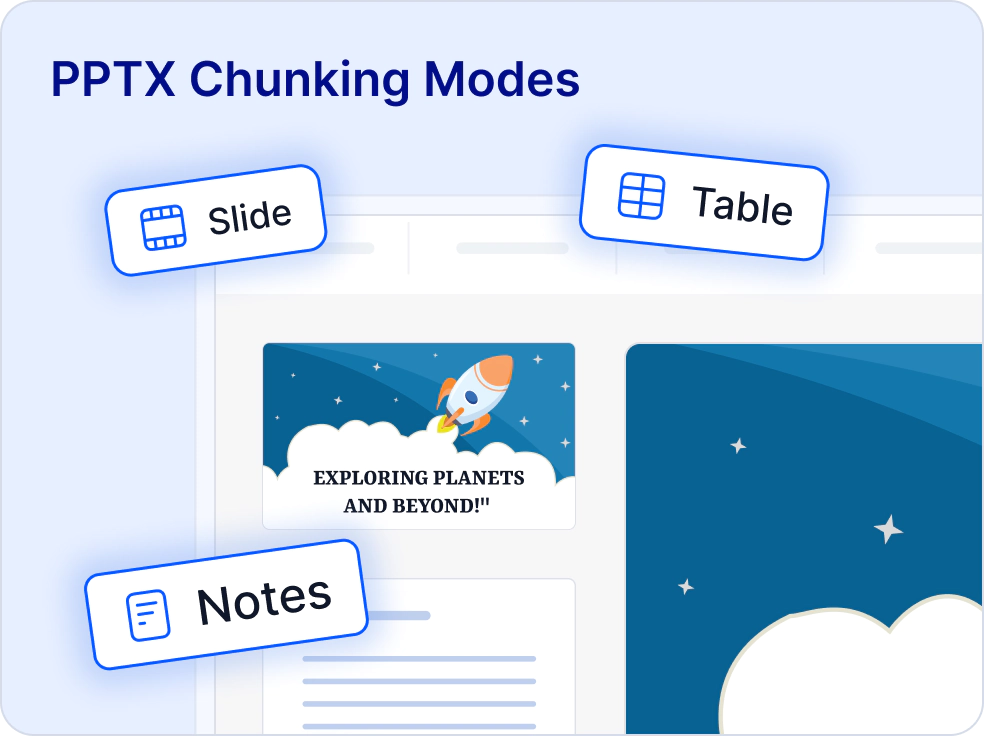
Presentation-aware content chunking
Extract presentation content while preserving slides, titles, sections, speaker notes, and source references. Maintain slide-level context to support retrieval, knowledge discovery, and AI-powered search experiences.
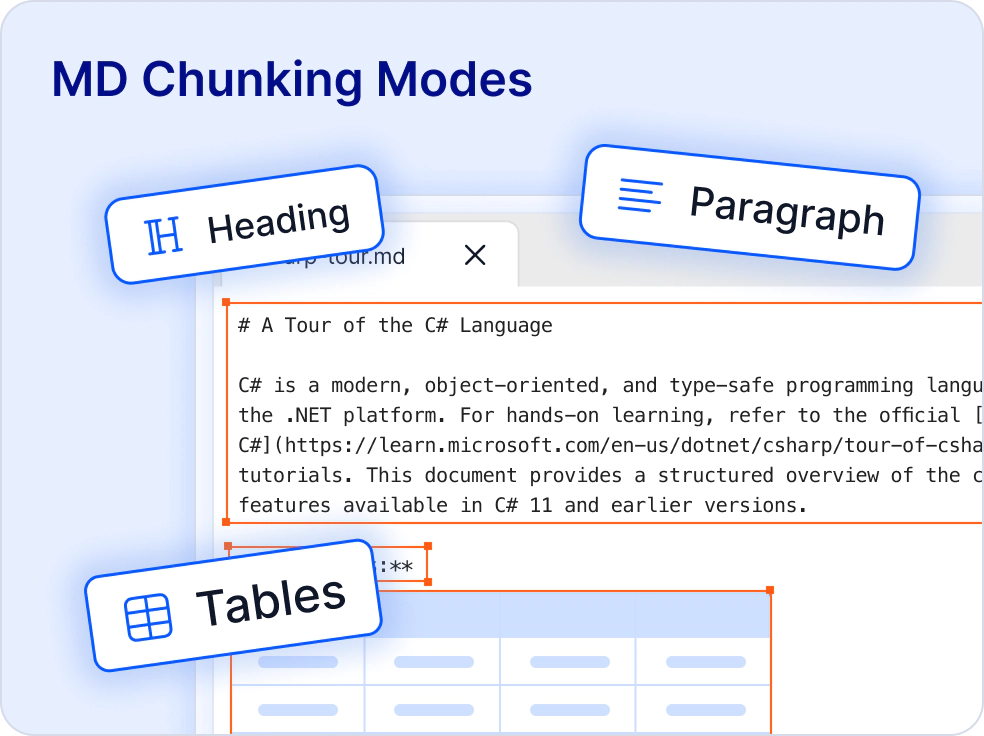
Structured markdown file processing
Process Markdown content while preserving heading hierarchy, lists, tables, code blocks, and document structure. Generate meaningful chunks that retain contextual relationships across technical and knowledge-focused content.
Build traceable and citation-ready chunks
Maintain source traceability, retrieval context, and citation-ready metadata throughout the chunking process. Generate chunks that remain connected to their original documents enabling accurate retrieval, grounded responses, and transparent AI experiences.
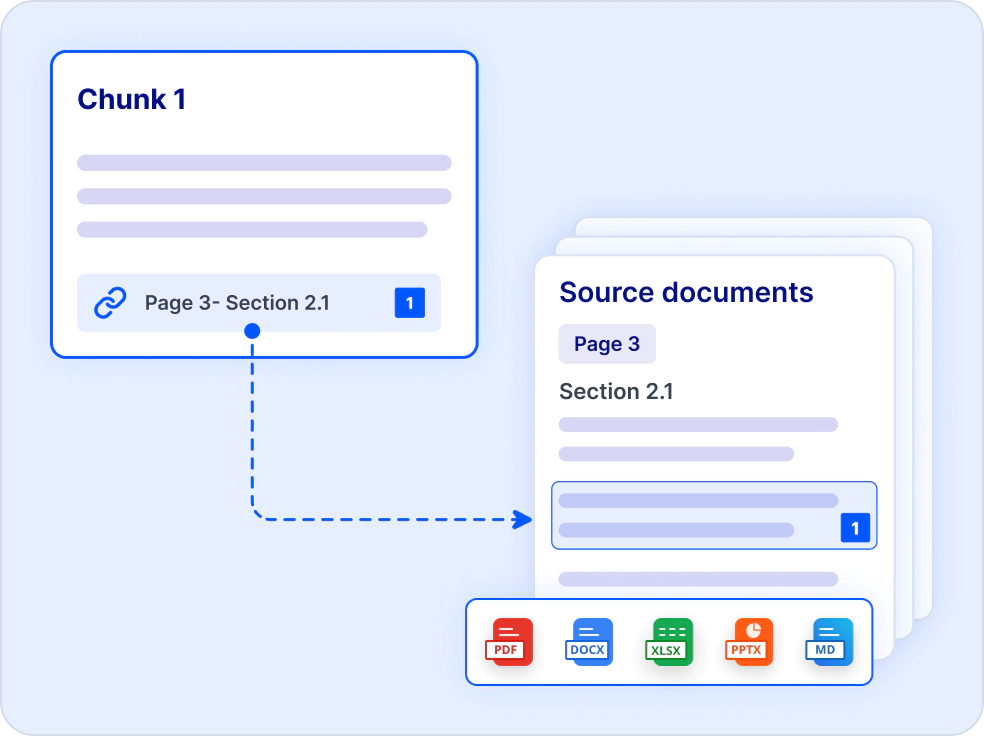
Citation-ready references
Preserve source information required for grounded retrieval and explainable AI experiences. Help users identify where retrieved content originated and provide reliable document citations.
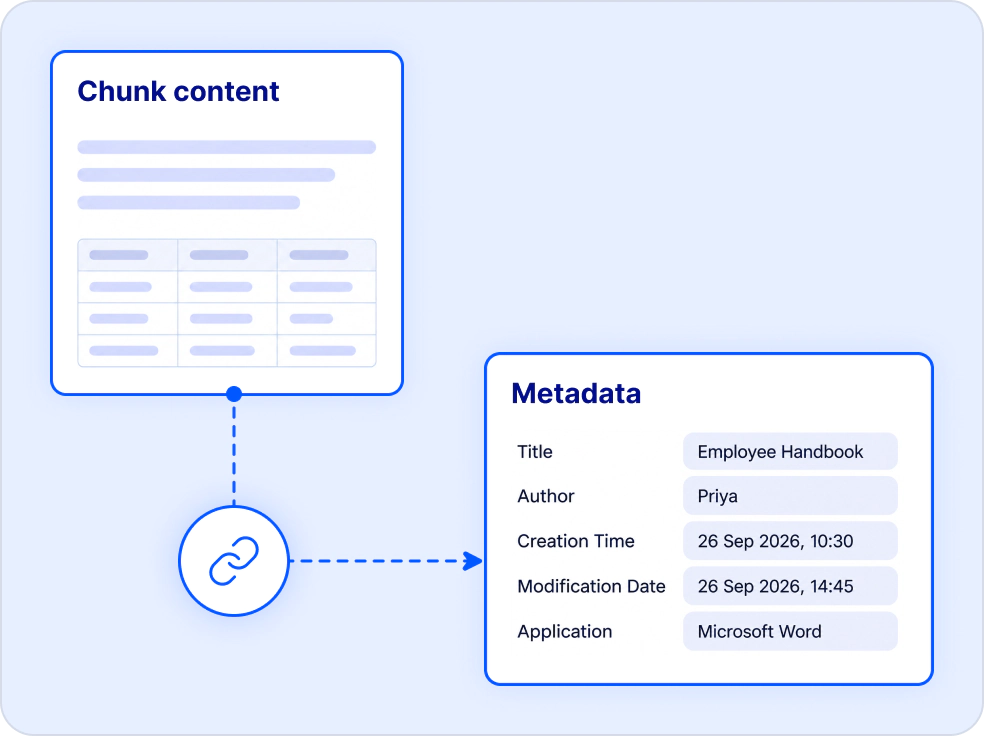
Metadata enrichment
Enrich chunks with built-in and custom document metadata, such as the title, author, creation time, modification date, and application-specific attributes, to support advanced search, and filtering.
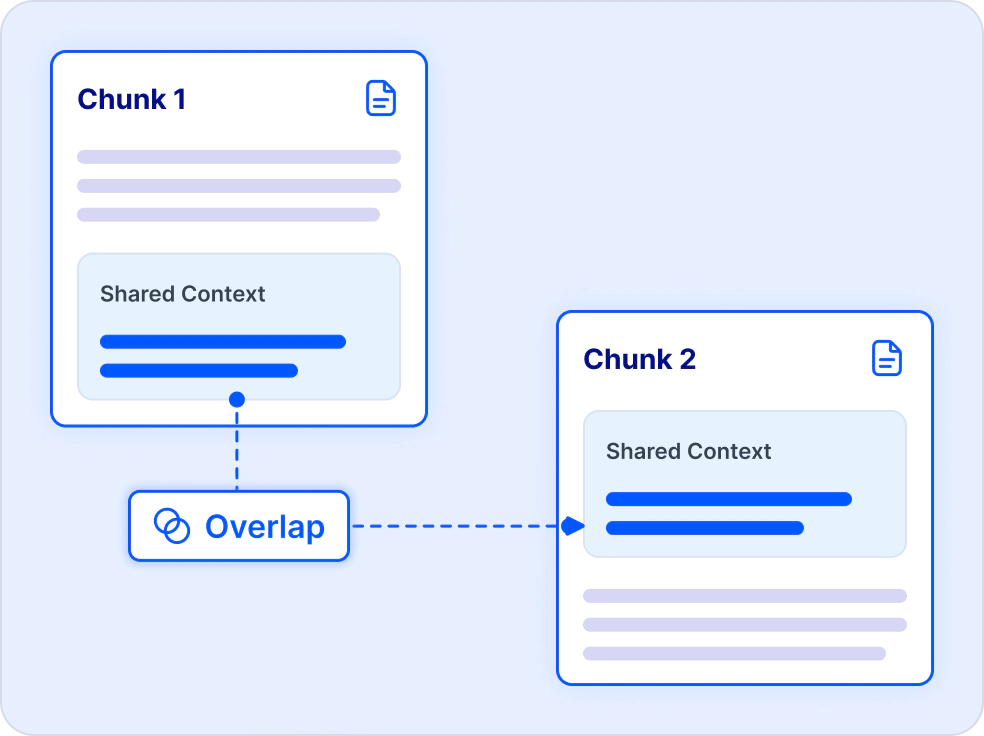
Configurable Chunk Overlaps
Add controlled overlaps between adjacent chunks based on a configurable token count to improve retrieval continuity and preserve context across chunk boundaries.
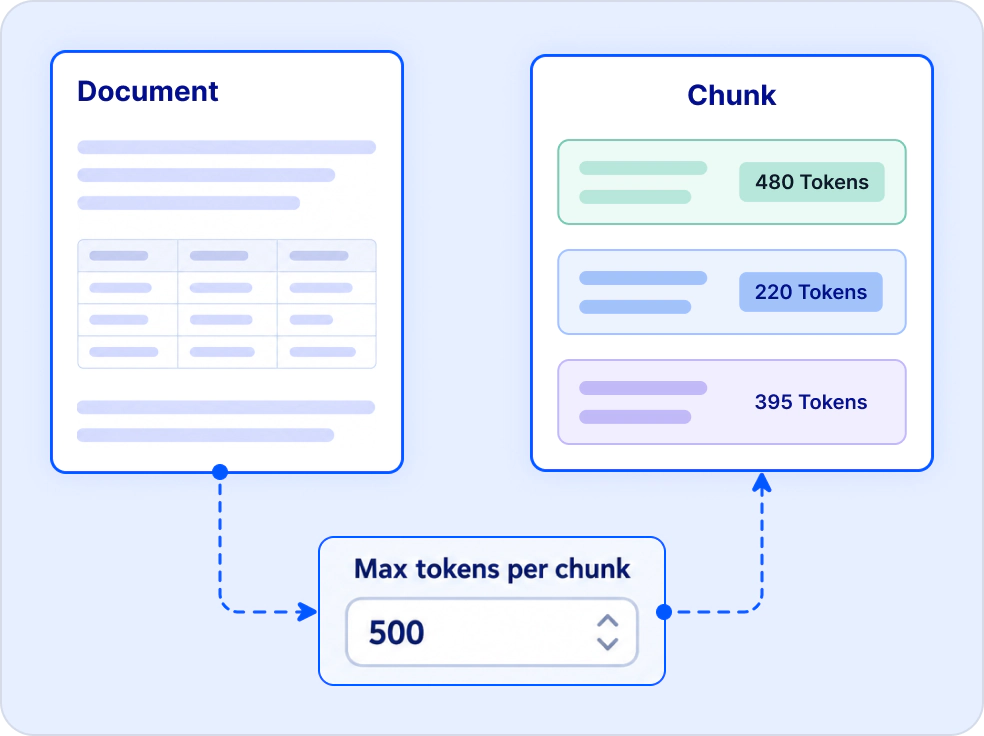
Set Token Limit
Configure the maximum token count for each chunk to maintain consistent chunk sizes and improve retrieval accuracy, processing efficiency, and compatibility with AI models.
Easy integration and chunk processing workflows
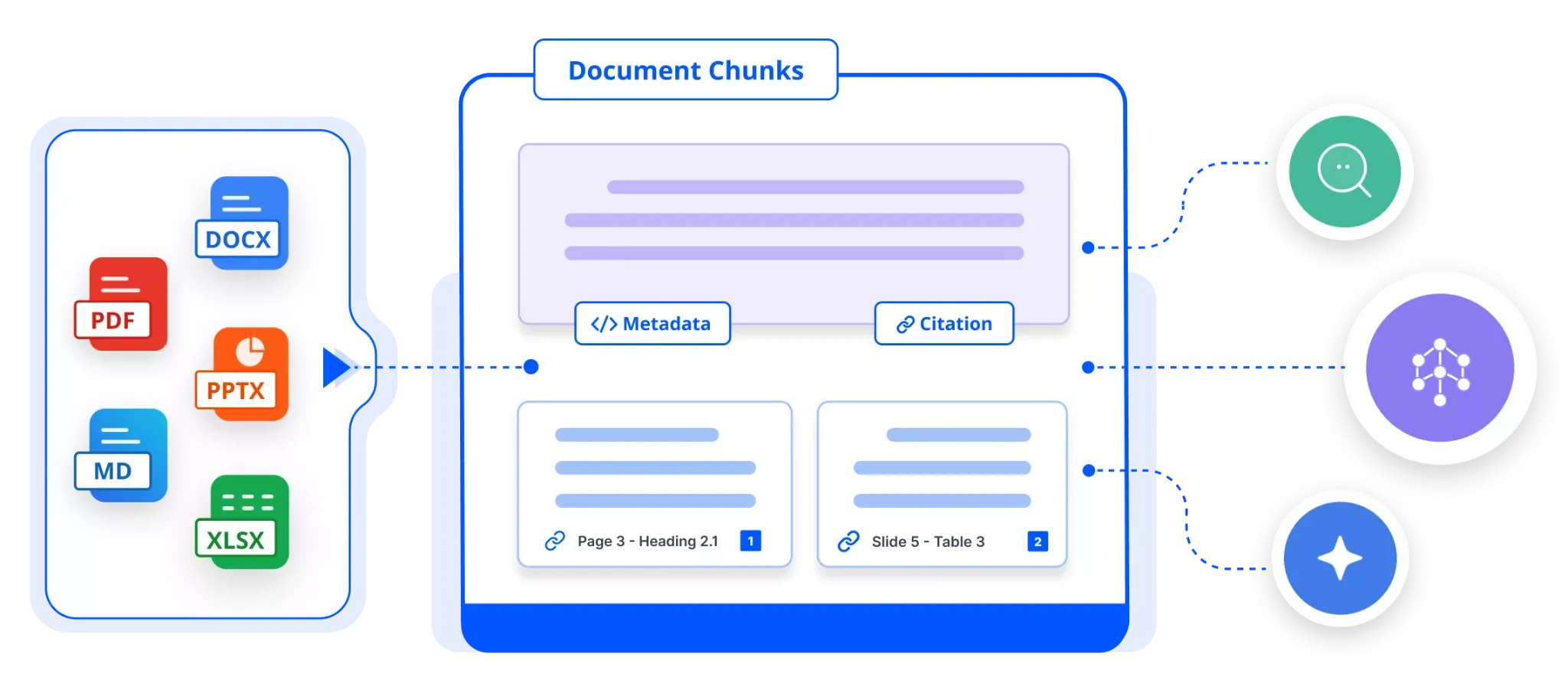
Understand how enterprise documents are transformed into retrieval-ready chunks for AI, search, and knowledge applications. From document ingestion and content extraction to chunk generation and indexing, the library provides a streamlined workflow for preparing enterprise content for retrieval systems.
- Load documents as files, or streams, then detect the document type and select the appropriate processing pipeline.
- Extract content, source-location information, and document structure from Word, PDF, Excel, PowerPoint, and Markdown documents.
- Apply format-specific preprocessing and split content using headings, sections, paragraphs, tables, and other structural boundaries.
- Recursively process oversized content, enforce token limits, and apply overlap rules to generate meaningful chunks optimized for retrieval.
- Attach source references and metadata, generate embedding-ready chunk records, and publish them to vector databases, search indexes, or other retrieval platforms.
Industry-specific use cases
Transform enterprise documents into structured, retrieval-ready content for search, knowledge management, AI assistants, and RAG applications.
No credit card required.
Enterprise knowledge management
Build searchable knowledge repositories from business documents, manuals, policies, SOPs, technical documentation, and internal knowledge bases.
Financial services
Prepare reports, disclosures, statements, audit documents, compliance records, and research content for semantic search and AI-powered knowledge retrieval.
Healthcare & life sciences
Prepare clinical guidelines, research documents, medical references, and operational procedures for knowledge discovery and AI-assisted information retrieval.
Legal and compliance
Process contracts, policies, regulations, case documents, governance records, and compliance manuals into citation-ready chunks.
Trusted by the world’s leading companies
Endless possibilities with .NET Document Chunking library
Transform business documents into embedding-ready chunks for semantic search, RAG, and AI assistants while preserving context, metadata, and citations.
No credit card required.
.NET Document Chunking library FAQs
What is the .NET Document Chunking Library?
The Syncfusion .NET Document Chunking Library is designed to extract, normalize, and split enterprise documents into meaningful chunks for retrieval-augmented generation, semantic search, vector indexing, and AI assistant applications.
Which document formats can it process?
The architecture can support Word, PDF, Excel, PowerPoint, Markdown, scanned documents, reports, forms, and other enterprise formats through applicable Syncfusion Document Processing capabilities and extensible extractors.
Does it support token-based chunking?
Yes. The design supports configurable token limits and pluggable token counters, enabling chunk sizes to be aligned with the requirements of different embedding models.
How does the library support citations?
Each chunk can retain its document name, source URI, page, section, slide, worksheet, table, range, and other location metadata. RAG applications can use this information to present grounded citations and source links.
Is it a basic text-splitting library?
No. It is designed to understand document structure and preserve meaningful boundaries such as headings, paragraphs, tables, worksheets, slides, and pages. It also retains source metadata for citations and auditability.
Does the library preserve document formatting?
The library focuses on preserving semantic structure rather than visual formatting. Headings, paragraphs, lists, tables, links, worksheet ranges, and other meaningful elements can be represented as structured blocks.
Can generated chunks be stored in vector databases?
Yes. The output is intended for vector databases, semantic search engines, Azure AI Search, embedding services, RAG frameworks, and custom retrieval systems.
Does the library require Microsoft Office?
The processing workflow is intended to use programmatic Syncfusion Document Processing APIs and does not depend on Microsoft Office Interop for supported operations.
Resources
Learn more about our Document Chunking Library
Explore demos, KB articles, and documentation to get the most out of our Document Chunking Library.
Explore guides, APIs, and quick-start tips.
See use cases.
Ask, share, and connect with peers.
Find solutions and best practices fast.
Get expert help when you need it.
Feature requests and bug reports
Track issues and suggest improvements.