
 Jeyasri Murugan
TL;DR: Agentic AI in software development introduces autonomous agents that can set goals, plan steps, execute tasks, and adapt with less constant prompting. This shifts developers from pure coding to designing intelligence: orchestration, workflow redesign, evaluation, and enterprise governance (security, auditability, cost controls). Organizations are experimenting widely, but scaling remains limited, so teams that redesign workflows and build responsible guardrails will get the biggest impact.
Shipping software has always been more than writing code. But now the gap is widening: teams must engineer systems that can take initiative, not just generate snippets.
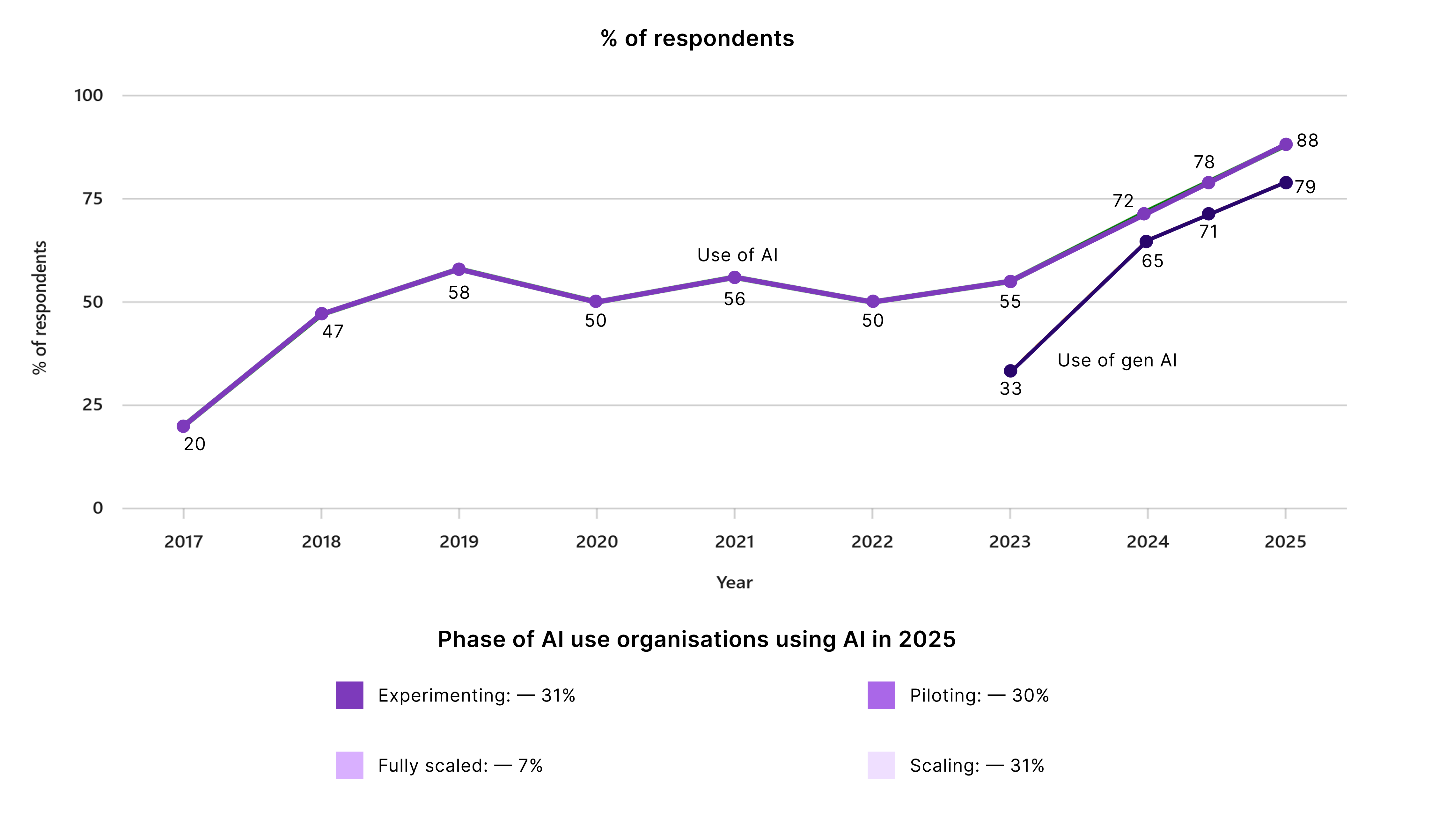
AI has moved from “experimental” to operational. McKinsey reports that 88% of organizations use AI in at least one business function (2025) (McKinsey & Company).
The next step is not simply smarter assistants. It’s Agentic AI that can plan, act, and adapt toward a goal. That changes your job from pure execution to orchestration, designing how autonomous systems behave, collaborate, and stay safe.
What is Agentic AI (and why developers should care)
Agentic AI refers to AI systems that behave like autonomous agents. They can:
- Plan steps toward a goal.
- Reason about tradeoffs and constraints.
- Execute tasks using tools without frequent human input (repos, CI, tickets, APIs).
- Adapt when conditions change (errors, failing tests, new requirements).
Traditional AI usage often looks like:
- Prompt → Output
Agentic AI flips workflow into a loop:
- Agent → Goal → Plan → Execute → Adapt
What agentic looks like in real dev work
You’ve probably seen early versions of this already:
- Coding assistants that attempt fixes and re-run tests.
- Testing bots that plan entire test suites based on code changes.
- Release agents that manage CI/CD pipelines and roll back deployments automatically.
These aren’t just chat tools. They operate against objectives, not only prompts.
Why it matters for developers
Agentic AI in software development is a paradigm shift:
- You design systems of behavior, not just functions and classes.
- You care more about reliability, observability, and guardrails.
- You must consider ethics, security, and accountability, as agents can take actions.
Industry insights: McKinsey’s 2025 AI Agents survey
McKinsey’s reported adoption shows momentum, but also a scaling gap:
Adoption trends (McKinsey & Company)
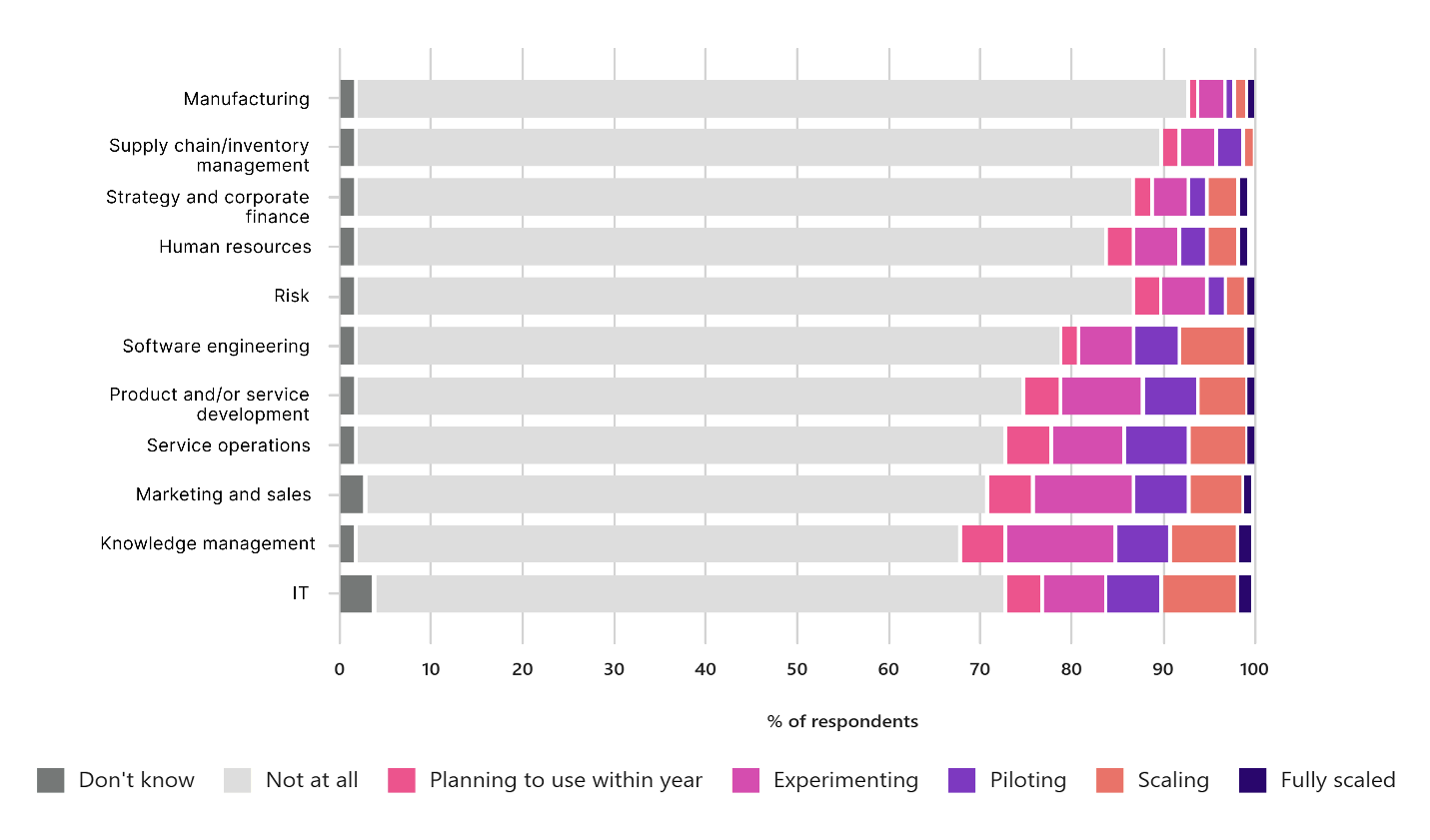
- 23% of organizations are actively scaling Agentic AI in at least one business function.
- 39% are experimenting with Agentic AI.
- Only up to 10% per function have scaled agents.
In other words, many teams are trying agents, but deep adoption is still rare, often limited to one or two functions.
Where agents are thriving
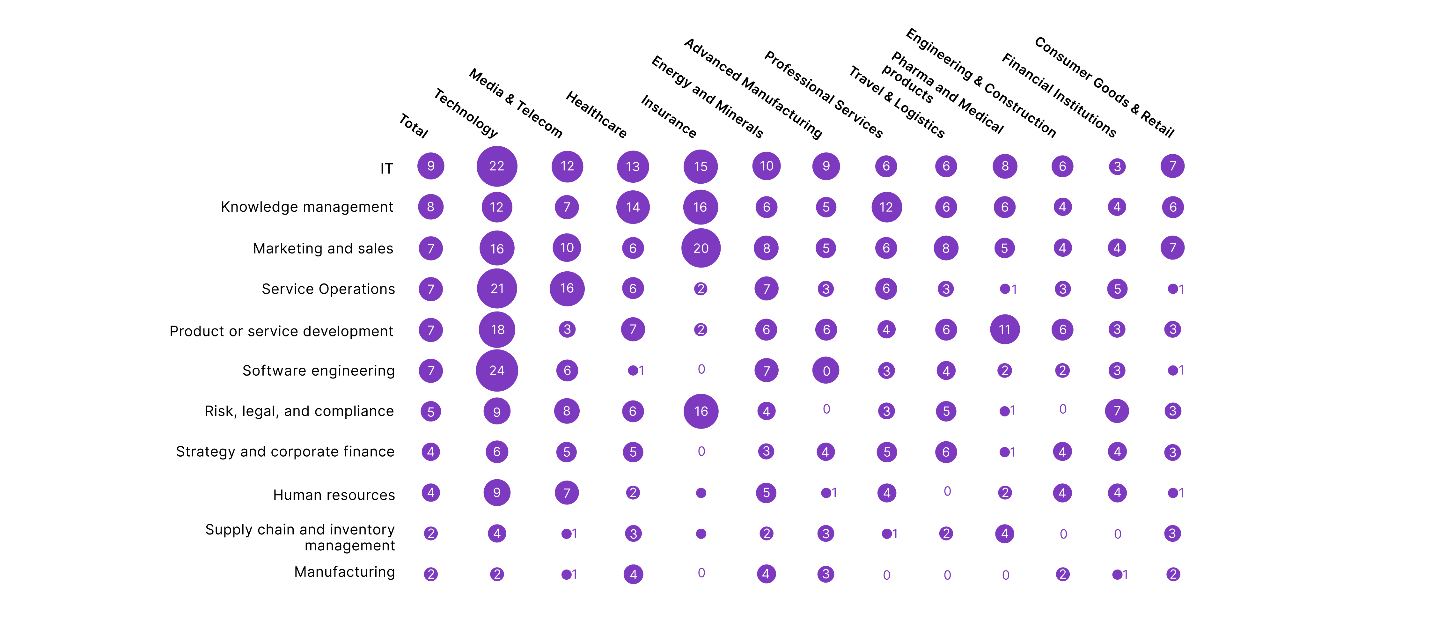
Agentic AI adoption is strongest in areas that map directly to developer workflows:
| Industry | Top functions scaling AI Agents |
| Technology | IT (22%), Software Engineering (24%), Service Ops (21%) |
| Media and Telecom | IT (12%), Marketing and Sales (10%) |
| Healthcare | Service Ops (6%), Knowledge Management (14%) |
| Advertising and Marketing | Marketing and Sales (5%) |
Business impact signals
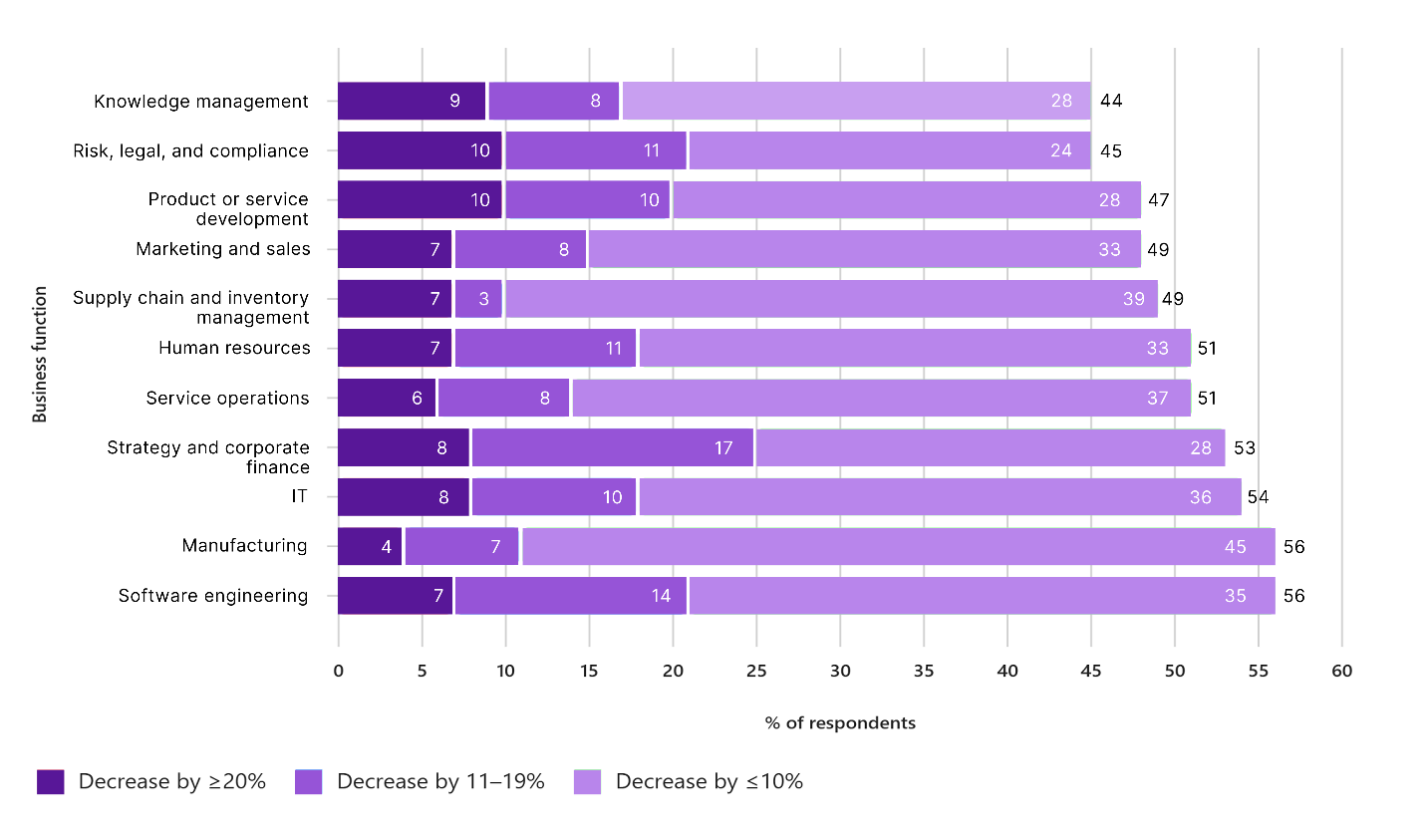
- Software engineering is among the top three functions reporting cost benefits from AI.
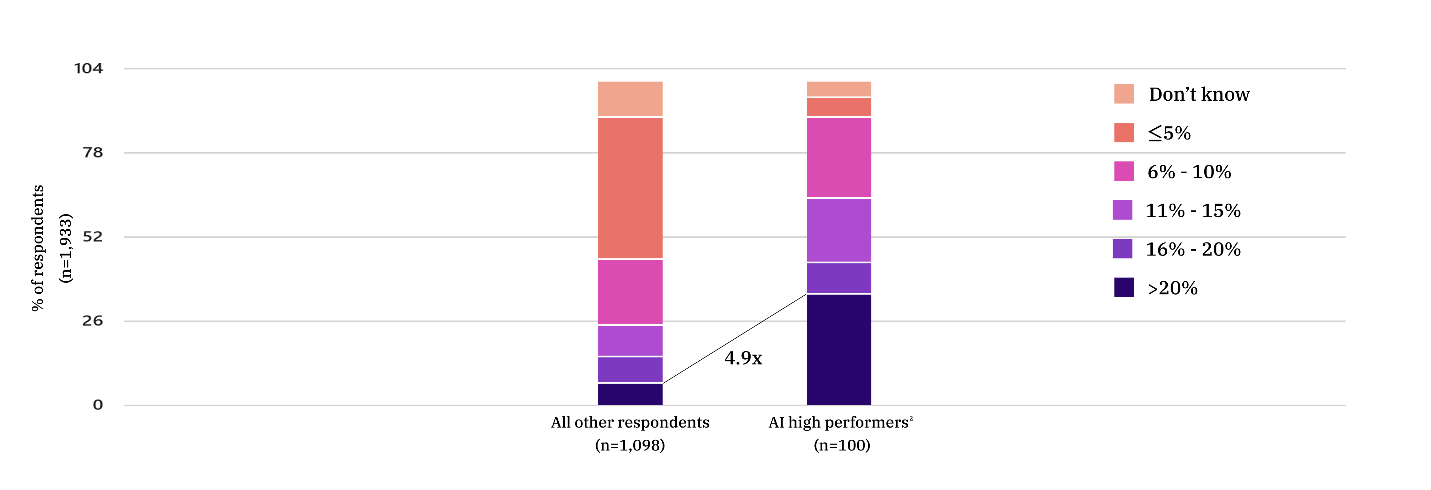
Source – McKinsey & Company - High-performing companies allocate 20%+ of their digital budgets to AI tools, indicating deep integration, not superficial add-ons.
Source – McKinsey & Company - Efficiency gains show up most clearly in software engineering, IT, and manufacturing.
Source – McKinsey & Company
The developer’s new roles (and skills)
Agentic AI isn’t replacing developers, it’s empowering them. Instead of writing code for every step, you increasingly:
- Define goals and constraints.
- Choose tools and boundaries.
- Validate outcomes.
- Harden reliability and safety.
Emerging roles
- Agent Orchestration Engineer: Coordinate multi-agent workflows like managing a team of specialized digital coworkers.
- Prompt Architect: Craft structured reasoning patterns that guide AI thinking step by step.
- LLMOps Specialist: Ensure reliability, safety, and performance in agentic pipelines.
The new unit of delivery is not only code. Its capability: a system that can repeatedly achieve a goal with predictable results.
Agents can act, but humans must decide
Autonomy is useful, but it’s not the same as responsibility.
AI agents can move fast: generate patches, update configs, trigger pipelines, or create specs. But humans still decide on:
- Product intent and tradeoffs.
- Ethical constraints and acceptable risk.
- Final approvals for high-impact actions (production deploys, security changes, compliance decisions).
The practical model is human + agent: agents handle execution and complexity; humans provide judgment and accountability.
Ethical and governance challenges in Agentic AI
Autonomous agents bring great potential but also new responsibilities. Organizations must focus on four key areas:
- Bias and fairness: Agent can learn skewed patterns from data. Use diverse data sources and periodic reviews.
- Compliance: Follow global regulations like GDPR and the EU AI Act by building transparency and risk controls.
- Transparency: Decisions should be clear and traceable. Use explainable AI methods and maintain audit logs.
- Accountability: When agents act independently, define who is responsible and set up human oversight and fail-safe measures.
Strong governance is essential for trust, safety, and long-term success with agentic AI. A useful test: if an agent causes an incident, can you answer what happened, why, and who approved the behavior?
Workflow redesign: The real key to AI-driven success
Workflows are the steps that move work from start to finish. Traditional workflows are manual and linear. Agents work best when the flow is designed for:
- Goal-based execution.
- Tool use (repo, CI, issue trackers, docs).
- Validation checkpoints.
- Safe rollback paths.
If you bolt AI onto rigid workflows, you get small gains. If you rebuild workflows to be AI-native, you unlock bigger outcomes. These autonomous agents don’t just automate tasks; they reason, plan, and act toward goals, adapting as conditions change and collaborating with humans for better outcomes.
What high performers do differently
- Redesign don’t patch: They rebuild workflows instead of layering AI onto legacy systems.
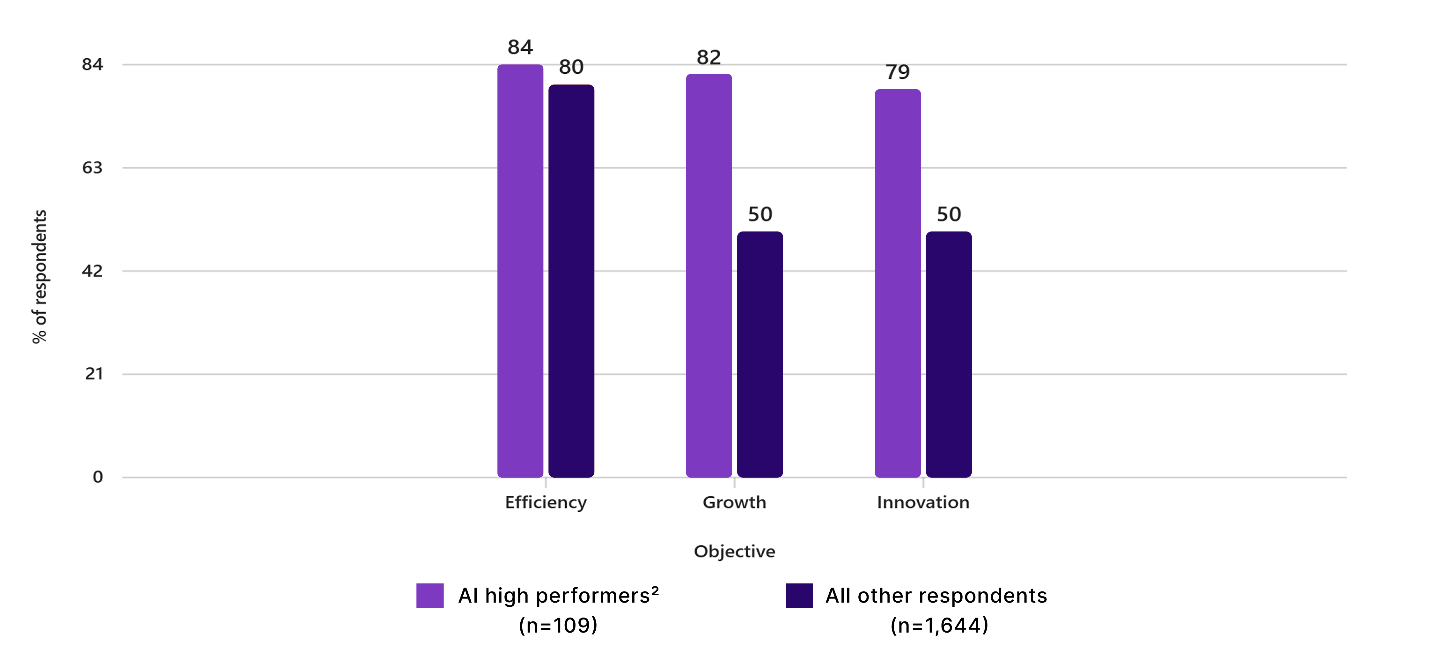
- Aim beyond efficiency: Target growth and innovation, not only cost reduction.
- Proven impact: Workflow redesign is reported as 3× more linked to success than incremental changes.
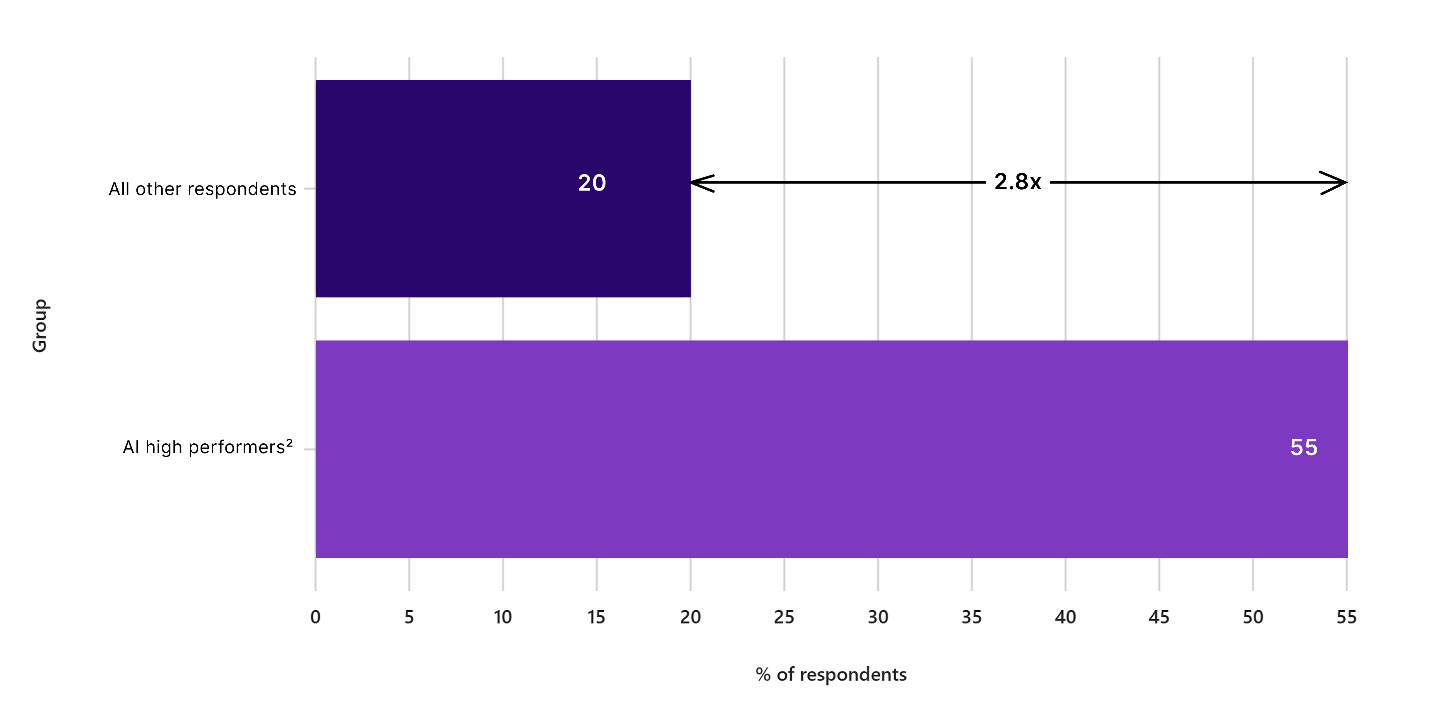
Source – McKinsey & Company - Human + AI validation: Leadership engagement and human validation ensure trust and accountability.
Scaling AI Agents for enterprise impact
Many enterprises experiment with agents. Few scale them across critical workflows. Instead of patching legacy processes, scaling means embedding agents into high-impact areas where they can deliver measurable outcomes.
Scaling requires:
- Clear objectives (what the agent owns).
- Standard operating boundaries (what it must never do).
- Reliability and evaluation (does it work consistently across repos and teams?).
- Security controls (tool permissions, prompt injection defenses).
- Cost visibility (token usage, model selection, fallback strategies).
Why scaling matters
- Beyond efficiency: Scaling agents unlock growth and innovation, not just cost savings.
- Goal-driven orchestration: Agents work toward business objectives, adapting dynamically instead of following rigid steps.
- Enterprise-wide impact: When agents collaborate across departments, productivity gains multiply.
Meet your new coding partner: The Syncfusion Code AI Agent
To scale Agentic AI in software development, teams need tools built for real engineering constraints: security, governance, and repeatability.
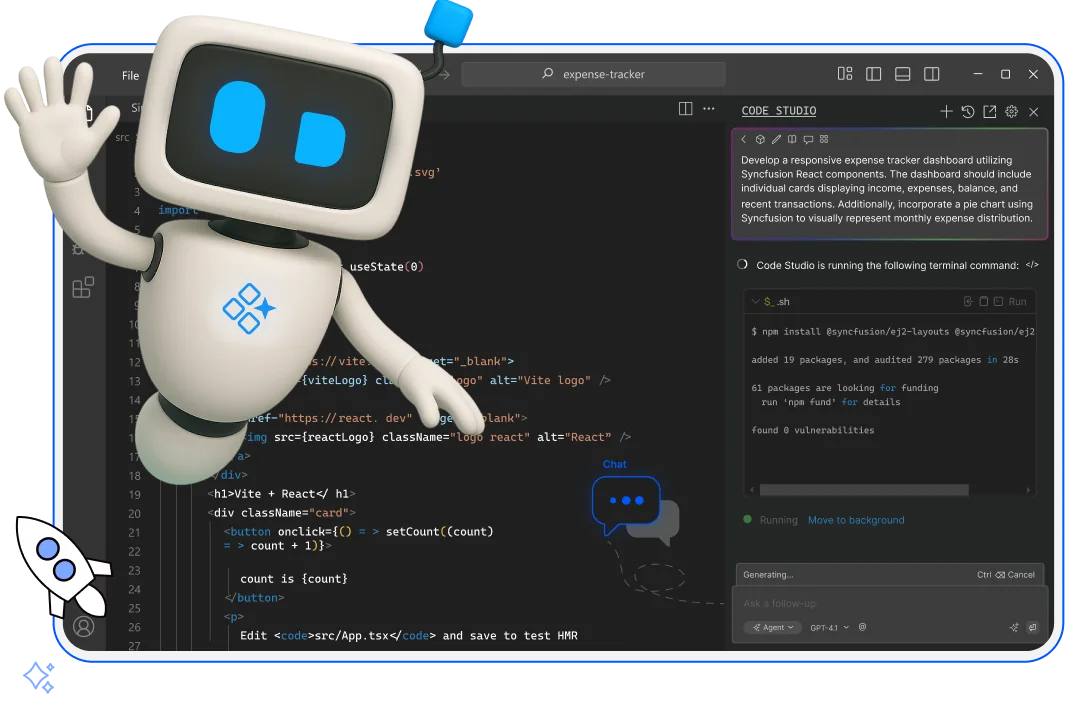
Syncfusion® Code Studio includes a Code AI Agent that functions as a coding assistant within a controlled workspace. Rather than simply responding to prompts, it is designed to reason, plan, and execute tasks with continuity and cost awareness. It supports multiple models for planning and coding and includes built-in rules for continuity and cost monitoring.
Agent Mode: What it helps you do
Agent Mode goes beyond simple code generation. It understands context, applies best practices, and executes tasks securely. With Agent Mode, you can:
- Develop complete applications using UI Builder and Syncfusion components.
- Refactor existing code for better performance.
- Fix bugs and iterate based on feedback.
- Generate specifications and requirement documents.
- Create unit and UI test cases.
- Deploy applications seamlessly.
Most importantly, Code Studio agents write code using advanced syntax and patterns, improving developer experience and accelerating delivery.
What makes it practical for enterprises
- Multi-model support: Choose the right model for planning vs. coding vs. testing.
- Workspace intelligence: Includes project rules, prompt injection controls, and enterprise-level cost monitoring.
- UI Builder integration: Powered by 1600+ Syncfusion components for all platforms, enabling rapid app development.
- Enterprise governance and compliance: Built-in security controls, audit trails, and SOC 2 compliance, and role-based access managed through Syncfusion’s enterprise server.
- Cost efficiency: Enterprise monitoring ensures token usage stays predictable and optimized.
- Multi-agent collaboration: Agents can work together on planning, coding, and deployment workflows.
- Continuous improvement: Agents learn from previous executions, improving code quality and reducing bugs over time.
Everyday developer helpers in Code Studio
- Autocomplete Mode: Intelligent code suggestions as you type.
- Chat Mode: Ask questions, plan tasks, or generate snippets in natural language.
- Edit Mode: Highlight code and instantly rewrite or optimize it.
Advanced features
- MCP Server Marketplace: Find, install, and manage MCP server integrations.
- Code Studio rules: Define project-specific rules for coding standards and patterns.
- Prompt files: Create reusable prompts for consistent workflows.
- Memory: Recall relevant past interactions for continuity.
- Apply from chat: Insert AI-generated code snippets directly into your file.
- Codebase search: Search your entire project using natural language queries.
- Image input: Provide visual context (UI screenshots, architecture diagrams, error messages).
Adaptability and integration
- Choose any model: You can choose a different Agent Model based on your use cases.
- Unlimited reach with MCP: Pull data from APIs, databases, local files, or cloud storage.
- Deep context awareness: Attach files, logs, Git diffs, or documentation URLs for precise answers.
Here are some helpful resources to get you started:
Future trends: Where Agentic AI is headed
Over the next decade, expect agentic AI to move from assistants to system-level capability:
- Hyper-autonomous systems: Agents will handle complex workflows end-to-end, reducing human intervention to oversight only.
- Multi-agent collaboration: Networks of specialized agents will work together, enabling dynamic problem-solving across domains.
- Context-aware intelligence: Agents will adapt in real time using environmental signals, user behavior, and business context.
- Ethics-first design: Governance, transparency, and compliance will become core features, not add-ons.
- Integration everywhere: From enterprise platforms to consumer apps, agentic AI will be embedded as a standard capability.
The long-term shift is simple: software won’t just respond. It will act, and we’ll be responsible for how it acts.
Frequently Asked Questions
Agentic AI refers to systems that can act independently, make decisions, and adapt without constant human input.What is Agentic AI?
No. It works alongside developers, automating tasks while humans provide oversight and strategic direction.Will Agentic AI replace developers?
Human judgment ensures ethical compliance, accountability, and alignment with business goals.Why do humans still need to make decisions?
Beyond coding, developers need to understand AI design, decision-making frameworks, and responsible AI practices.What skills should developers focus on?
Validate AI continuously, document its behavior, and maintain transparency in decision-making.How can developers ensure AI is responsible?
It’s a smart coding companion that helps developers build and scale agentic AI systems efficiently within Syncfusion Code Studio.What is Syncfusion Code AI Agent?
Conclusion
Thank you for reading! Agentic AI in software development is changing what “building software” means. The work shifts from writing every step to designing autonomous behavior: goals, plans, tool access, guardrails, and validation.
If you want to experience the shift from code to agents, evaluate Syncfusion Code Studio and test how Agent Mode fits your team’s workflow, especially where governance, cost control, and repeatability matter.
You can contact us through our feedback portal for queries. We are always happy to assist you!



 No spam, just valuable updates.
Comments (1)
Great post! The discussion of agentic AI in software development highlights how AI agents are transforming modern development workflows. This guide also covers leading SDKs and frameworks for building AI agents: https://mobisoftinfotech.com/resources/blog/ai-development/top-ai-agent-sdks-frameworks-automation-2026