 Arunachalam Kandasamy Raja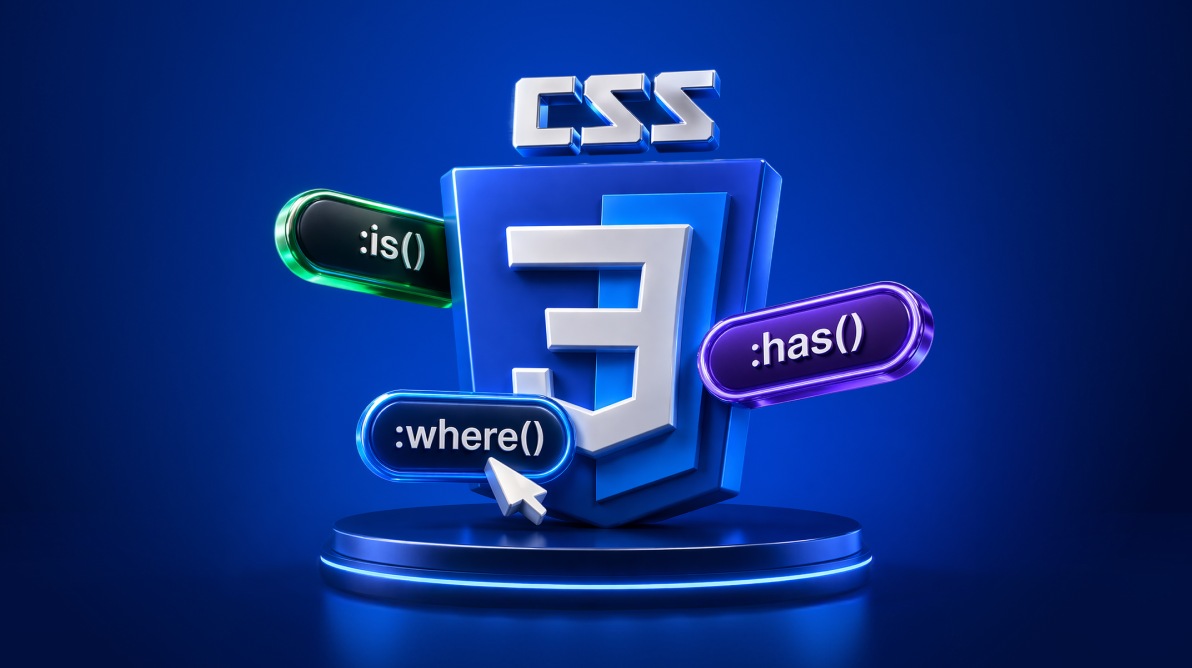
TL;DR: Production CSS selectors require more than correctness; they demand predictable specificity, modern pseudo classes like :has(), :is(), and :where(), and patterns that scale. This article breaks down how to choose selectors that improve maintainability, reduce bugs, and keep large codebases fast, readable, and resilient as apps grow.
Selectors look simple when a project is small. You add a class, style a few elements, and move on. As a codebase grows, selector choice starts to affect more than just appearance. It influences maintainability, override behavior, debugging effort, and, sometimes, rendering cost.
Modern CSS gives us more selector options than ever, but the real skill is knowing which ones keep a codebase easier to work with over time. This guide focuses on choosing selectors that are clear, resilient, easy to override, and realistic to ship in production.
A simple decision framework
A practical way to choose selectors is to move from simple to specialized:
- Use a
typeselector for safe global defaults - Use a
classselector for reusable UI - Use an
attributeselector for real state or semantics - Use a
combinatorwhen the relationship matters - Use
:is(),:where(), or:has()when they remove real complexity
Start with the simplest selector that communicates intent, then add structural or relational logic only when the UI actually needs it. This helps avoid overengineering and keeps CSS predictable.
Quick Selector Decision Cheat Sheet
Use this table as a fast reference when choosing selectors in production.
| Situation | Recommended Selector |
| Global typography or resets | Type selector (body, h1) |
| Reusable UI components | Class selector (.button, .card) |
| State already in markup | Attribute selector ([disabled], [aria-expanded]) |
| Layout relationships | Combinators (+, >) |
| Shared patterns | :is() |
| Soft defaults | :where() |
| Context-based styling | :has() |
Classes, attributes, and combinators: Choosing the right tool
Classes for reusable UI
For buttons, cards, modals, alerts, and most component styles, classes are usually the best default. They describe what an element is rather than where it appears in the DOM.
.button {
  display: inline-flex;
  align-items: center;
  gap: 0.5rem;
}

.button--primary {
  background: royalblue;
  color: white;
}
This works well because the styling hook is tied to the component itself; changes to the HTML layout do not break the selector.
Attribute selectors for real state and semantics
Attribute selectors are useful when a state already exists in markup, such as disabled, aria-expanded, aria-selected, or data-* attributes.
button[disabled] {
  opacity: 0.6;
  cursor: not-allowed;
}

.accordion-trigger[aria-expanded="true"] {
  font-weight: 600;
}
This keeps styling aligned with behavior and accessibility without introducing extra classes.
Combinators when structure is meaningful
Combinators are useful when the relationship between elements matters, especially for spacing or local layout rules.
.form-row + .form-row {
  margin-top: 1rem;
}

.card > h2 {
  margin-block-end: 0.5rem;
}
Combinators work best when the relationship is short and clear. They become harder to maintain when they describe long paths through the DOM.
Modern Selectors: When to use :is(), :where(), and :has()
:is() — Reduce repetition
Use :is() when multiple selectors share the same pattern and repetition hurts readability.
:is(header, nav, footer) a:hover {
  text-decoration: underline;
}
This selector improves clarity, but it takes on the specificity of its most specific argument.
:where() — Low-specificity defaults
:where() always contributes zero specificity, making it ideal for broad defaults that should remain easy to override.
:where(article, section, aside) h2 {
  margin-block-end: 0.5rem;
}
When override flexibility matters more than selector weight, :where() is usually the better choice.
:has() — Context-driven styling
:has() lets you style an element based on what it contains or what appears around it, often replacing extra classes or writing JavaScript just to change styles.
/* Before: extra class and JavaScript */
.card.has-error {
  border-color: crimson;
}

/* After: pure CSS with real state */
.card:has(.error-message) {
  border-color: crimson;
}
The key question is whether :has() simplifies the code. If a plain class is clearer, it remains the better option.
Specificity: Rules that matter in practice
Most selector problems eventually manifest as specificity issues. Heavier selectors are harder to override cleanly.
Practical rules to remember:
- Type selectors are light
- Classes, attributes, and pseudo‑classes are heavier
- IDs are heavier still
:is()and:has()inherit the weight of their most specific arguments:where()contributes zero specificity
This is why production CSS usually favors classes over IDs, shallow selectors over deep chains, and low‑specificity defaults where possible. Frequent use of !important is often a sign of selector strategy issues.
Native CSS nesting and accidental complexity
Native CSS nesting makes it easy to accidentally create massive specificity chains. Nesting heavily (e.g., .card { .card-body { .card-title { span { ... } } } }) compiles down to deep descendant selectors that are fragile and hard to override. Keep nesting shallow, ideally, no more than one or two levels deep.
Selector performance: Measure before you optimize
Selector performance can matter in large or highly dynamic DOMs, but it is easy to overestimate its impact. Whether selector complexity affects performance depends on DOM size, rule count, and the frequency of DOM changes.
The practical approach is measurement. If CSS matching is causing slow interactions, use browser performance tools to identify which selectors actually appear in the data. Optimize what proves expensive, not what merely looks expensive.
Real-world patterns that work well
1. Form state without extra classes
A strong use of :has() is styling a wrapper based on input state.
.form-group:has(input:invalid) {
  border-color: crimson;
}
This removes the need for an extra state class and keeps the styling tied to the real form state.
2. Grouped interaction rules
:is() works well when repeated container patterns share the same interaction styles.
:is(header, nav, footer) a:hover,
:is(header, nav, footer) a:focus-visible {
  text-decoration: underline;
}
This is easier to read than repeating the same selector chain multiple times.
3. Soft defaults for content blocks
:where() is a good fit when you want consistency without creating override friction.
:where(article, section, aside) :where(h2, h3) {
  line-height: 1.2;
}
This works well for content-heavy layouts where flexibility still matters.
4. Accessibility-driven state styling
Attribute selectors are often the cleanest option when state is already exposed through accessibility attributes.
.disclosure-button[aria-expanded="true"] + .disclosure-panel {
  display: block;
}
That keeps state, behavior, and styling aligned.
Common Anti-Patterns We Avoid
- Deep descendant chains that tightly couple styles to DOM structure
- Styling everything with IDs, which adds unnecessary specificity
- Using advanced selectors when simpler class‑based solutions are clearer
Powerful selectors are useful only when they reduce real complexity.
Frequently Asked Questions
Yes. Browser APIs like Do modern selectors like :has() work in JavaScript selectors?
querySelector() use CSS selector syntax, subject to browser support.
Yes. Cascade layers help control precedence across resets, defaults, utilities, and components, reducing reliance on heavy selectors.Should the selector strategy be combined with cascade layers?
When a selector enhances the experience but is not required for core functionality, especially with newer features like When should @supports selector(...) be used?
:has().
Yes. If a rule needs meaningful selector weight inside a component, Are there cases :where() is a bad choice?
:where() may be too weak.
Conclusion
Thank you for reading! The best selectors in production are rarely the most advanced ones. They are the ones that make the code easier to understand, override, and change. Modern CSS provides better tools, but the real advantage comes from using them with judgment.
Choose selectors for clarity first, specificity second, and complexity only when it removes a real problem. If you’ve developed your own selector strategies in production, feel free to share them in the comments.




 No spam, just valuable updates.