
Successful Remote Working Succinctly®

CHAPTER 5
Managing Remote Workers
Being a manager of people who are working remotely requires a different level of empathy, a great ability to delegate, and a different way to control the effectiveness of work being done.
Care about people more than the business
Business will come if you take care of your people. Of course, you must care about the business, but try first to understand what’s driving your employees, what’s blocking them, and what they cannot tell you.
Note: Of course, this chapter applies also to managers having employees working in the same office, but for those who are managing people working remotely, this is even more relevant.
Focus on the essentials of the work
People working remotely need to have even clearer priorities, and normally they don’t like to spend too much time on unnecessary activities, or activities that don’t align with their own and their team’s priorities.
Help employees prioritize meetings that they must attend and meetings that they could decline to ease meeting fatigue. Assign clear responsibilities to people with different seniorities and instruct newbies on who can help them with specific problems or on specific topics. You can also encourage newbies to have a period of job shadowing with senior team members, or with senior people in the company with a similar role. When you empower people on specific topics, they’ll help you drive the business even further.
Note: Empowering people, assigning clear responsibilities, and taking care of how they feel is the opposite of micromanagement, a bad management style where managers closely control every move of their employees. Micromanagement denotes a lack of trust and freedom on how to interpret the job.
Social events that are currently very fashionable, like virtual coffees or virtual happy hours, are important, but only if all the fundamentals of a good team are already in place.
Set boundaries between work and personal life
A manager should lead by example, even when talking about work-life balance. How can people believe that they can have a balanced work and life if their managers are burning the midnight oil every day, if they call them at every hour, if they expect immediate answers to emails sent 24 hours a day?
The manager should show that a work-life balance can be achieved, and they should protect an employee’s time off. Of course, sometimes people should go the extra mile, but that shouldn’t be the norm for all days; otherwise, employee burnout will be just around the corner.
Manage by objectives, not by hours at the computer
This paragraph is closely tied to the previous one. Don’t judge people’s performance on how many hours they spend at the computer. Manage them by objectives, clearly prioritize the objective with them, try to unblock or understand when something is going down a dead road, and work with employee to find another way to solve the issue.
Instead of focusing on “knowing if they’re working,” focus on their results, and help them reduce stress and hours worked, with great benefit to their productivity.
Of course, there are situations when people are not working correctly and seriously, and you should work to solve those problems directly with those people to understand the root causes.
Implementing a diffused surveillance system on company devices will lower people’s morale, collaboration, and trust. Even Great Place to Work, an organization that has a list of the best places to work, says that the benefits of a trust culture are much higher than a culture of strict control.
Please don’t do like in the following comic:
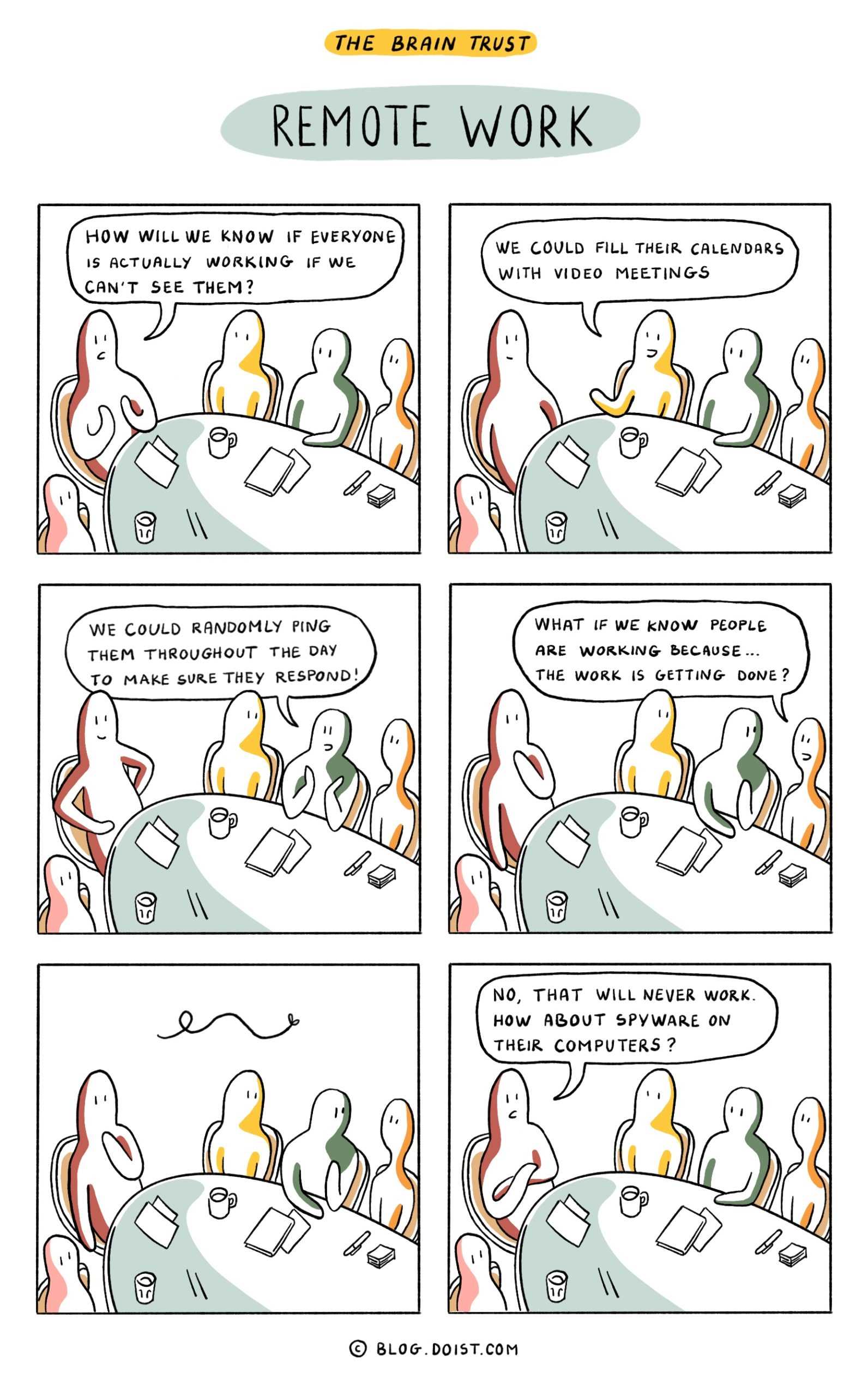
Figure 33: How to Know If Your Remote Employees Are Really Working (or not?). Source: blog.doist.com
Know your people
A good manager should have contact with a remote team member at least once a week, apart from business-related calls. A contact can be a short one-to-one, an email with some context, a message, or chitchat during a more structured meeting—something that allows the manager to feel the pulse of the person.
Knowing how to read behind body language or the tone of voice is essential, but so is knowing the habits of the people regarding team dynamics. Some people attend every meeting, formal and informal, while others only attend important ones.
If someone that attended every meeting is missing, try to understand what happened. Perhaps it’s just an overlapping meeting, but sometimes there are other causes that need to be understood.
For people who only attend important meetings, you should have regular, probably short, one-to-one meetings to keep checking how things are going, not only from the business side, but with them personally. Don’t force people to attend every meeting, and make sure to mark mandatory meetings as such in the invitation.
Foster employee connections
Employees need to feel connected to have good morale, and managers should do all they can to enable it. “In Hybrid Work, Managers Keep Teams Connected” is a great paper about how managers can bond a team together to have happy and engaged people and better results.
To keep a good connection even when working remotely, people should feel that their work is important and recognized; that they aren’t wasting time with activities that aren’t a priority; that they can trust the company culture; and that they have a good work-life balance. Their manager is essential to all those topics, and numbers are starting to show that a good level of connection can be stabilized after an abrupt change.
Another part of feeling connected is knowing what’s happening in the company or in the team, even when it’s just a rumor. A good manager should be transparent enough to share what could happen, even if it’s not certain, or at least share that it is something that’s still undefined or unclear. Remote people will feel more connected to the company when these kinds of discussions, typically done in front of the water cooler or coffee machine, happen during online staff meetings.
Speaking of company culture, this Fast Company article by Ayekin Tank will show you how having solid company values, caring about your employees, and supporting them even remotely will be the norm when some of the people work onsite and some of them work remotely.
Note: It’s also important to connect people in your team to other teams in the company, especially when the various teams need to work together, but they have different objectives. It’s important to know what drives other departments in the company to be able to find common objectives.
Have regular and ad hoc meetings
Try to have regular staff meetings (every two weeks or monthly) and one-to-one meetings (weekly or every two weeks) to check not only the business, but also how your people feel about what’s happening around them.
During staff meetings, try to leave twenty or thirty minutes in every meeting to a different team member to present something about their work, new stuff they learned recently, their interests, or their culture. Be sure to rotate to a different team member each time. If that can’t be done during a staff meeting, you can still plan special recurring meetings dedicated to better understanding the team, one team member at a time.
Try to always respect the meeting agenda (you sent it for a reason) and give everyone the chance to talk if requested.
Note: Even a short 30-minute, one-to-one meeting every week or two can make the difference. It can seem redundant, but it allows you to drive forward topics that will normally be underestimated.
Sometimes problems arise, and you can’t wait for the next scheduled team meeting in two weeks. Try to understand how people feel in the team, perhaps by talking with one or two influential team members. If you sense that the situation is going downhill, you can send an email saying that you’re taking care of it, or, if you have something to discuss, schedule a specific meeting to solve the problem, or at least to ask people how they feel and discuss possible solutions.
Your people should feel that your door is always open, even virtually, with a call, a chat, or an email. Try to avoid false hope. If you’re busy and you say, “I’ll call you back later,” you should do it. People in the office can see when you’re no longer busy, but people working remotely will feel left behind if you don’t keep your promise.
Note: If part of the team that you’re managing is remote and part of the team is in the same office, try to join the meeting from a conference room, or stay at home that day. Most of the time, people in a meeting try to treat the manager in a special way, especially by making sure that their point is taken and well understood by the manager.
In many meetings where the manager is in the same room, most people tend to focus on targeting the manager and not the whole audience, which can cause a bad experience for remote participants.
If the manager is not in the same physical room, people in the room together are forced to give remote participants the same level of engagement that is normally reserved for people being present. Lead by example.
Inform people who missed important meetings
Recording a two-hour staff meeting and asking people to watch it is not effective, nor respectful of their time. If the meeting is important, and some people from your team couldn’t attend, ask someone to take notes, or do it yourself if you aren’t the main speaker, and share the notes afterwards. Meeting tools are evolving to provide meeting transcripts that you can then edit and shorten, leaving only the meaningful parts.
Take small problems lightly
The way you treat people when there are small problems working remotely has big impacts on their perception about you, the company, and their ability to continue working remotely. Does a child come on screen during a call? Smile, say hello to the child, and then continue with the meeting. Is the dog barking, or the cat walking on the keyboard? Laugh about it, tell a joke, and then continue talking about business.
From a direct manager to a dotted-line manager
Moving from a linear model, where you directly manage people, to a matrix model, were you’re responsible for part of the work of other people without being their direct manager, is a great challenge. Being a remote dotted-line manager is even more challenging.
Note: Dotted-line managers can assign you tasks or drive initiatives that include you without being your direct (also called solid-line) manager. More information about dotted-line reporting can be found in the Indeed article "Dotted-Line Reporting: Definition and Tips."
Here are some considerations for dotted-line managers:
- During reorgs, many managers who used to be direct managers and became dotted-line managers have a difficult time adapting to the new role. Most of them will search for a more traditional managing role. Being a dotted-line manager requires a greater variety of skills than a traditional manager.
- Managing a community of people who have different managers but the same objective is more difficult than managing a team. The role of a dotted-line manager is more strategic because you can’t order your people to do something; you aren’t their direct manager. If people know that you can anticipate business directions, including understanding before others which are the important topics of the next months or of the next semester, and you can steer your community in that direction, people will follow you without the need of direct power.
- If you demonstrate that you have business acumen and that you can also “talk their language," your people will respect you—not because you’re their manager, but because they can trust you.
- Since you’re not their direct manager, you have the opportunity to better understand their needs if you show them that you’re open to talking, that you can coach or mentor them when needed, that you can share with them your vision, and that you can listen to theirs.
- If you know what drives your people, you can better assign activities to them because you’ll probably find the right people for the right task; they’ll like the task, and if the task is difficult and no one else wants to do it, they’ll probably obtain more visibility inside the organization when they complete it.
Remote recruiting and onboarding
Hiring people remotely is not a new thing. Multinational companies with cross-border teams have been doing it for years, but at some point, the whole team should meet and interact with each other.
During the pandemic, a lot of hiring became remote, but in most cases the offered jobs will be remote until the offices reopen, and then people will need to move back to the office again.
There are some differences if employees will work remotely after the pandemic, or if it’s only a temporary situation.
Recruiting for a temporary remote position
In the case of hiring someone for a temporary remote position, the job post and the selection is nearly the same as hiring for a permanent position. The only difference is that the interviews are remote only, with the webcam turned on, and they will probably be one-to-one meetings since it’s difficult to organize virtual one-to-many or many-to-many sessions, which are possible in person.
HR (human resources) departments should work on better filtering of candidates, and managers should focus on reading body language using a screen. But in the end, the process is very similar to the traditional one.
Recruiting for a permanent remote position
Hiring people for a permanent remote position could be a completely different experience. First, the job post should advertise that the position is remote, and it should probably be posted on a remote-jobs dedicated search site in addition to regular ones (Monster, LinkedIn).
Second, it’s likely that people from different regions or countries will apply with different cultures, and sometimes even different time zones if the job allows that. HR should be prepared to do a set of screenings before passing the candidates to the hiring manager.
A lot of companies are now offering remote positions to attract the best talent. If a company is known to be remote-friendly, more people will consider applying for a position. Your company should work to establish a brand that is remote-friendly, with dedicated posts on social media that describe how (part of) the company is handling remote work, remote employees’ interviews on the company’s career website, dedicated perks for remote workers, and so on.
You can find more information about the topic in this Vervoe article by Hugo Britt.
Use LinkedIn to find the right people
Sometimes HR or the recruiting agencies cannot find a good set of candidates for a remote position. A good manager with a strong network on LinkedIn can step in and start promoting the position, searching for a good candidate, with the help of other remote colleagues that can attest to how well they’re working remotely in the team.
Remote onboarding
In the Microsoft white paper that we saw before, there’s a section with data about remote onboarding during the pandemic. More than 25,000 Microsoft employees were onboarded remotely during the pandemic. They were surveyed after 90 days, and their responses were compared to interviews from previous onboarding cycles were people received the typical in-person welcome.
The result was that managers were crucial to the onboarding experience (new hires relied 20% more on managers), more than peers (new hires reliance on peers decreased 15%), especially when managers set clear goals, offered guidance on how to approach the work, and made team priorities clear.
Managers should be empowered by their companies to be support heroes for new hires. Managers should give new hires enough time to understand the job, internal procedures, and team dynamics, as well as data and insight about the kind of work that the new employee should do, to help them set the right priorities and goals.
Note: If you cannot help your new hire regularly, let them work with other people on the team by asking a colleague to be their virtual buddy from the beginning and to have regular meetings to improve onboarding without the pressure of a formal process.
Invest in the new hire immediately
Retaining a remote new hire can be difficult because competition is growing, and they’re not yet connected with the team and the company. Investing in their future immediately will strengthen their retention and can be done relatively easily by letting them attend virtual trainings of various nature, internally and externally.
If you see that they feel anxious about other people’s perceptions of their contributions to the team, you can also help them identify and work on quick wins: small projects, aligned to their best qualities, that can be closed in short time to help them gain recognition.
Multicultural environments
Working in a multicultural environment (as is the case for many remote teams) can be challenging without specific training for the manager and the employees. A good book that can help in understanding all the implications of a multicultural environment is The Culture Map by Erin Meyer.
Regular sharing of activities from different team members about their culture, traditions, and heritage can be beneficial to the whole team, and can be done during regular or dedicated staff meetings.
Note: Sometimes different cultures can clash on some topics (such as geopolitics, human rights, diversity and inclusion, and personal values). It’s important to work on that, if possible, because some fractures are difficult to fix if not immediately discussed.
In other cases, the issues might be well beyond the team capacity to adapt and find a solution. In those, the manager should work with their managers and HR to find a solution, which can involve moving people around or splitting the team geographically.
Gifts and other benefits
In many companies, remote managers have a budget for small gifts that can be used to improve team morale. Being able to send a small physical gift or even a greeting card when people have birthdays, on a work anniversary, when they get sick, or for other special occasions can make them feel more appreciated and part of a well-functioning team. Even being able to expense a dinner can make a huge impact on people’s morale.


- 1800+ high-performance UI components.
- Includes popular controls such as Grid, Chart, Scheduler, and more.
- 24x5 unlimited support by developers.