
Beyond Public Speaking for Geeks Succinctly®

CHAPTER 6
Personal Branding for Geeks
Have you sent hundreds of proposals without receiving any answer? Do you want to be invited to speak at big conferences? You need to invest in your personal brand, do some marketing work, and give people a reason to listen to you.
What is a personal brand?
I like this definition from Wikipedia:
“Your brand is a perception or emotion, maintained by somebody other than you, that describes the total experience of having a relationship with you.”
You can work on your personal brand, but you can’t completely control it because it depends entirely on the impressions you give to others.
Note: Even if you work for a company, you have your own personal brand, sometimes associated with the company’s, sometimes completely disconnected. You must always work on your personal brand, because it’s not good for your image or career just to be identified with your company’s name.
Amazon’s Jeff Bezos defined (personal) brand as “what other people say about you when you’re not in the room.” Don’t limit it to thinking that personal brand is only your reputation.
Having a good brand helps you in your job, but sometimes in your personal life as well, in ways that you cannot imagine when you start working on it. Everything is easier when your good reputation precedes you.
Note: I can remember dozens of times when I was introduced to a new customer and they said, “I know him, he’s Genio Del Male” (my blog/Twitter alias, which in Italian means evil genius; see the About the Author page at the beginning of the book). Most of the time, it is easier for me to convince my customers because of my brand. Of course, you should keep working on your brand, because it can also become a memory of an ancient past. I have a lot of colleagues who worked with me as evangelists for Microsoft and were well known in the market, and now people barely remember them. On the other hand, others are still relevant today because they continued to work on their brands, or their brands were so strong that they lived on years after they changed jobs.
Having a strong personal brand can also be seen as having insurance for your future, especially in these troubled times. Nobody can assure you that your personal brand will make a difference, but not having it will for sure make one, in a negative way, since nobody will know you and it will be more difficult to emerge from among the crowd.
Everybody has a personal brand, even if they don’t do personal branding
Most people confuse a personal brand and personal branding. We already defined what a personal brand is. Your personal brand exists even if you don’t do anything about it.
Personal branding is the process and the strategy used to increase the value and the perception of a personal brand.
Never underestimate your online brand and reputation
Even if you have a very strong personal network, people who know you and trust you, you must work on your online brand and reputation, because it’s crucial when you need to do something new, when you send your proposals to new conferences, and also when you have business meetings with new customers.
In general, conference organizers and new customers will try to find you online, look at your profile on LinkedIn and other social media, look at your website, and so on.
Tip: Every now and then, open a private window in your browser, and search for your name, or your brand. Look at the results through the eyes of your customers or conference organizers.
If you don’t like what you see when you search for your name or your brand online, you should work hard to change it. Most of the time, when people talk about rebranding, they talk about companies. But many influencers, politicians, and sometimes “normal” people have tried to rebrand themselves because they had a bad or outdated image.
Having a personal brand doesn’t exempt you from knowing your stuff!
Let’s first clarify this point. Having a personal brand and working to improve it doesn’t exempt you from knowing the matter you’re talking or writing about.
I know a few people who have a strong personal brand, but when I talk with them, I can feel that they haven’t mastered their stuff. You shouldn’t be a know-it-all, but if you’re speaking and writing about a topic, after a while people expect something more from you, and they’ll probably be able to tell if you’ve really mastered your stuff or not.
You shouldn’t be an expert when you start working on your personal brand
This point seems to contradict the previous one, but that’s not true, because the starting point is different. In the last section, the focus was on people who are already famous in a field, but not as competent as their brand suggests. In this section, we’re talking about the journey to establish a personal brand in a field.
Is it possible to work on your personal brand while you’re studying or improving in a field? Yes, of course it is.
You should make it clear that you’re on a journey. People will follow your journey and will trust you even more at the end of it. You’ll become a brand without even noticing it.
Note: It’s always fun when, after a journey like this, you search for a topic and find one of your articles, blog posts, slides, or sessions from some time ago that you’ve completely forgotten.
Think ahead when choosing a name
A lot of people, including the author, have chosen a brand name and later regret that decision. There are many reasons that a brand name can become stale or outdated, or become too restricting:
- Your brand is related to a product, technology, or methodology that changed its name or evolved. For example, my friend Matteo Emili’s Twitter alias @MattVSTS was related to Microsoft Visual Studio Team System product naming. Microsoft already changed the name of the product many times, but for Matteo it is too difficult to change his alias, both for practical and sentimental reasons.
- You define your brand name using a language, and then decide to broaden your scope, and nobody will understand your brand. For example, my GenioDelMale brand that means evil genius is both in Italian (limiting its international appeal) and could lead to misinterpretations once translated, because the irony or some special meaning could be lost.
In most cases, it’s much better to stick to your real name, or use a brand that’s not country- or technology-specific, like my friend Matteo Pagani, also known online as qmatteoq.
Do you need a logo?
If you decide to create a name for your brand, you can also think about having a logo related to that brand.
Note: When I started using Genio Del Male as the name for my blog and as the alias for my social media presence, I decided to use a logo (two white eyes on a black background), and after a while I also created t-shirts and hoodies with the logo on them, together with my Twitter alias. After some time, a friend of mine drew a picture of me (in my typical Wonder Woman position 😊) and I started using it as my avatar during my sessions. In some sessions, to show the power of the Morph transition, the avatar floated around the slides during slide changes.

Figure 33: Author avatar and logo
Don’t worry if you don’t have a logo. A nice picture of you, especially on your blog, and on your personal social media pages, is even more important than having a logo.
If people follow you or read your blog, they’ll see your face from time to time. When they meet you, they can recognize you, even at customer meetings, or while walking around in a shopping center.
Note: The first time I went to the United States to attend a conference, I was walking in the partners’ pavilion when I was called by a woman who recognized me because she read my blog. It’s a small world, I thought.
Find your niche
People think that it’s not easy to find their space, since most topics already have a lot of experts.
You have two ways to find your space:
- You can do a brute-force attack on the system, posting a lot of content relevant to a broad topic you want to associate your brand with. But you’ll need a lot of time and effort to start obtaining results.
- You can find your niche, perhaps a part of a broad topic that few people are exploring. There are a lot of public speaking coaches, experts, blogs, and books. This is why I decided to focus on public speaking for geeks. It’s less crowded and gives me a lot of satisfaction and much more visibility, even if it’s in a small group of people.
Once you find your niche, try to explore it, and try to see if there’s interest. Try to nurture it. It could take some time.
Note: When I started proposing “public speaking for geeks” sessions at conferences, it was poorly received by conference organizers. So, I started to write about it. I went to many small meetups, I kept sending proposals, I did some webinars. In the end, I was invited to do the sessions in many Italian and international conferences.
You shouldn’t stay forever in your niche. You can find other, unrelated niches, or you can expand your niche to include other topics, like I did for public speaking when I started talking about diversity and inclusion, accessibility, code of conduct, etc.
If you’re not sure what to do, try to find a mentor who can help you evaluate your strengths and search for direction.
Write before you speak!
The most important suggestion I received when I wanted to speak at big conferences, but was too junior for it, was start writing.
At the beginning, I was skeptical about that, but my mentor told me that writing allows you to show many things:
- You know the subject.
- You can organize your knowledge and transfer it to other people.
- You can summarize important things.
- You can refer to other people’s work and complement it.
These qualities are expected also from a speaker, so writing helps you prove you have them. Then you should work on your stage presence. But writing can open a lot of doors, even better when you write for someone who will review your material before publishing it, like this book.
Note: Some people are scared of reviews like they’re scared of dry runs, but, exactly like a dry run can dramatically improve your session, a review can dramatically improve your book, article, tip, etc.
In most conferences, when you send your proposals, they’re often discussed with you and improved, even after being accepted. Conference organizers most of the time know their attendees very well. Great conference organizers want to give attendees the best content for their needs by improving speakers’ proposals.
Connect with people on LinkedIn
There are two ways to connect with people on LinkedIn at the end of a session.
If, after the session, you meet a person you’d like to connect to, you can open the LinkedIn app, go to your network, and add a new contact.
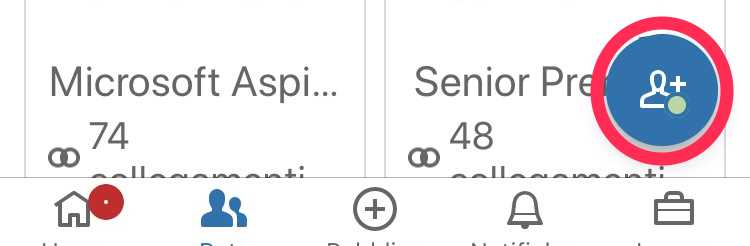
Figure 34: Adding new connections on LinkedIn.
You can also easily connect using the QR code directly from the search bar, by tapping the QR code button.

Figure 35: Easily scan a LinkedIn QR code, or create your personal QR code.
You can scan a QR code or show your personal QR code. You can also use the generated QR code and show it at the end of your presentations, as we already saw in Chapter 3.
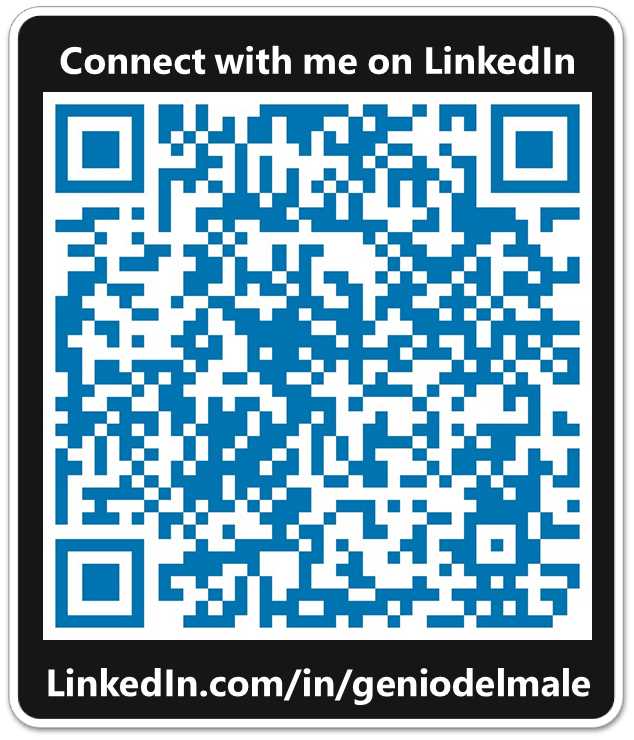
Figure 36: Author's LinkedIn QR code, with some customization.
If you want to improve your LinkedIn profile, you can find a lot of interesting articles online. I liked this ebook: The Proven Secret of an Outstanding LinkedIn Profile: How to Speed Up Your Social Media with AI.
Another interesting ebook is Personal Branding with LinkedIn: The Think Natalia Method.
If you can read Italian, one free ebook from one of my favorite authors is LinkedIn Personal Branding.
LinkedIn Social Selling Index
The LinkedIn Social Selling Index is a way to evaluate how your LinkedIn profile compares to other profiles in the industry and in your network. It’s a number between 0 and 100, and higher is better. As you can see from the picture, “establish your professional brand” is an important part of the overall score.
You shouldn’t look at it every day, even if the index is updated daily. It’s not a perfect way to evaluate your profile, but it’s a nice starting point, and useful to follow the trend of your activities.
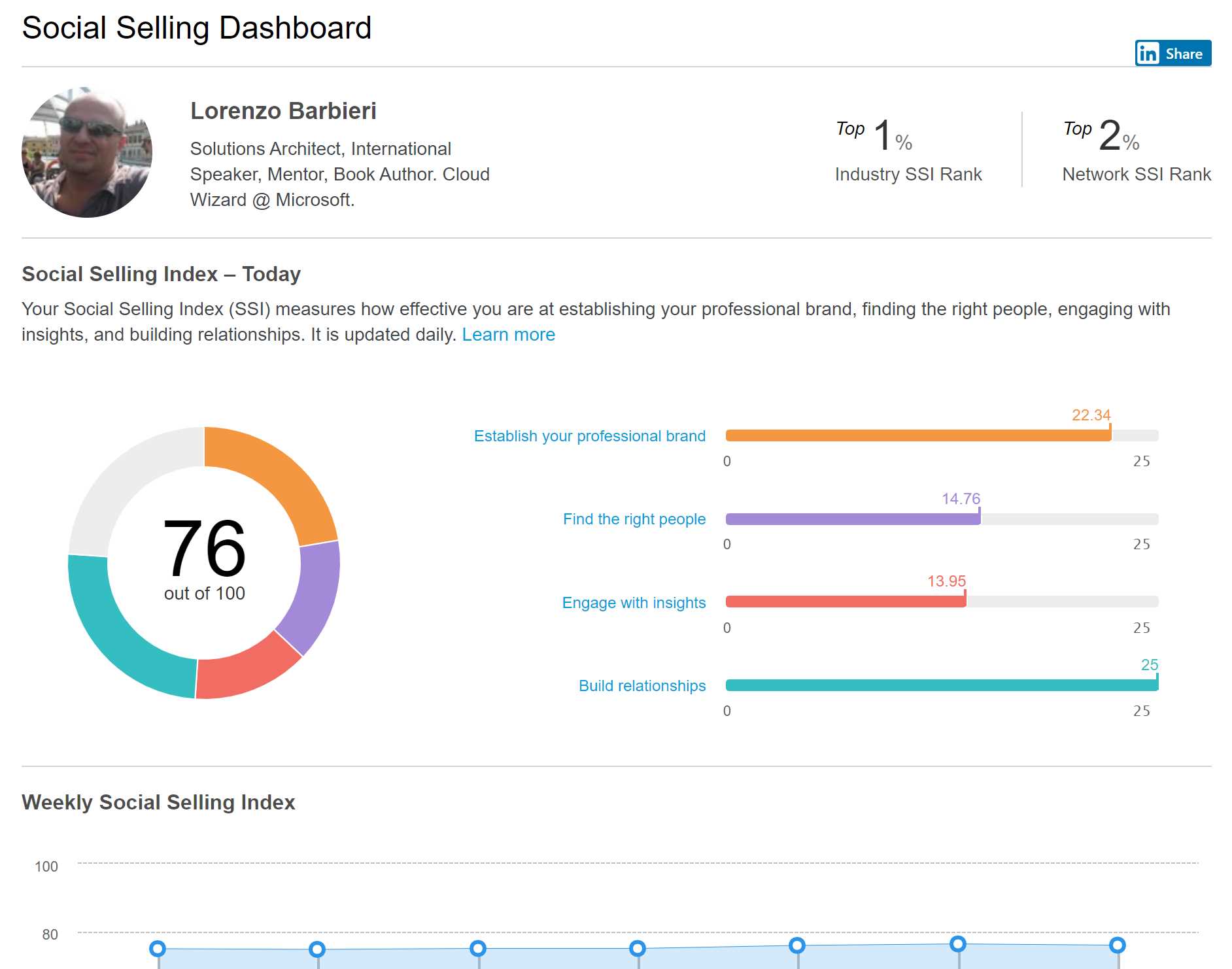
Figure 37: Author's Social Selling Index was 80+ on the best days, but still top 2% in his network.
What about other social media?
As we already discussed in Chapter 3, every social media platform has its strengths and its weaknesses, a different audience, different ways to interact with people, different algorithms that promote your content, etc.
Teaching the right social media strategy is outside the scope of this book: first, because the field changes every day; second, because it’s part of your overall brand strategy, and the time, effort, and money you want to devote to your brand promotion, etc.
Tip: If you want to pay to promote your content, always evaluate the different costs of different platforms, and the configuration options of the campaign that you’re doing. Sometimes, you can publish content on one platform, and promote it on another one, because it’s way cheaper.
What happens when your personal brand grows too much for you to manage?
Sometimes, people feel that their personal brand has grown too much. They feel that they don’t deserve the popularity (even if it’s only in a small field, or among a small group of people).
If the situation is temporary, it could be an incentive to fill the gap, and then grow even more.
If the situation is persistent, or if it continues to come back, it could be a symptom of impostor syndrome, which will be discussed in the next chapter.


- 1800+ high-performance UI components.
- Includes popular controls such as Grid, Chart, Scheduler, and more.
- 24x5 unlimited support by developers.