Context Engineering for Production-Ready AI Workflows
AI doesn’t fail because it lacks capability—it fails because it lacks context. Code Studio gives AI the memory and guidance needed to generate more reliable results.
-
Persistent AI context and memory.
-
Smarter planning before coding.
-
Reduced rework and faster delivery.
No credit card required.
Context Engineering for Production-Ready AI Workflows
AI doesn’t fail because it lacks capability—it fails because it lacks context. Code Studio gives AI the memory and guidance needed to generate more reliable results.
Your download has started
Check your browser's downloads to access the Handbook PDF
Built by Syncfusion. Trusted by 41,000+ enterprises.
25+ years of developer tools, now reimagined for the agent first era.
Enterprises
UI Components
Years in Business
Fortune 500 Companies
AI coding workflows break without structured context
Without structured context, AI relies on fragmented prompts and incomplete project knowledge, leading to inconsistent outputs and unnecessary rework.
Repeated Context Sharing
Teams repeatedly explain architecture, workflows, and implementation expectations across AI interactions.
Inconsistent AI Output
Without reusable workflow guidance, generated code varies between sessions and lacks engineering consistency.
Missing Architecture Awareness
AI implementations fail to align with project structure, business goals, and technical standards.
Unstructured Development Workflows
Planning, implementation, testing, and review workflows operate independently without coordination.
Increased Rework Cycles
Teams spend more time fixing AI misunderstandings than progressing feature development.
No Persistent Project Memory
AI systems lose project decisions, coding standards, and workflow instructions between interactions.
AI works better when it understands your project
With the right context, AI delivers more consistent, reliable, and predictable results for your project.
Shared Project Understanding
AI works with product goals, architectural decisions, and engineering standards rather than relying on isolated prompts.
Context-Driven Decisions
Implementation choices are guided by project knowledge and workflow context rather than assumptions.
Improved Output Reliability
AI-generated responses become more accurate, consistent, and aligned with project requirements.
Architectural Consistency
Features and implementations follow established system patterns and design principles.
Greater Development Confidence
Teams can trust AI-generated suggestions because they are grounded in the relevant project context.
Predictable Workflow Outcome
Development workflows become more repeatable and easier to scale across projects and teams.
Context Engineering Workflow in Code Studio
Code Studio turns AI into a structured development workflow. Code Studio helps AI understand your project, create a plan, and execute with confidence—without losing context between steps.
Grounding the AI in Project Reality
Give AI the same project knowledge your team relies on. Product goals, architecture decisions, coding standards, and workflow guidance become part of the AI's working memory, helping it make better decisions from the start.
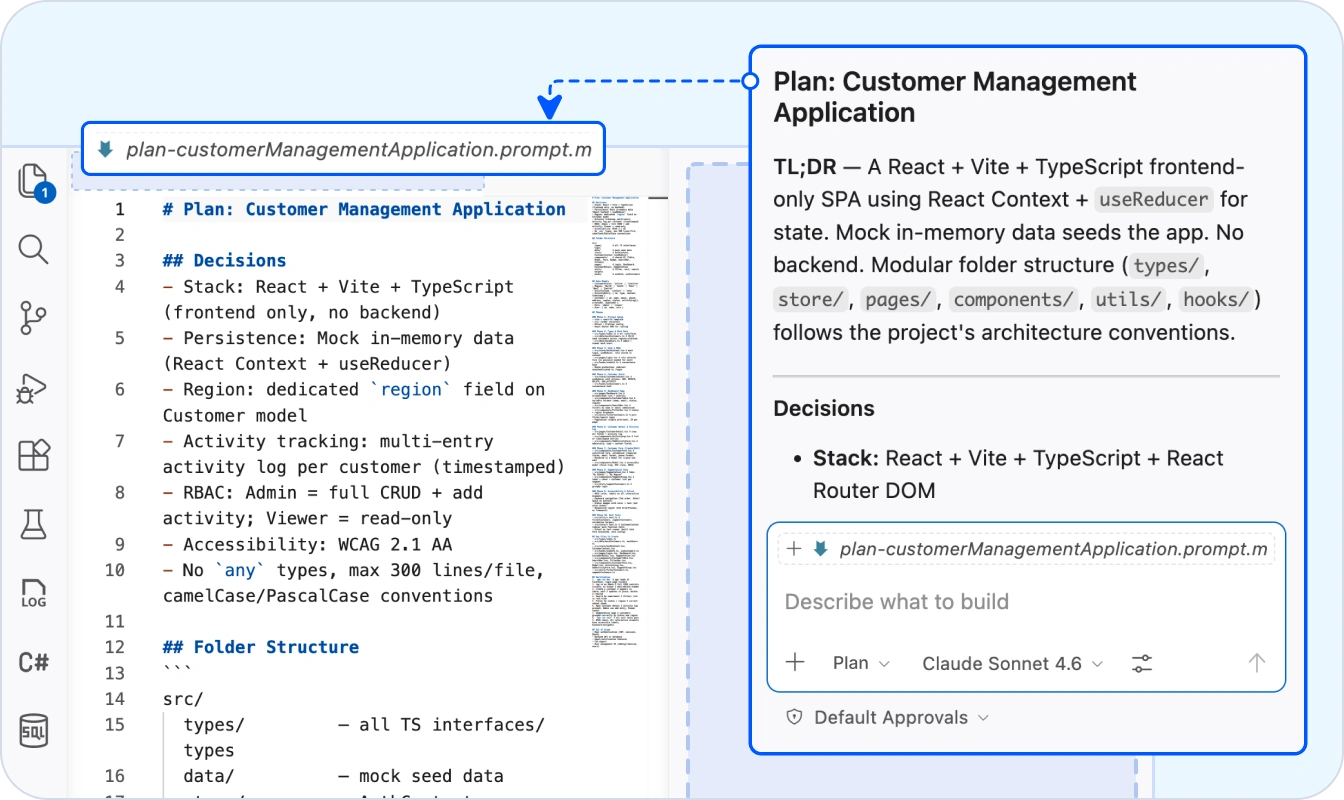
Designing the Planning Persona
Break down large goals into clear, sequenced tasks. A dedicated planning persona turns ambiguous requirements into a structured roadmap the AI and your team can follow with confidence.
Executing with Builder Agents
Let builder agents generate code within guardrails you define. Every change stays reviewable, testable, and aligned with the plan, so execution speed never comes at the cost of control.
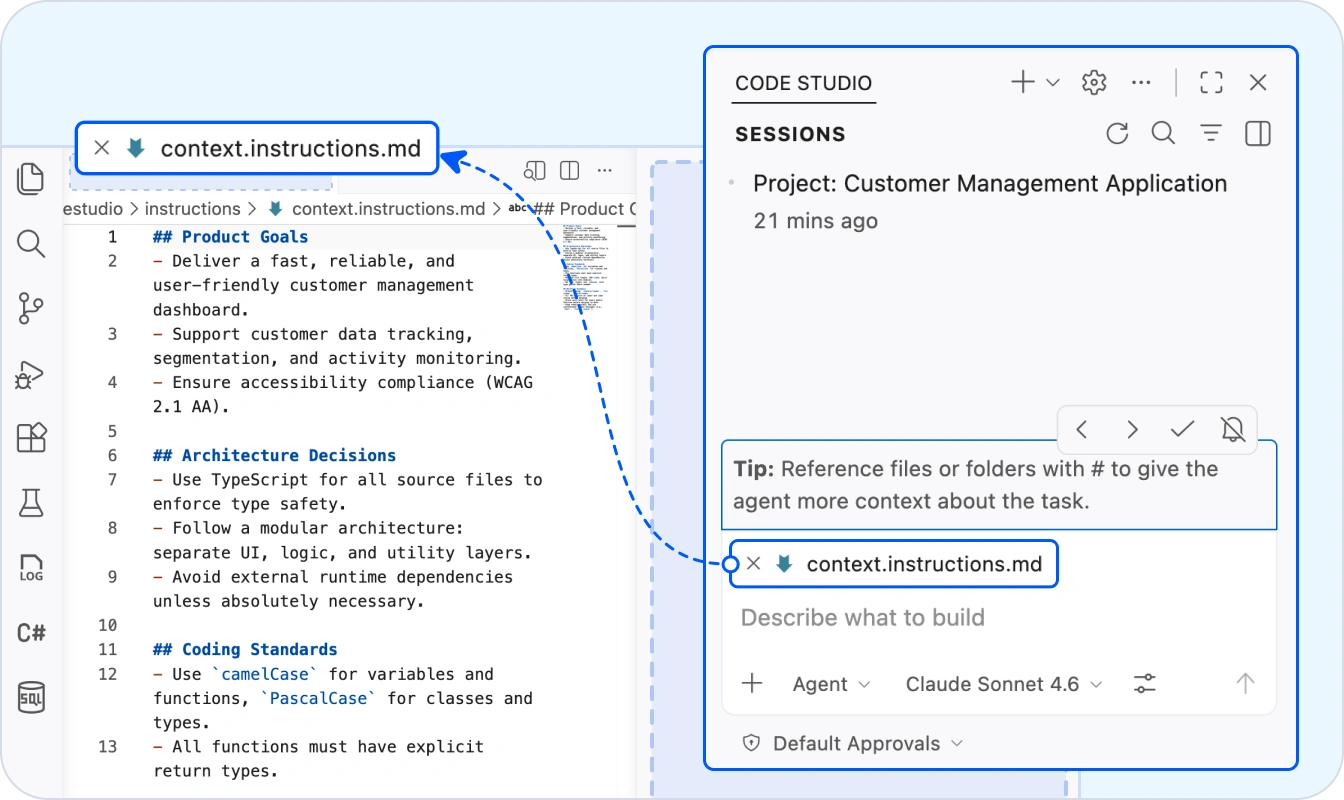
Grounding the AI in Project Reality
Give AI the same project knowledge your team relies on. Product goals, architecture decisions, coding standards, and workflow guidance become part of the AI's working memory, helping it make better decisions from the start.
Designing the Planning Persona
Break down large goals into clear, sequenced tasks. A dedicated planning persona turns ambiguous requirements into a structured roadmap the AI and your team can follow with confidence.
Executing with Builder Agents
Let builder agents generate code within guardrails you define. Every change stays reviewable, testable, and aligned with the plan, so execution speed never comes at the cost of control.
Context Engineering in Action
Explore practical AI development guides covering workflows, context, AI agents, retrieval, and more to build reliable, AI-powered applications.
-
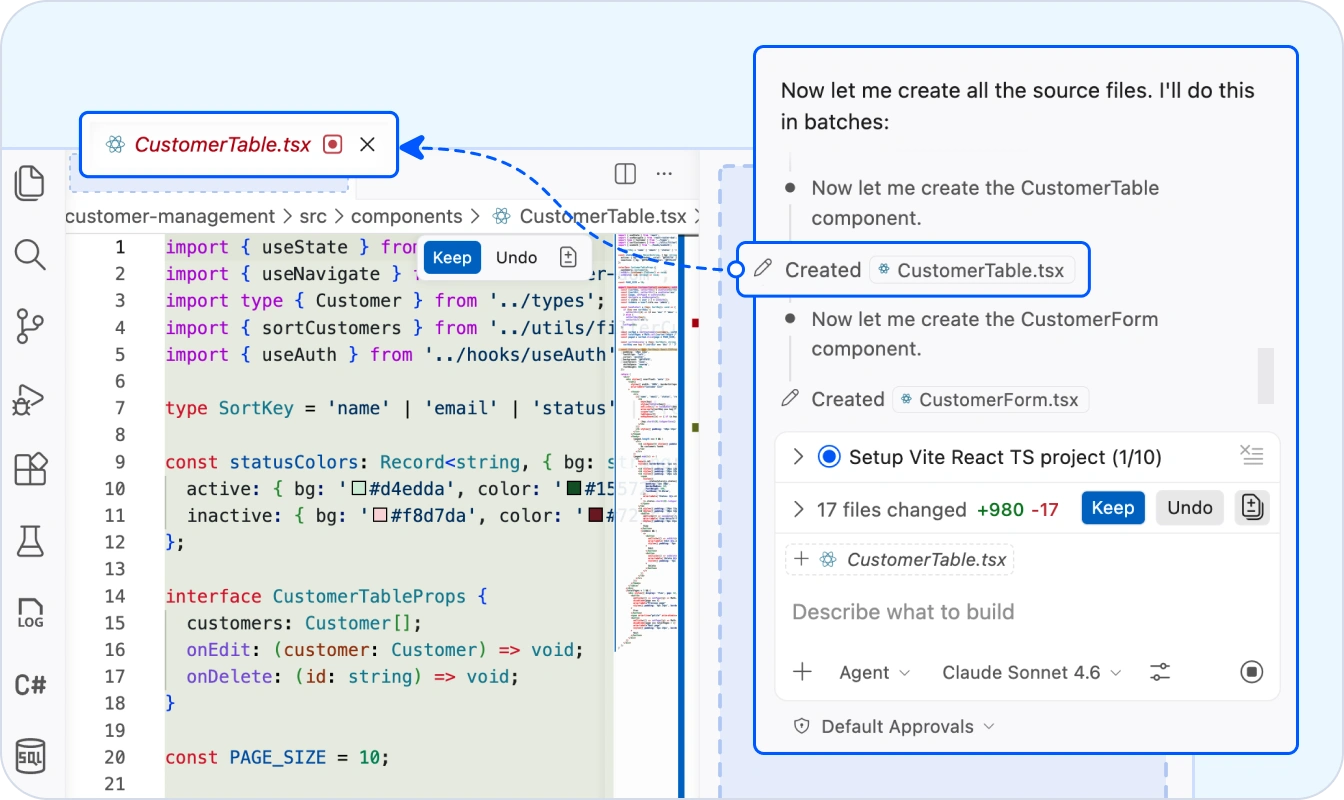
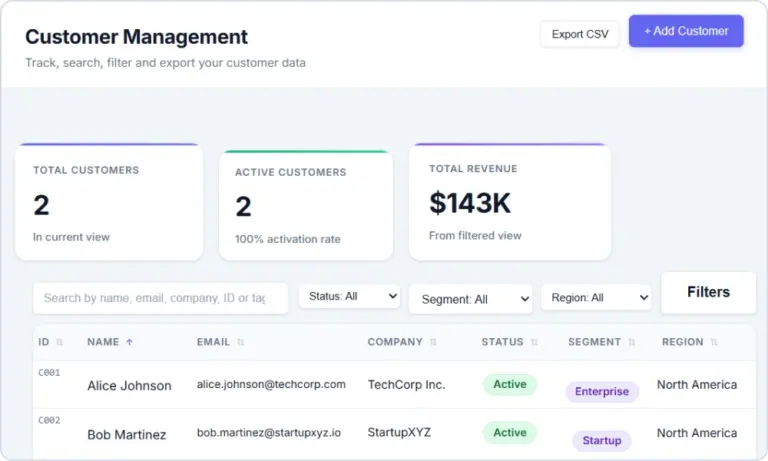
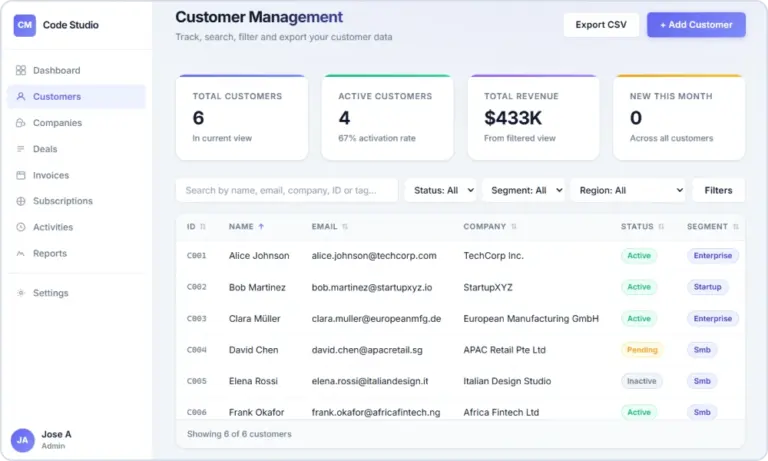
Request: "Build a customer management dashboard with search, filtering, and export functionality."
Without Context Engineering:
With Context Engineering:
Workflow Optimization Principles
Small habits make a big difference. These principles help AI stay focused, reliable, and aligned with your project.
-
Do
-
Keep Context Fresh Continuously update project context, workflow instructions, and architecture guidance to improve AI workflow accuracy over time.
-
Build Context Progressively Start with high-level workflows and architecture direction, then gradually introduce implementation details as development evolves.
-
Context Isolation Keep planning, implementation, testing, and debugging workflows separate to maintain cleaner, more reliable AI interactions.
-
Minimum Necessary Context Provide only the relevant context needed for the workflow to reduce noise, cost, and unreliable outputs.
-
Avoid
-
Context Overloading Avoid providing excessive or unfocused information that does not directly support implementation decisions or workflow execution.
-
Skipping Validation Do not assume AI systems fully understand requirements without clarification, testing, and feedback-driven validation.
-
Conflicting Instructions Avoid inconsistent documentation, workflow rules, or coding guidance that can create unreliable AI-generated outputs.
-
Workflow Drift Avoid mixing planning, implementation, testing, and debugging instructions in a single workflow without clear separation.
Why Code Studio for Context Engineering
Code Studio provides the workflow infrastructure needed to operationalize context engineering across modern AI-assisted development teams.
Persistent AI Context & Memory
Give AI access to project knowledge, coding standards, architecture decisions, and workflow guidance across every interaction.
Smarter Planning
Analyze requirements, identify gaps, and create implementation plans before code is generated.
Consistent Development Standards
Keep AI aligned with project conventions, naming patterns, and engineering practices across the entire code base.
Guided AI Agent Handoffs
Separate planning, implementation, testing, and review workflows through controlled AI orchestration.
Production-Ready AI Development
Use validation systems, TDD workflows, and architecture-aware execution to improve implementation reliability.
Scalable Team Collaboration
Share reusable context systems, workflow standards, and AI instructions across engineering teams and large-scale projects.
Give AI the Context It Needs to Build Better Software
Stop repeating requirements and correcting AI output. Build with persistent context, smarter planning, and more reliable AI-assisted development.
-
Start building scalable AI-assisted development workflows with Code Studio today.
Frequently asked questions
Context engineering is the practice of organizing project knowledge, workflow instructions, architecture guidance, and implementation context so AI systems can generate more accurate and reliable output.
Prompt engineering focuses on optimizing individual prompts, while context engineering manages the broader workflow environment, including memory, planning, tools, reusable instructions, and implementation systems.
Planning agents analyze requirements, identify dependencies, ask clarification questions, and generate implementation strategies before development begins.
Yes. Code Studio supports reusable workflow systems, persistent project context, standardized instructions, and scalable AI collaboration across teams and repositories.
Teams commonly use PRODUCT.md, ARCHITECTURE.md, CONTRIBUTING.md, implementation plans, and .codestudio/codestudio-instructions.md files to guide AI workflows.
Code Studio provides reusable project context, planning agents, workflow orchestration, structured AI handoffs, and implementation systems for scalable AI-assisted development.
Structured context helps AI systems understand architecture decisions, coding standards, implementation workflows, and business goals before generating code.
Yes. Code Studio uses reusable project context, validation systems, structured workflows, and architecture-aware implementation processes to improve the consistency and reliability of AI output.
Workflow handoffs separate planning, implementation, testing, and review responsibilities between specialized AI agents to improve execution quality and workflow consistency.
Yes. Code Studio helps teams build production-ready AI workflows with planning systems, TDD implementation workflows, validation processes, and structured context engineering practices.